Lifetime Citizen Portal Access — AI Briefings, Alerts & Unlimited Follows
UN forum warns of $4 trillion annual SDG financing shortfall; member states urge Seville follow‑through
Loading...
Summary
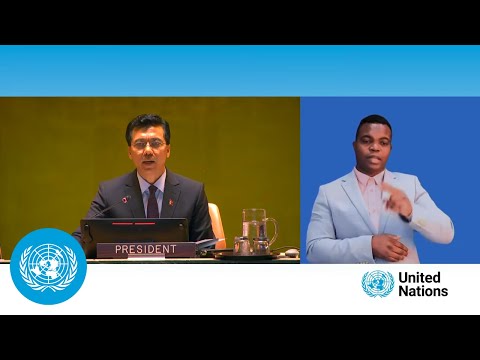
At the opening of the 2025 High‑Level Political Forum on Sustainable Development, United Nations officials and member states warned that the world faces an annual financing shortfall of roughly $4,000,000,000,000 to meet the 2030 Agenda and urged rapid implementation of commitments from the Fourth International Conference on Financing for Development in Seville.
At the opening of the 2025 High‑Level Political Forum on Sustainable Development, United Nations officials and member states warned that the world faces an annual financing shortfall of roughly $4,000,000,000,000 to meet the 2030 Agenda and urged rapid implementation of commitments from the Fourth International Conference on Financing for Development in Seville.
"The annual financing shortfall has now exceeded $4,000,000,000,000 to achieve sustainable development," said a senior ECOSOC speaker during opening remarks. Under‑Secretary‑General Lee Chinhwa presented the Secretary‑General's 2025 progress report, saying, "This report marks a decade of the implementation of the transformative 2030 Agenda. It reveals that only 35% of SDG targets are on track or making moderate progress."
The nut graf: delegates framed the shortfall as a central obstacle to meeting the 2030 goals and called for a mix of domestic resource mobilization, reforms to international finance, and scaled private‑public investment. Several countries and speakers referenced the Seville outcome as a political and operational roadmap to close financing gaps, but they stressed that agreement must be followed by concrete measures such as debt restructuring, concessional finance, and bankable project pipelines.
Member states and other speakers underlined the scale and distribution of the problem. The Secretary‑General's report and subsequent interventions cited a series of high‑level figures: more than 800,000,000 people remain in extreme poverty; debt servicing costs for low‑ and middle‑income countries reached about $1,400,000,000,000; and carbon dioxide concentrations reached record levels in 2024. National representatives highlighted country‑specific needs: the representative of Nepal said achieving the SDGs there requires about $23,000,000,000 per year (roughly 45% of GDP), with an 11%‑of‑GDP residual financing gap. Uganda and other delegations described domestic reforms, inclusive financing models, and public development banks as key instruments.
From the private sector and civil society perspectives, panellists and delegations emphasized blended finance, guarantees, first‑loss facilities, and better matchmaking between bankable projects and available capital. Sanda Ojiambo, CEO of the UN Global Compact, summarized private‑sector priorities discussed at Seville: "There are enough bankable projects" but improved matchmaking, regulatory coherence, and co‑creation with the private sector are needed to scale investment.
Several delegations and stakeholders argued reform of the international financial architecture is necessary to improve access to affordable financing and to mitigate adverse spillovers from major economies. Russia, South Africa, China, and other states urged more inclusive global governance and greater voice for developing countries. Norway, which co‑facilitated FFD4, called for efficient use of existing finance while mobilizing new public and private sources and highlighted anti‑corruption and financial integrity as cross‑cutting priorities.
The forum repeatedly returned to immediate next steps: implementing the Seville commitments, scaling blended finance and derisking mechanisms, strengthening domestic resource mobilization, and expanding concessional finance for vulnerable countries. Several delegations noted that the true test of Seville will be rapid, measurable follow‑through at national and multilateral levels.
Ending: The High‑Level Political Forum will continue in plenary and thematic sessions to review SDG progress and to press for operational follow‑up to the financing commitments discussed in Seville. Delegates repeatedly emphasized that political consensus must translate into concrete financing instruments, debt solutions, and bankable projects if the 2030 Agenda is to remain achievable.