Get AI Briefings, Transcripts & Alerts on Local & National Government Meetings — Forever.
Michigan community colleges ask Legislature to sustain guarantees, boost operations and expand dual-enrollment funding
Summary
Leaders from Michigan’s community colleges told the House Appropriations Subcommittee that sustaining the community college guarantee and Michigan Reconnect, increasing operations funding and investing in capital and dual-enrollment supports are key to meeting workforce needs.
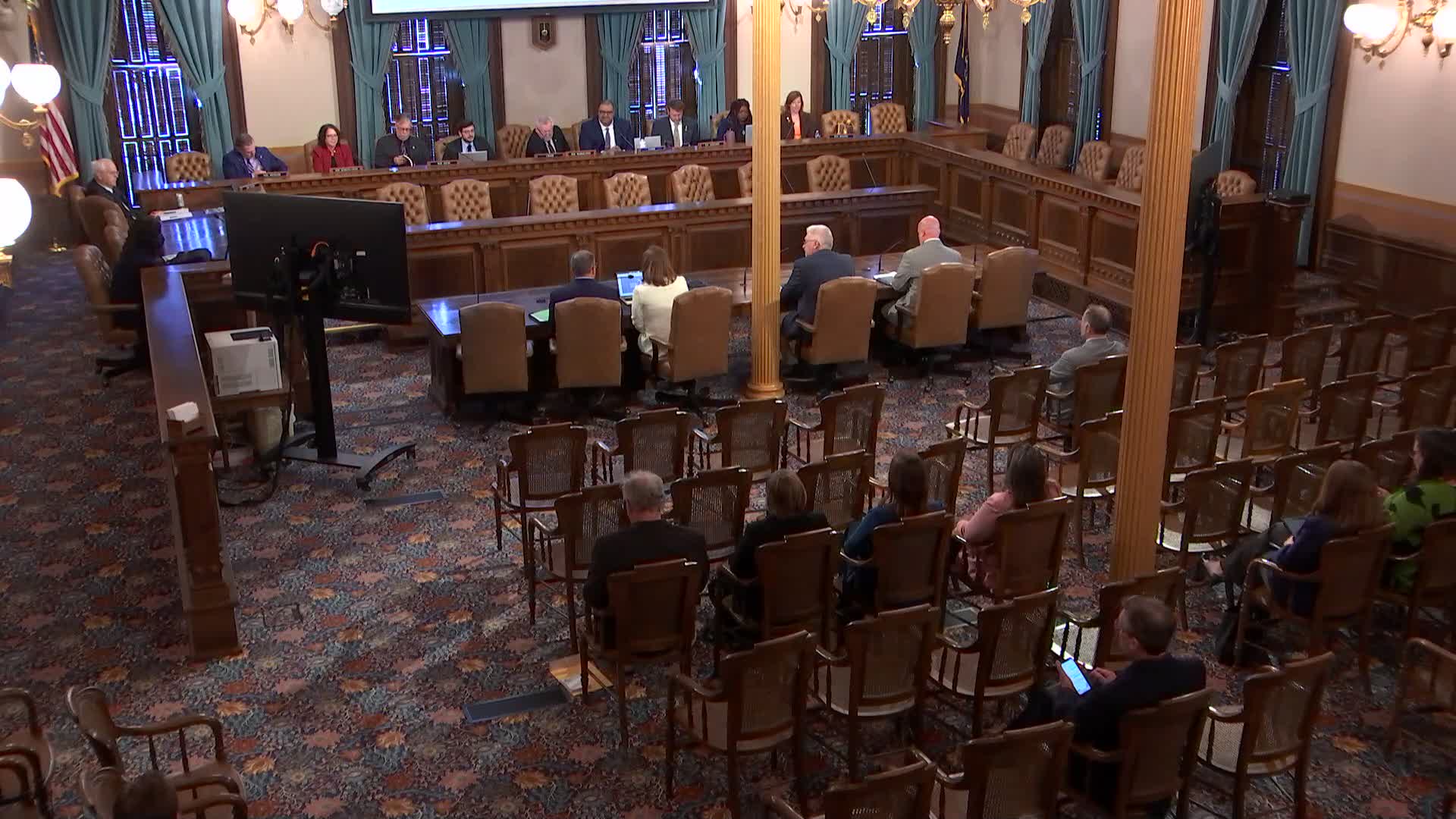
Leaders from Michigan’s community colleges urged the House Appropriations Subcommittee on Higher Education and Community Colleges on Oct. 12 to sustain and expand state programs that reduce tuition costs, shore up operations funding and remove barriers to dual enrollment.
"We are the Swiss army knife of institutions of higher education," Brandy Johnson, president of the Michigan Community College Association, told the committee. She asked lawmakers to continue funding the community college guarantee and other scholarships that reduce direct costs for students.
The request comes as community colleges argue they play a central role in statewide workforce development. Al Poshulka, vice president for enrollment marketing and government relations at Lake Michigan College, cited federal labor data to emphasize demand: "Michigan had on average, on an average day, 222,000 jobs open," he said, and asked the committee to treat college funding as an investment in talent pipelines.
Why it matters: Presenters said the state’s combination of the Michigan Achievement Scholarship (including the community college guarantee), Michigan Reconnect and Pell grants has sharply reduced tuition barriers for many students and increased enrollment. The community college guarantee — launched in fall 2024 — provides last-dollar tuition and fee coverage for recent high school graduates who enroll full time and complete the FAFSA. Association testimony said the guarantee is saving students about $2,134 per year on average and served more than 18,000 students in the current year.
Key requests and context: Brandy Johnson asked the subcommittee to back several budget priorities: a 4% increase in community college operations funding, continued funding for Michigan Reconnect (including proposals to lower the eligible age to 21), $15 million for MyLEAP student success grants, and a $45 million investment in an items program for infrastructure, technology, equipment, maintenance, safety and housing. Lake Michigan College representatives requested an additional $50 million for the postsecondary scholarship fund to support expanding cohorts.
College presidents described how those investments would be used. Dr. Nick Nisley, president of Northwestern Michigan College, highlighted capital and housing projects, including a student services hub and a recent state allocation of $3.75 million to expand aviation hangar capacity. He said the aviation program has a two-year waiting list and described strong placement and pay outcomes for graduates: "For our aviation students graduating with an associate degree in just two years, they're typically starting at a salary of $70,000, plus sign-on bonuses exceeding $50,000," he said.
Dual enrollment and early/middle college: Multiple presenters urged greater and clearer funding for dual enrollment programs that let high school students earn college credit. Chris Petrino, president of Gogebic Community College, said dual enrollment improves college readiness and reduces costs to families. Brandy Johnson and others described early middle college as an intensified pathway that can produce an associate degree or certificate alongside a high school diploma and recommended that the state improve how dual enrollment is funded so K–12 districts are not financially penalized for participation.
Capital matching parity: Johnson told the committee that community colleges face a higher state match requirement for capital outlay than universities (50% for colleges versus 25% for universities, per testimony), despite smaller project size and fewer local resources. She said the association will provide exact comparative percentages and detailed reports to the committee.
Data and follow-ups: Witnesses cited recent outcomes data: Michigan’s community colleges serve roughly 283,000 students (many part time), awarded more than 20,000 associate degrees and over 10,000 certificates last year, and have seen improved completion rates (association testimony combined a 38.4% success rate for a recent cohort plus additional continuing students to report roughly a 60% success measure). Presenters offered to provide district-level dual-enrollment participation and cost data from CEPI and said a cross-sector work group has produced policy recommendations and a request for better data collection on how many students reach the current 10-course dual-enrollment cap.
No formal votes were taken at the hearing. Presenters asked the subcommittee to consider the budget requests and said they would provide requested follow-up data on capital outlay distributions and dual-enrollment participation.
Looking ahead: Committee members asked follow-up questions about capital outlay percentages, the effect of dual enrollment on time-to-degree, and the feasibility of lowering the Michigan Reconnect eligibility age. Presenters urged sustained, multi-year investments rather than one-time appropriations to move community colleges closer to the historical one-third state funding share.