Get email alerts on the Homelessness topic
No spam. Unsubscribe anytime.
Marathon County task force recommends coordinated plan to reach 'functional zero' homelessness
Summary
A county–city task force presenting a final report recommended that the county administrator and Wausau city staff develop an actionable, coordinated, measurable plan to reach a functional zero homeless population; the county board motion directing staff to begin that work passed by voice vote.
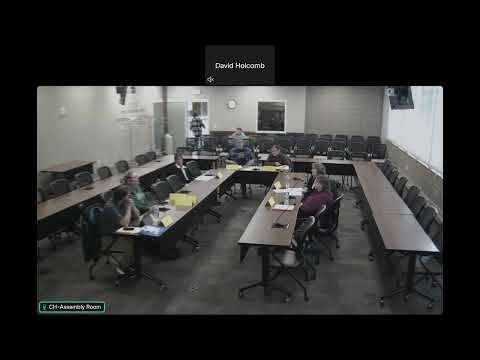
A Marathon County–City of Wausau task force on homelessness presented a final report and on a voice vote directed the county administrator to work with Wausau city staff to develop a coordinated, actionable and measurable long-term plan intended to reach a functional zero homeless population.
The task force members framed its recommendation as the next step after a multi-year review of local services and shelter capacity. The group summarized the local response: a year-round ("365") day and night shelter model operated by Catholic Charities, a community outreach specialist housed in the Wausau Police Department, ARPA-funded shelter supports and two officers funded by outside foundations to connect people to services, and partnerships with the Marathon County district attorney’s deflection and diversion programs.
Members told the task force that shelter capacity for single adults has been limited after the Salvation Army shifted to serve families; Catholic Charities provides a lower-barrier shelter with licensed capacity usually up to 30 beds and emergency overflow to 40 in severe cold conditions. Local presenters and nonprofit partners described persistent turnaways because demand has outstripped available shelter space and said many people who use shelter are employed but still unable to afford housing.
Task force presenters also described enforcement and policy changes the city and county put in place since 2019, including an ordinance restricting loitering in parking ramps and an aligned set of park rules and a 14-day notification-and-removal process for encampments. City and county officials said those enforcement steps were paired with outreach and shelter options so people displaced from encampments have alternatives.
The final report, which task force members said drew on a La Crosse "Pathways Home" approach, identified gaps including limited supply of affordable and accessible housing for people on fixed incomes, transitional and neutral (non-faith-based) housing options, housing for people with criminal histories or registry restrictions, and shortages of clinicians and treatment capacity for mental health and substance use in Marathon County. North Central Health Care and other speakers described competition for licensed clinicians and concerns that changes in Medicaid funding could worsen treatment capacity.
On the recommendation, a task force member moved to direct the county administrator to work with Wausau city staff to develop a long-term coordinated, actionable plan that would address a measurable goal of achieving a functional zero homeless population; Bill Conway seconded the motion. Members amended the motion to add the words "coordinated, actionable, measurable" and to clarify that both county and city staff would participate; the amendment and the amended motion passed by voice vote. No roll-call tally was recorded in the transcript.
Task force leaders said the county provided up to $400,000 in ARPA funds for night shelter, day shelter, transportation and case management, with Marathon County matching $200,000 for 2025 and consideration of additional funds in the county budget process for 2026. Presenters recommended producing a succinct slide presentation for elected leaders and proposed presenting the final report jointly to both the city council and county board to speed the policy response.
Members stressed that "functional zero" must be defined in the plan and that the plan include measurable benchmarks and data collection so policymakers can track whether inflow and outflow of unsheltered people reach a manageable level. The task force scheduled follow-up work to finalize the presentation and to coordinate how the report will be routed to the city and county policy bodies.
The task force also summarized existing local programs and partners named in the report, including Catholic Charities (Good Shepherd Shelter and day services), Bridge Street Mission, Salvation Army (family shelter), Grama men's recovery shelter, Hager House, Gospel TLC, North Central Health Care, ADRC and other nonprofits and faith-based providers; presenters described those organizations’ roles but said available data on the unhoused population remains incomplete because not all people are entered into HMIS/Clarity.
AI generated
The text on this page is AI generated. Summaries, highlights, analysis, and video transcripts are all produced from the original source material.
AI can make mistakes, so if you spot one, and we will fix it for everyone.
Note: the source content is unaltered by us. Any content source we link to, be it a video, an audio recording, or a document, is presented exactly as its publisher released it. That publisher is usually a government body, sometimes an individual official or another organisation.