Get AI Briefings, Transcripts & Alerts on Local & National Government Meetings — Forever.
Committee examines bill to let child-support payments follow children placed with kin caregivers
Loading...
Summary
Senate Bill 1923 would allow child-support payments to follow a child placed with an adult caregiver under certain temporary kinship or parental-child safety placements. Witnesses described practical obstacles grandparents and kin face and urged the committee to consider administrative options.
Senate Bill 1923, sponsored by Sen. West, would permit child-support payments to follow a child placed with kin or an authorized adult caregiver under specified temporary arrangements, such as parental-child safety placements (PCSPs) or chapter-34 authorization agreements. The committee heard testimony from a kinship caregiver advocate and family-defense attorneys and left the bill pending for further work.
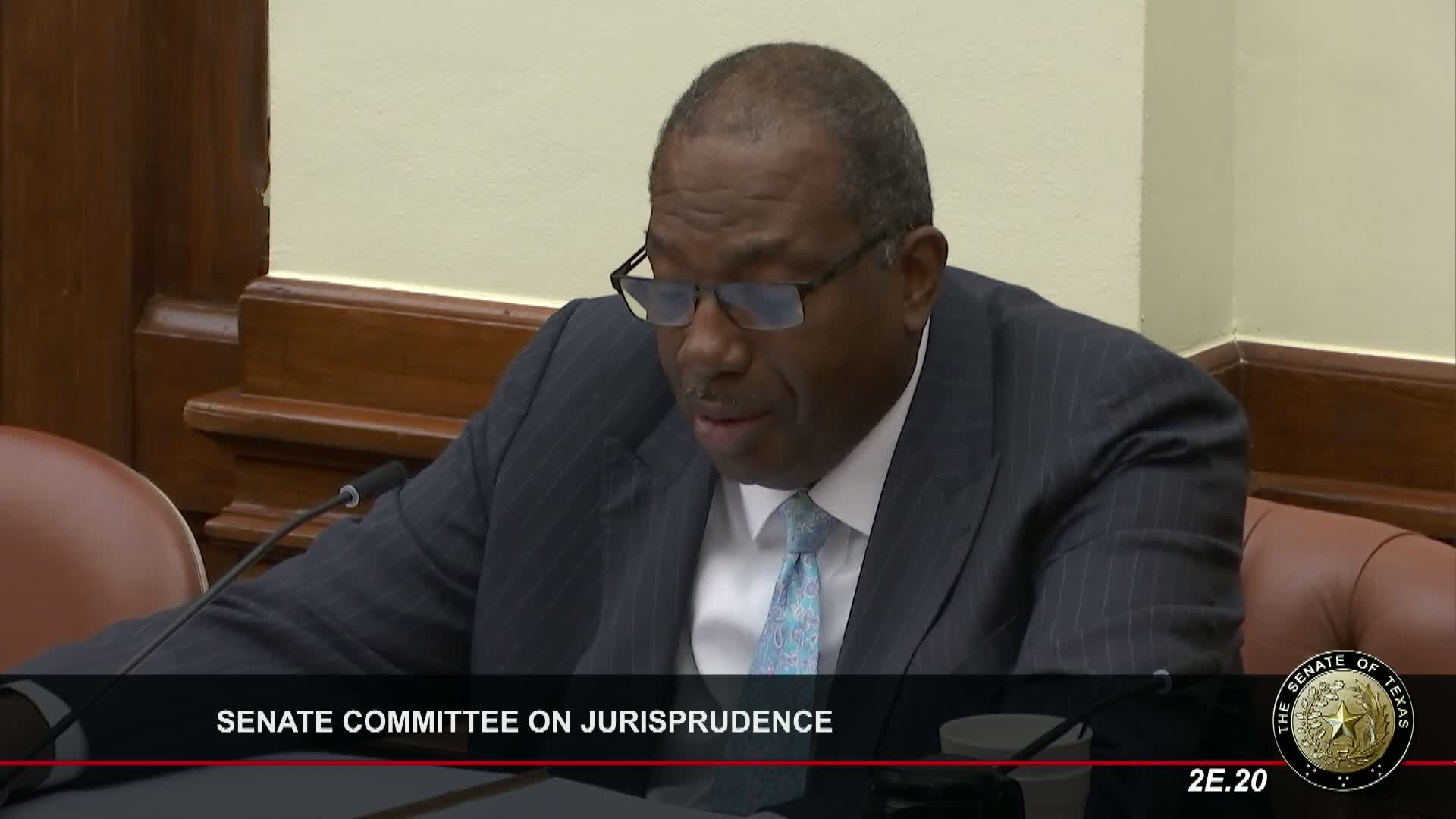
Senator Charles West told the committee the measure addresses a statutory gap in which child-support payments remain payable to the custodial parent even when a child is temporarily placed with kin. The committee substitute specifies eligibility conditions the sponsor described: the child must be voluntarily relinquished (as defined by the substitute), the caregiver must have physical possession for at least six months, an authorization agreement or PCSP must be in effect, and any modification to support would be temporary and automatically terminate 90 days after the agreement or on the termination date specified.
Mercedes Bristol, executive director of Texas Grandparents Raising Grandchildren and a kinship caregiver herself, testified about her experiences receiving children placed for safety and the financial difficulties kin caregivers face when state-administered supports and services do not transfer. Bristol told the committee she had been denied one-time TANF assistance and described gaps in services that led to kin caregivers bearing out-of-pocket costs for basic needs.
Julia Hatcher, president of the Texas Association of Family Defense Attorneys, testified in support and cautioned that administrative options—such as the attorney general handling temporary orders administratively—might be preferable to routing every temporary support modification through courts. Hatcher also noted PCSPs are voluntary, time-limited arrangements (statutorily limited to 90 days with extensions), and that kinship payments in foster-care settings differ from the temporary-authority arrangements contemplated in the bill.
Senators and witnesses emphasized that kinship caregivers often receive limited public benefits and that a statutory mechanism to let support “follow the child” temporarily could ease caregivers’ burdens pending longer-term case outcomes. The committee did not take final action and left the bill pending while the sponsor and stakeholders continue discussions about administrative versus judicial implementation.
No vote on the bill was recorded during the hearing.