Get AI Briefings, Transcripts & Alerts on Local & National Government Meetings — Forever.
Planning board recommends trustees expand where accessory dwelling units are allowed in Dobbs Ferry
Loading...
Summary
The Planning Board voted to send a positive recommendation to the Board of Trustees for a local-law amendment to permit accessory dwelling units in three medium-density residential zones, limited to single‑family properties and separate accessory structures.
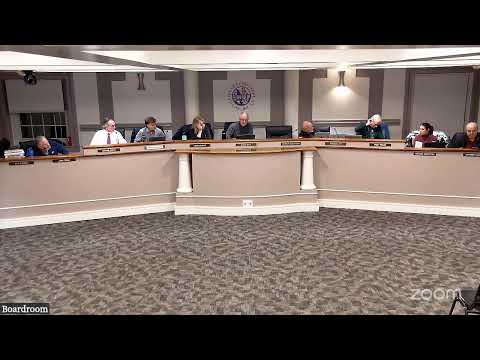
The Planning Board reviewed a draft local law from the Board of Trustees that would expand where accessory dwelling units (ADUs) can be permitted in Dobbs Ferry and voted on Jan. 9 to send a positive recommendation to the trustees.
Under the proposed change, ADUs would be permissible in the MDR‑1, MDR‑2 and MDR‑H zoning districts, but only on lots with a single‑family principal dwelling and only in a separate accessory structure (the draft specifies a separate principal building for the ADU). Planning staff noted the change aims to enable property owners in these denser residential districts to qualify for Habitat for Humanity grant funding for ADUs and to expand housing options without altering multi‑family zoning rules.
Board action and rationale: The board asked a few clarifying questions about structure type and application of building code rules for conversions versus new accessory structures, then voted to forward the local-law referral with a positive recommendation to the Board of Trustees. The board and staff noted the village is simultaneously updating its comprehensive plan and the proposed ADU expansion is an interim measure to allow grant applications and modest housing increases while broader zoning updates are finalized.
Why it matters: ADU legalization in additional zones could allow property owners to add rental or family‑use units to existing single‑family properties and detached structures in selected medium‑density districts, potentially increasing affordable housing stock and enabling homeowners to access state or nonprofit grant programs.
Next steps: The Board of Trustees will consider the planning board’s recommendation at an upcoming meeting and may hold its own public hearing before adopting any local law change.