Lifetime Citizen Portal Access — AI Briefings, Alerts & Unlimited Follows
Team Alaska stresses rural outreach, cultural exchange ahead of 2026 Arctic Winter Games in Whitehorse, Yukon
Loading...
Summary
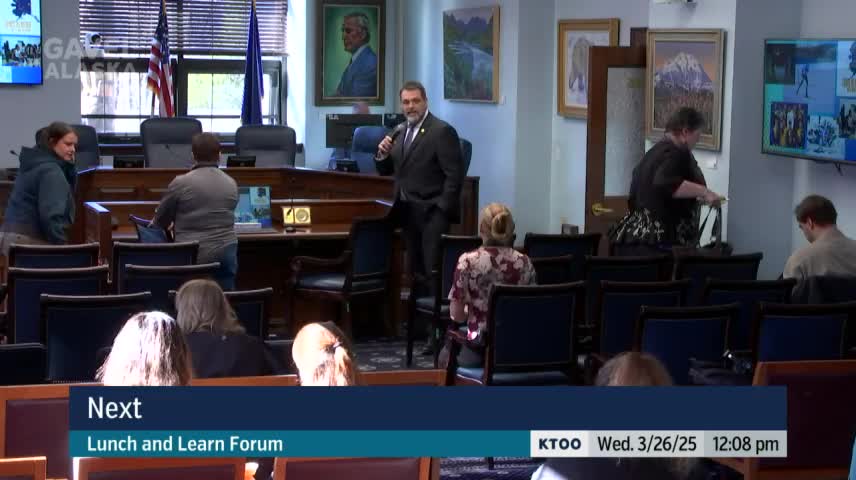
At a legislative lunch-and-learn, Team Alaska leaders described the history, volunteer-run operations and rural outreach work of the Arctic Winter Games and said Whitehorse, Yukon will host the 2026 games.
At a lunch-and-learn hosted for members of the Alaska Legislature, Team Alaska officials described efforts to recruit rural athletes and volunteers for the Arctic Winter Games and highlighted the cultural exchange component of the event.
Sarah Frampton, Team Alaska Arctic Winter Games executive director, said Team Alaska’s job is to assemble “those Alaskan coaches, athletes, staff to represent our state.” She described the games’ origins in 1970 and said they emphasize both athletic competition and cultural exchange among northern communities.
The Arctic Winter Games, Frampton said, began as a response to larger multi‑province events and were designed to give northern territories a level playing field. Team Alaska brings contingents to compete in a broad slate of events and also fields a cultural contingent that performs throughout the week, she said.
Nicole Johnson, president of Team Alaska’s board and a longtime competitor and official, described outreach to rural areas. Johnson said the organization has increased participation from rural Alaska in recent years: “We have grown our rural athletes from anywhere from 10 to 20 athletes to last year, 66 athletes from rural Alaska,” she said, and added that the organization hopes to reach about 100 rural athletes in future years.
Organizers described the logistics and fundraising demands of the event. Frampton said she is the only paid staff member and that much of the work falls to volunteers and the board. She said Team Alaska typically coordinates travel for a contingent that organizers estimate at roughly 355 people, and that the total number approaches 400 when staff and volunteers are included.
Reggie Jewell, an Arctic Winter Games alumnus and longtime coach, recounted early competitions and the event’s community-building effect. “That’s magic that happens,” Jewell said, describing lifelong friendships and mentoring that emerge from the games.
Speakers noted that the state of Alaska has historically been a formal partner in the games’ charter and that Team Alaska conducts private fundraising and relies on volunteers to cover many costs. Organizers asked legislators to continue awareness and support of the program’s role in youth development across Alaska’s hub and village communities.
Looking ahead, Frampton and Johnson said Whitehorse, Yukon was awarded the 2026 Arctic Winter Games. They said Whitehorse has venues for downhill skiing and biathlon and that the city and surrounding community have previously hosted the event. No legislative action or vote was recorded during the session.
The presentation included a brief question-and-answer period in which organizers listed the sports contested at the games (including alpine skiing, biathlon, arctic sports, curling, hockey, volleyball and others) and described cultural programming and volunteer roles. Organizers also recounted media interest in individual athletes during recent games.