Get AI Briefings, Transcripts & Alerts on Local & National Government Meetings — Forever.
Caucus discusses health and professional licensing bills: behavior‑analyst board, oral preventive assistants, hospital data and epinephrine language
Loading...
Summary
Lawmakers previewed a set of health‑sector bills: moving behavior‑analyst regulation to its own licensing board, creating an oral preventive assistant training and scope for dental assistants, requiring hospitals to collect optional immigration‑status indicators on intake forms, and broadening statutory language for school epinephrine delivery.
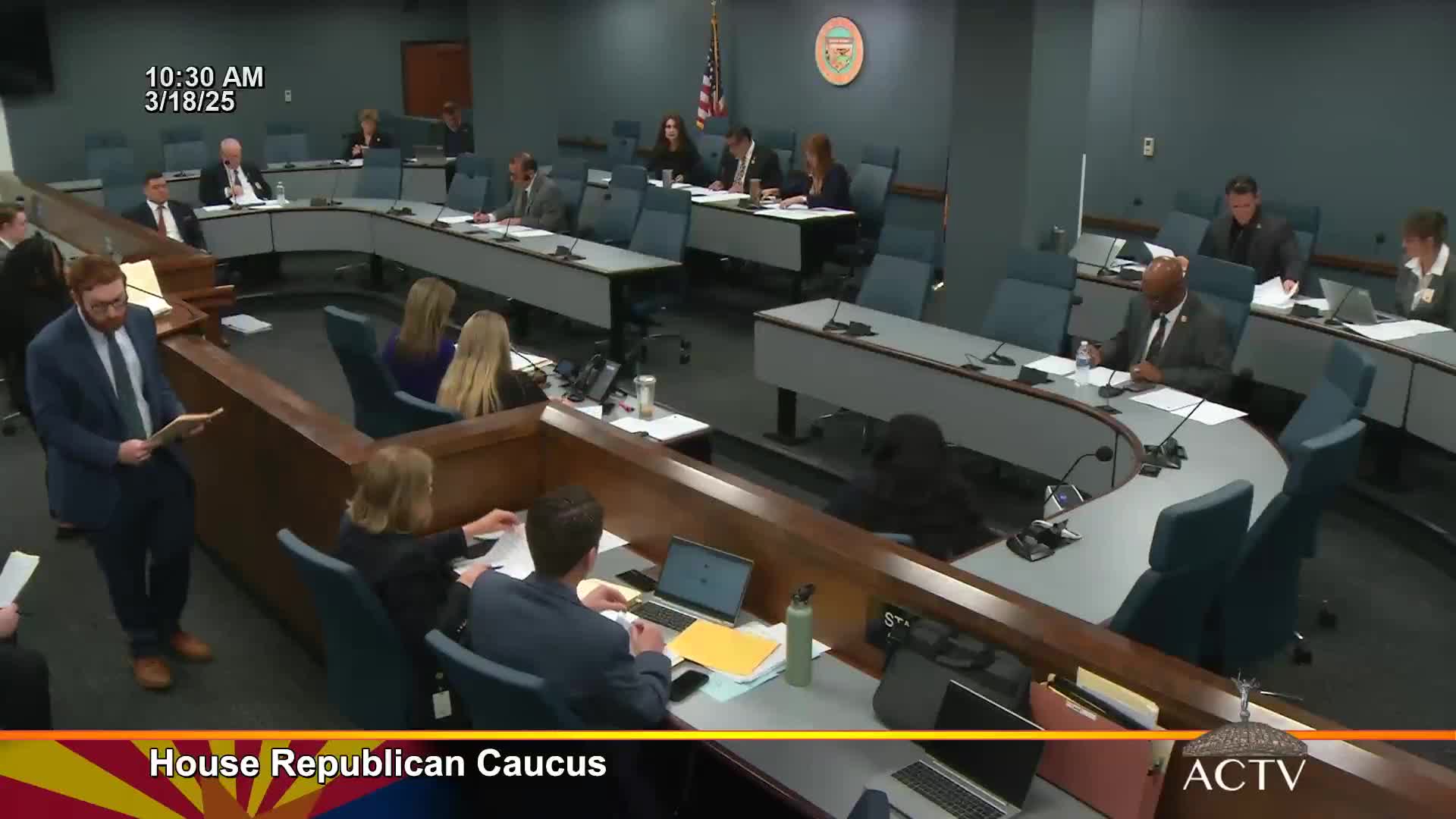
During caucus, members reviewed multiple measures addressing professional licensure, clinical scope of practice and medical‑reporting requirements.
House Bill 2027 would transfer licensure and regulatory oversight of behavior analysts from the Arizona Board of Psychologist Examiners to a standalone State Board of Behavior Analysts, expanding membership on that board. Sponsors said the change responds to rapid growth in the number of behavior‑analyst licensees and aims to streamline regulation; committee discussion focused on whether the change expands government or simply reorganizes existing functions, and sponsors said staff and office locations would remain the same.
Senate Bill 1124 (listed in caucus as SB 11 24) would establish an "oral preventive assistant" role. The bill requires dental assistants who seek the expanded role to complete a board‑approved training program consisting of 120 hours of didactic and clinical instruction and to practice only under direct supervision of a dentist or dental hygienist. Sponsors and supporters said the proposal addresses dental‑hygienist shortages—testimony cited a reported shortage of about 7,000 hygienists—and aims to improve access to preventive services, especially in rural areas. Committee discussion covered grandfathering provisions for current practitioners and unanswered questions about who pays for training and how programs would be administered; staff did not provide a fiscal note during caucus.
Senate Bill 1268 would add an optional question on hospital patient registration forms to indicate whether a patient is lawfully present, unlawfully present or a U.S. citizen, and would require quarterly reporting on patient immigration status to the Department of Health Services. Committee remarks emphasized the form would be optional, would not change clinical eligibility for care, and that hospitals would still provide treatment regardless of responses; members asked whether answering the question could affect immigration pathways, and staff said existing federal rules about public‑benefit use and immigration remain unchanged by the measure.
Separately, Senate Bill 1440 (education package) would broaden statutory language to "epinephrine delivery systems" rather than only "auto‑injectors," a change intended to allow noninjector options such as nasal formulations; caucus discussion raised clinical and monitoring concerns if inhaled or nebulized delivery methods were included.
Why it matters: The bills affect access to care, workforce capacity and regulatory structure for health professions, with potential consequences for rural access and the administration of professional boards. Several items carried questions about training costs, reporting burdens and regulatory implementation that caucus members asked staff and sponsors to address.
Next steps: Sponsors were asked for further fiscal details and implementation plans for training programs, reporting mechanisms, and how the new board would operate administratively.