Get email alerts on the Trail Development topic
No spam. Unsubscribe anytime.
Morgan County hears White River Greenway master-plan presentation; adoption deferred
Summary
HWC Engineering presented a White River Greenway Master Plan that breaks the corridor into five buildable segments and a Waverly loop; commissioners agreed to return the plan for formal action at a future meeting rather than adopt it tonight.
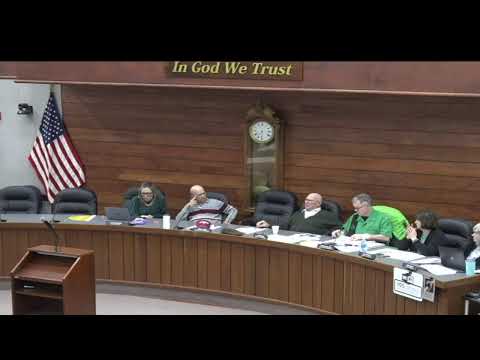
Kyle Leakin, a landscape architect with HWC Engineering, presented a draft Morgan County White River Greenway Master Plan to the Morgan County Board of Commissioners on March 17, outlining potential routes, priorities and estimated per-mile budgets for the corridor that would extend from the existing Waverly Park segment.
The purpose of the plan, Leakin said, "was to help establish some consensus and refine a possible route for a continuation of the White River Greenway throughout Morgan County," then described public outreach, the analysis that informed route options and the project-level segmentation the consultant recommends.
The plan divides the corridor into five initial segments plus a Waverly loop, with individual segment lengths and estimated cost ranges per mile as follows: Segment 1 (south of Martinsville) about 2.6 miles; Segment 2 about 2.8 miles; Segment 3 about 5.2 miles; Segment 4 about 4.1 miles; Segment 5 about 4.3 miles. Leakin told commissioners the budgets in the plan are conservative and include anticipated soft costs such as permitting and engineering. The plan assumes "a 10 foot wide asphalt trail" with additional buffer/right-of-way space, matching public input that favored a separated paved greenway over on-road treatments.
Leakin reviewed constraints that affect routing and costs: topography and hydrology along the river, multiple bridge crossings on some segments (notably segment 4, which carries the highest per-mile estimate because it requires a large bridge crossing near State Road 144), shoreline erosion in places, and the need for culverts, retaining walls or boardwalks in wet areas. He said Segment 3 — the longest continuous frontage along the White River — had the lowest cost per mile despite its length; Segment 4 is the most expensive per mile because of the bridge needs.
HWC described the outreach process for the plan: a public workshop held in October and an online survey with 26 participants. Survey and workshop respondents favored a separated paved greenway with furnishings, bike racks, lighting, signage and, where feasible, restrooms or water stations. The consultant said the survey identified south-of-Waverly segments (segments 2 and 3) and a proposed Waverly loop as high public priorities.
Commissioners and attendees asked questions about priorities and funding. Leakin said priorities are not locked in but that two tracks emerged from public input and staff discussion: completing a connection south of Martinsville toward Morgan–Monroe State Forest and advancing a Waverly-area loop or an extension immediately south of Waverly. On next steps he recommended the county adopt the plan as a guiding document, continue conversations with state and regional partners (IDNR, INDOT, MPOs) and pursue design and funding for one of the initial segments.
The board did not adopt the plan at the March 17 meeting. Commissioners directed that staff prepare a resolution and return the plan for consideration at the next meeting so the public would have another opportunity to review and comment before formal adoption.
If the plan is adopted in a future meeting, HWC’s summary tables and maps would be used to define project-level scopes for grant and design work, the consultant said.
AI generated
The text on this page is AI generated. Summaries, highlights, analysis, and video transcripts are all produced from the original source material.
AI can make mistakes, so if you spot one, and we will fix it for everyone.
Note: the source content is unaltered by us. Any content source we link to, be it a video, an audio recording, or a document, is presented exactly as its publisher released it. That publisher is usually a government body, sometimes an individual official or another organisation.