Get Full Government Meeting Transcripts, Videos, & Alerts Forever!
Get email alerts on the Irs Chief Counsel Nomination topic
No spam. Unsubscribe anytime.
Senators press Korb on IRS privacy, whistleblowers, ERTC fraud and past remark saying an official "should have been shot"
Summary
Donald Korb, nominee for IRS chief counsel, defended past remarks and pledged to follow the law, work with the whistleblower office and coordinate with the Office of Tax Policy on guidance timing; senators pressed him on taxpayer privacy, disclosures to ICE, revenue ruling 2024-14 and enforcement fairness.
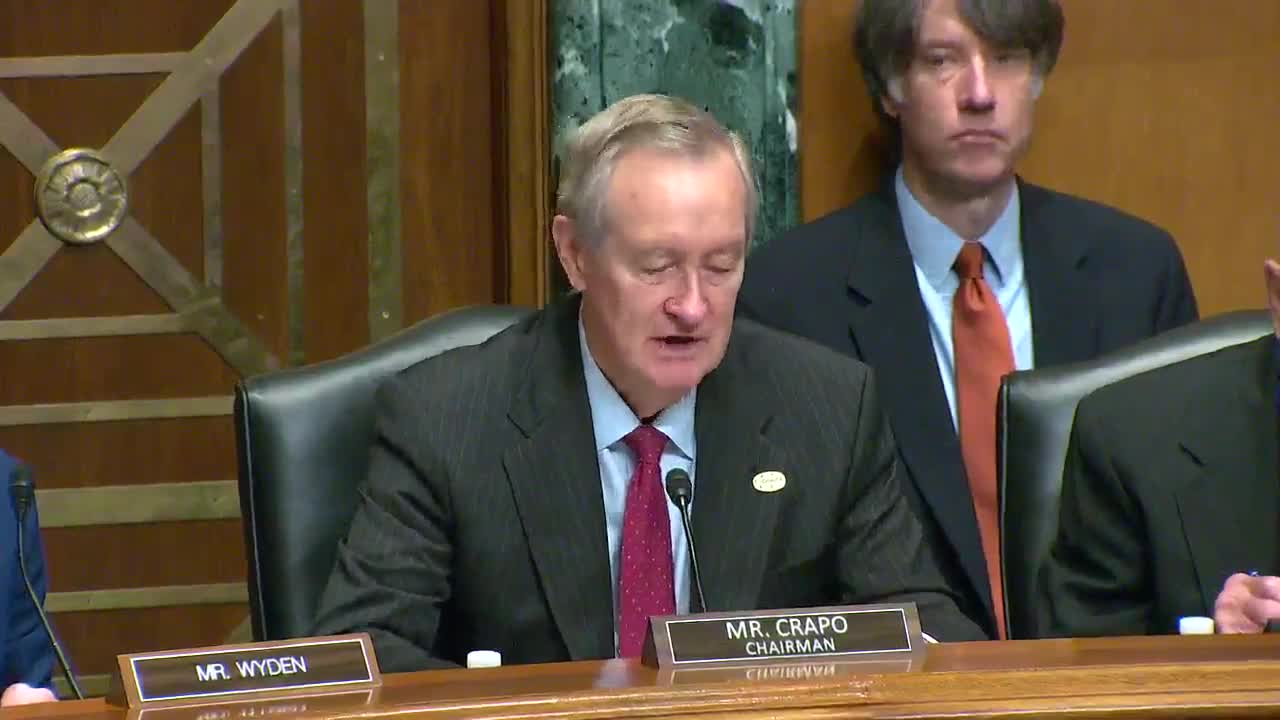
Donald Korb, President Trump's nominee to return as chief counsel for the Internal Revenue Service, faced sustained questioning on taxpayer privacy, the whistleblower program, a controversial comment he made to committee staff and the timing of guidance for multiple tax changes.
Korb, who previously served as IRS chief counsel from 2004 to 2008, told the committee, "The words, that, Senator Wyden was referencing are taken out of context from a larger discussion being had at the time, and they were clearly used merely as a figure of speech." He added that he cares "deeply about the IRS" and pledged that if confirmed he would "follow the law."
Why it matters: the IRS chief counsel advises the commissioner and shapes legal guidance and enforcement priorities. Senators from both parties pressed Korb on how he would handle politically sensitive directives, improper disclosures of taxpayer returns, and long delays in whistleblower claim processing.
Senators asked Korb to respond to several specific concerns. On taxpayer privacy and alleged pressure to disclose returns to Immigration and Customs Enforcement, Korb stressed his commitment to taxpayer rights and said he would prioritize "correct and impartial interpretation of the Internal Revenue laws." On whether a chief counsel approving improper disclosure of returns should be prosecuted, Korb declined a direct policy answer and emphasized that court findings and legal questions must be respected.
On whistleblowers, Korb agreed to work with Senator Chuck Grassley and the whistleblower office to address processing delays and to explore claim disaggregation to speed awards. Grassley asked Korb to help restore predictability and fairness with respect to Revenue Ruling 2024-14, a guidance instrument dealing with partnership transactions; Korb said he would be briefed and work with Treasury's Office of Tax Policy to determine next steps.
Senators also pressed Korb on the employee retention tax credit (ERTC) fraud wave and on corporate-tax provisions in the reconciliation legislation. Korb said he would "work very closely with the Office of Tax Policy and the Treasury Department to make sure that timely guidance is provided" and repeatedly pledged to follow statutory requirements, including the corporate minimum tax enacted in 2022.
Several senators, led by Senator Ron Wyden, repeatedly returned to Korb's reported remark that an official "should have been shot" when discussing a resignation of an acting IRS commissioner; Wyden said that comment raised questions about political motives and judgment. Korb said the remark was figurative, apologized for any misunderstanding of tone, and reiterated that he would maintain professional standards if confirmed.
Korb also addressed enforcement fairness and personnel pressures, telling Senator Sheldon Whitehouse that he would not be "swayed by people who are not in the agency telling me what to do" in matters of employee discipline.
The hearing produced no formal committee action. Korb committed to follow-up work with senators and Treasury officials and to provide written responses where appropriate.