Get email alerts on the Zoning Accessory Structures topic
No spam. Unsubscribe anytime.
Planning commission backs staff study to ease 3-foot setback for accessory structures
Summary
After a workshop discussion, the Dallas Planning Commission voted 3-2 to ask staff to analyze amending the development code that now requires a 3-foot side and rear setback for accessory structures up to 15 feet tall.
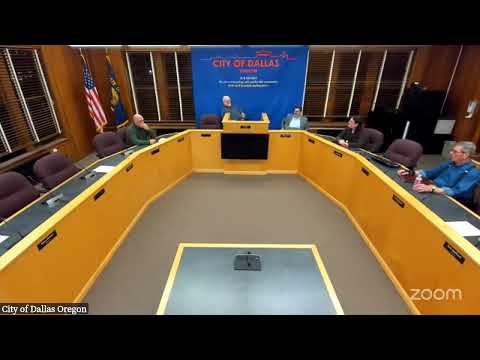
The Dallas Planning Commission voted 3-2 at its meeting to ask staff to analyze and prepare code language that could remove or modify the current 3-foot side and rear setback for accessory structures under 15 feet in height.
The recommendation seeks City Council consideration of amendments to Dallas Development Code §2.203, which the staff presentation identified as the section that sets a 3-foot interior side- and rear-yard setback for accessory structures up to 15 feet tall. Code Services staff told commissioners the change is prompted by a high number of nonconforming accessory structures and by the fact that many small structures are exempt from building permits even though zoning setbacks still apply. “So, essentially, this…relates to setbacks for accessory structures. Currently…in residential areas is 3 feet from the side and rear property lines,” the Code Services staff said during the workshop-style discussion.
Why it matters: commissioners and staff said the change would affect homeowners who install storage sheds, detached garages, workshops and prefabricated metal carports. Staff said small structures under 200 square feet are exempt from building-permit requirements but still must meet zoning setbacks, and that an administrative adjustment in the code only allows 20 percent of the numerical standard (about five inches on a 3-foot setback), making the existing adjustment process of limited practical use.
Discussion focused on safety, enforceability and fairness. Building-department staff noted that the state building code allows structures to be constructed up to property lines if they meet fire-rating and noncombustible material standards, but zoning rules currently do not. The building official urged caution about removing the setback entirely: “As an engineer charged with health and safety…I'm not comfortable with just getting rid of it completely without saying, you know, ‘You want to build a metal structure? Not a problem. But any accessory structure right at the property line, I have a problem with that,’” the building official said.
Code Services staff countered that many of the most problematic installations are prefabricated metal carports that are not highly combustible and that the city has a substantial number of existing nonconforming structures. Staff also told commissioners they checked aerial photos of a sample block and estimated roughly 39 percent of properties in that sample appeared to have setback violations; staff described that figure as a nonrandom illustration rather than a formal survey.
Commissioners discussed alternatives including a narrowly tailored expedited variance process, lowering the 15-foot threshold, or limiting any change to uninhabited accessory structures (not accessory dwelling units). Staff said accessory dwellings would not be included in the proposed change, and that any draft language would return to the commission and then to council for public hearing and final action.
Votes at a glance: the commission held several procedural votes during the meeting (voice votes without recorded roll calls) including keeping the current chair and vice chair (voice vote; approved) and approving the minutes with the requested adjustment (voice vote; approved). On the development-code matter, the commission approved the motion to ask staff to analyze and prepare code language for City Council consideration by voice vote recorded as 3 yes, 2 no.
Next steps: staff will prepare proposed code language or options for amendment and present those to the commission and the City Council in a public hearing process. If the commission or council decides not to pursue code amendments, staff indicated it would resume enforcement actions on nonconforming structures that are subject to existing demolition orders.
AI generated
The text on this page is AI generated. Summaries, highlights, analysis, and video transcripts are all produced from the original source material.
AI can make mistakes, so if you spot one, and we will fix it for everyone.
Note: the source content is unaltered by us. Any content source we link to, be it a video, an audio recording, or a document, is presented exactly as its publisher released it. That publisher is usually a government body, sometimes an individual official or another organisation.