Get email alerts on the Hazardous Materials Tier2 topic
No spam. Unsubscribe anytime.
DEC briefs Denali LEPC on Tier 2 reporting, ePlan access
Summary
Alaska Department of Environmental Conservation staff reviewed federal EPCRA/Tier 2 reporting requirements, Alaska-specific thresholds and the DEC ePlan database, and answered questions about which local facilities must file and how first responders can obtain access to the reports.
Kathy Shea, with the Alaska Department of Environmental Conservation(DEC) Spill Prevention and Response program, told the Denali Local Emergency Planning Committee on a recent evening that the Emergency Planning and Community Right-to-Know Act was created after large, lethal industrial releases in the 1980s and requires fixed facilities to report hazardous-substance information.
Shea said Tier 2 reports are submitted for any fixed facility that stores, at any time during a calendar year, hazardous substances that meet federal or state reporting thresholds. "Those reports are due to DEC by the first of every March for the previous calendar year," she said. She described the DEC ePlan database as the repository for submitted Tier 2 forms and site maps and said first responders and LEPC chairs can request official access.
The presentation summarized federal EPCRA provisions and Alaska-specific requirements. Shea noted that some substances on the EPA "list of lists" have low reporting thresholds (from single pounds to multiple thousands of pounds) while Alaska treats some classes (poison gas, explosives, flammable solids, radioactive hazard gases) as reportable in any quantity and sets a 10,000-pound threshold for other hazardous substances. She pointed out that common local items can meet reporting thresholds: "Anything that is 1,200 gallons or more reaches that 10,000-pound threshold," she said, using home heating oil as an example for nonresidential facilities.
Shea demonstrated the ePlan sign-in and search functions and said facility submissions typically include site contact information, 24-hour phone numbers, a site map with access points and where chemicals are stored inside the facility, and material-specific hazard details drawn from Safety Data Sheets. She emphasized that reporting is self-reported by facilities but asked LEPC members to notify DEC if they suspect a facility should be reporting but is not.
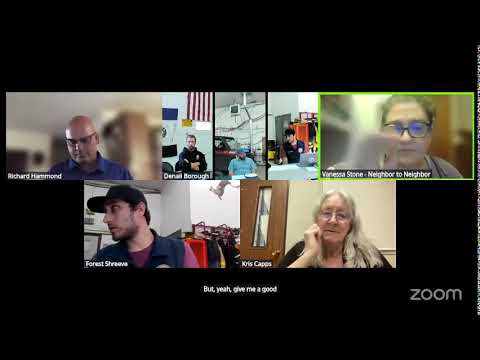
Committee members pressed practical questions about who in the borough should hold ePlan access. Forrest, Denali Borough emergency manager, noted that Chief Sparks was assigned LEPC access and said the borough would follow up with local fire chiefs about requesting accounts. Vanessa Stone, president and treasurer of Neighbor to Neighbor (the Denali food bank), and others discussed likely local Tier 2 reporters such as retail fuel stations, school generators and large institutional fuel tanks.
Shea offered DEC resources, including a Tier 2 FAQ, links to the EPA materials and a DEC contact for account issues and training. "If you are aware of a facility that should be reporting and isn't, let's figure out how to get them in compliance so that we all have the information that we need," she said.
The committee asked Shea to share her slides; she agreed to provide the presentation and supplemental links after the meeting.
AI generated
The text on this page is AI generated. Summaries, highlights, analysis, and video transcripts are all produced from the original source material.
AI can make mistakes, so if you spot one, and we will fix it for everyone.
Note: the source content is unaltered by us. Any content source we link to, be it a video, an audio recording, or a document, is presented exactly as its publisher released it. That publisher is usually a government body, sometimes an individual official or another organisation.