Lifetime Citizen Portal Access — AI Briefings, Alerts & Unlimited Follows
Presenter warns of evolving Russian missile and drone tactics, cites civilian targeting in Kherson
Loading...
Summary
A presenter outlined changes in Russian missile and drone operations since Feb. 2022, describing larger salvos, repurposed Soviet weapons, new drone types and tactics that challenge Ukrainian air defenses and often put civilians at risk, citing a UN commission finding of attacks on civilians in Kherson.
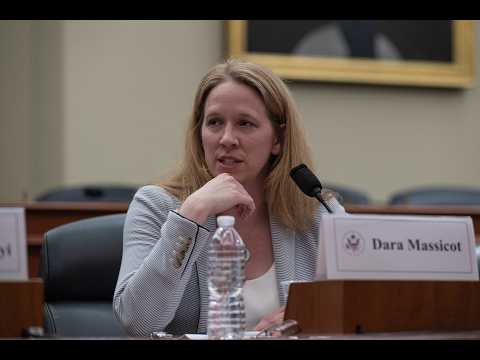
A staff member outlined how Russian missile and drone tactics have evolved since Feb. 2022, saying higher production rates, repurposed Soviet weapons and new unmanned systems now pose a greater challenge to Ukrainian air defenses and increasingly endanger civilians.
The presenter said Russia has repurposed older Soviet anti-ship cruise missiles and some air-defense missiles for land-attack roles and has increased one-way attack drone and missile production since a partial mobilization in September 2022. He said salvo sizes vary — from about 30 missiles to as many as 150–200 in larger, rarer waves — and that engineers are experimenting with coordinated arrival times, looping and double-back flight paths, altitude changes, and penetration aids such as chaff and flares to saturate defenders.
The presenter described a range of warheads and munitions in use, including cluster munitions and thermobaric rockets associated with long-range artillery systems like TOS-1 and TOS-2, and said ballistic and complex-profile missiles such as the Kinzhal pose interception challenges. He said Ukrainian air defenses have repeatedly improved their ability to intercept many cruise missiles but that coverage gaps remain because of Ukraine’s size and the difficulty of protecting all areas.
On drones, the presenter said the last three years have seen the most dramatic change in warfare, with the rise of loitering munitions, first-person-view drones, one-way attack drones and, since 2024, wired or fiber-optic drones. He said Shahed-type production and attacks have expanded, with attacks rising from about 100 drones per day in January to averages he described as 500–700 per day and expected to climb; he also said engineers have made drones harder to detect and intercept by changing paint, speed and terminal maneuvers and by using decoys.
The presenter said Russian reconnaissance and strike capabilities have improved, noting that Iskander missiles have been used to target forward-deployed Patriot teams when those teams remain stationary too long. He also said Russian strikes sometimes appear to target civilian infrastructure directly, citing hospital strikes, attacks on busy shopping centers and apartment buildings hit by missiles originally designed for anti-ship use.
Quoting the UN’s Independent International Commission of Inquiry on Ukraine as read in his remarks, the presenter said, "Russian armed forces have committed the crimes against humanity of murder and the war crimes of attacking civilians through a month long pattern of drone attacks targeting civilians on the right bank of the Dnieper River in Kherson province in Ukraine," and that the commission found those acts aimed to spread terror among the civilian population. The presenter characterized recent activity in Kherson city as a "human safari," saying drone units there have targeted civilians in public spaces, including a toddler in a backyard.
As for remedies, the presenter repeated a general assessment that damaging or destroying launch platforms — specific ships, certain bombers and ground launch platforms — has been one effective but difficult approach, citing past examples such as Operation Spiderweb. He said more purpose-built interceptors for attack drones would be critically important given rising production rates and that Western production of systems such as Patriot, NASAMS and IRIS has been slow enough that Russia expects to wear down Ukrainian defenses over time.
The presenter concluded that Ukraine’s layered air-defense network, when operational and supported by partners, intercepts the majority of cruise missiles and deters much Russian tactical aviation, but he warned that the network remains insufficient to protect the entire country and that gaps and high-value air-defense targets make the system vulnerable.
The remarks were presented as analysis and recommendation; no formal decisions or actions were recorded in the meeting.