Lifetime Citizen Portal Access — AI Briefings, Alerts & Unlimited Follows
St. Joseph County assessor urges residents to file appeals as assessments rise; says SB1 provides limited relief
Loading...
Summary
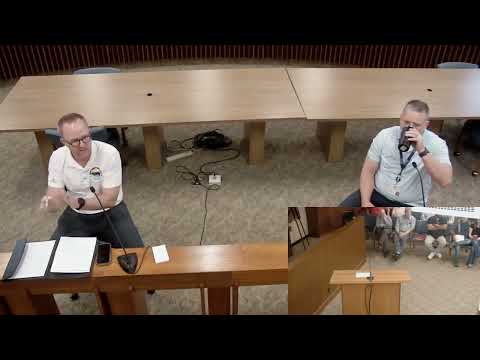
St. Joseph County Assessor Mike Castellon urged homeowners at a Saturday town hall to file formal appeals after widespread increases in assessed values, saying many rises came from state cost-table updates and market activity beyond local control.
St. Joseph County Assessor Mike Castellon urged homeowners at a Saturday town hall to use the formal appeals process after widespread increases in assessed values, saying many increases stem from state-mandated cost-table adjustments and market activity rather than local assessor discretion.
Castellon said the state and court rulings set the framework for assessments and that local appeals are the principal way taxpayers can raise neighborhood-specific concerns. "The appeal process is so important because then we can begin to look at your property and compare it to individual properties," he said.
Why it matters: County residents have reported large assessment increases that in some cases outpaced household budgets. Although most residential taxpayers are subject to Indiana's 1% property-tax cap for homesteads, Castellon and other officials said rising assessed values — not higher tax rates — are driving larger bills for some homeowners. The assessor's office said it inherited a backlog of appeals and has changed procedures to provide more one-on-one review, but the office and local leaders warned that some remedies require action by state legislators.
Assessment process and causes of increases Castellon said assessments combine land and structure values, use state cost tables that are updated periodically, and apply market "trending" when recent sales differ from current assessments. He described two mechanisms that affected many 2024–25 assessments: local market trending based on neighborhood sales and a state decision to raise cost tables using multiple years of inflation. "The state decided to raise those cost tables, and they used 4 years of inflationary value out of my control," Castellon said.
He described how limited sales in a neighborhood — or investor flips and teardown/replace projects near places such as the University of Notre Dame — can skew the neighborhood median sales figure used for trending. To limit those effects locally, Castellon said the office will stratify neighborhoods and create submarkets so long-term residents are not compared to nearby new "mega homes."
How appeals work, what to submit and timelines Castellon outlined the appeals steps: file an informal appeal (online via the assessor's Engage portal or in person), participate in an informal hearing with a staff member assigned to the taxpayer's township, and, if unresolved, proceed to the County Tax Board of Appeals and then the Indiana Board of Tax Review.
On evidence, Castellon said assessors cannot enter homes (state law removed that authority in 2006) and therefore rely on taxpayers to provide documentation of condition and size. He advised submitting square footage, whether a basement is finished, photos of deterioration or neighborhood conditions, comparable-sales information from local realtors (comparative market analyses) and recent appraisals when available. "Do you have a finished basement? Do you have the square footage correct? Do you have an attached garage? Do you have the age correct? All those things are conversations that we'll have," Castellon said.
The office uses pictometry and assigns reviewers to work within a single township so they learn local patterns. Castellon acknowledged capacity limits: his staff of about 30 covers roughly 100,000 residential parcels, and he described a multi-year backlog of appeals. He said the office inherited roughly 13,000 open appeals, received another about 6,500 within six months, and worked through many others; at the town hall he reported that about 300 outstanding appeals remained from the prior cycle and that 85%–90% of appeals typically favor taxpayers in whole or part once discussed.
Deadlines and next steps Castellon reminded listeners that the county appeals deadline is June 16 (file by that date to allow review for the current year). He also encouraged residents to register contact details with the auditor to ensure notices are received and to use the assessor's Engage portal to view assessments and file appeals.
SB1 and other state-level changes Officials at the meeting summarized aspects of Senate Bill 1. Castellon said SB1 will provide some credits but does not fully offset assessment spikes. He described provisions discussed at the meeting: a phased homestead credit (a 10% credit referenced by Castellon), a change in how much of assessed value is subject to tax over time (an example cited: paying taxes on two-thirds of assessed value by 2031), and higher thresholds for business personal-property reporting. "I have 10,000 filings that eliminates 9,600 of our personal property," Castellon said of the higher reporting threshold, noting that the change could reduce local revenues and complicate budgets for taxing units.
Other topics discussed - Circuit breaker and tax caps: Officials explained that the 1% cap on residential homesteads limits liability for many homeowners, but the circuit breaker mechanism means taxing units may not collect all levies they set. That shortfall affects government budgets and can shift costs among units, the officials said. - Rental and commercial properties: Rental properties are valued using gross rent multipliers and different standards than owner-occupied homes; commercial properties saw large cost-table increases in the most recent cycle, Castellon said, and the office plans to expand income-modeling for commercial trending. - Airbnb and short-term rentals: Castellon said regulation and reporting of short-term rentals are primarily a city responsibility and that he has met with Mayor Mueller's team about reporting. - TIF and solar farms: Officials said tax-increment financing (TIF) districts direct growth in increment revenue to redevelopment projects and that solar projects and abatement decisions can affect how land is classified for local assessments.
Quotes from other officials Jason Critchlow, Portage Township trustee, praised Castellon for holding the meeting and said township staff often field calls about assessments that originate from state-level rules: "Too often I see elected officials running the other way when stuff hits the fan, and I see his office leaning into it," Critchlow said.
Abby Doyle, chief deputy auditor, described technical aspects of tax-rate calculations and said SB1 will change how some credits and limits are applied; she advised residents that more guidance from the Department of Local Government Finance (DLGF) was forthcoming in June.
What residents can do Officials at the meeting urged homeowners to file appeals even if they have questions outstanding, to gather evidence (photos, CMAs, leases for rental units, dated appraisal reports) and to contact their state representatives to press for statutory changes that would provide more stability in assessments. Castellon said local legislative changes are needed to address what he described as systemic instability: "We need you to provide some type of stability," he said, urging residents to contact legislators.
Closing and assistance Castellon said assessor's office staff would be available on the third floor after the meeting to help residents file appeals and review assessments. He repeated the June 16 appeals filing deadline and invited taxpayers to use the Engage portal on the St. Joseph County assessor's website to view property records and initiate appeals.
Ending: The meeting closed with staff offering one-on-one help and a request that residents contact their legislators about assessment policy changes and SB1 guidance from the DLGF.