Get email alerts on the Land Use Development topic
No spam. Unsubscribe anytime.
Corinth amends development code to require buried utilities for commercial projects
Summary
The Corinth City Council approved a text amendment to the Unified Development Code extending the city's buried-utility requirement to commercial developments and clarifying that both new and existing lines are included.
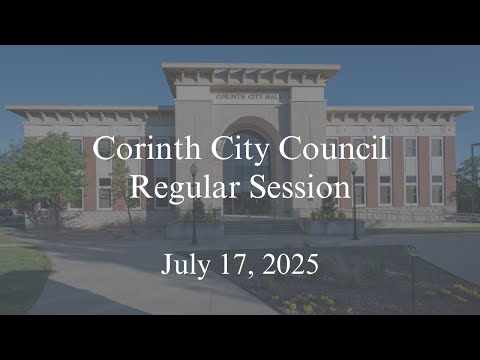
The Corinth City Council on July 17 approved an amendment to the Unified Development Code that extends the city's existing buried-utility requirement for residential and multifamily projects to commercial developments and clarifies the rule applies to both new and existing utility lines. The ordinance change was unanimously approved following a public hearing and a staff presentation.
City planner Matthew Lilly told the council the change "promotes safety, improves aesthetics, minimizes conflicts with other infrastructure, and creates uniformity throughout the city." The amendment amends UDC subsection 3.05.19(a) to add the commercial category and to clarify scope.
The amendment does not specify minimum burial depth in the UDC text; during discussion council members asked whether the ordinance sets a depth requirement for buried utilities. Planning staff said burial depth and similar technical specifications remain subject to the utility companies' standards and to the National Electric Safety Code, which the city has adopted into its code. Staff also noted that low-voltage infrastructure, such as some broadband lines, may be installed differently because of voltage and equipment differences.
Council members raised one neighborhood-level concern where recently installed overhead poles near Realty Capital property would remain in place because the poles sit within utility easements and were installed by the utility company. Planning staff said the city generally lacks authority to order burial of existing lines that are in utilities' easements and that such conversions typically require agreement or contract terms with the utility owner.
The ordinance received a unanimous vote after the city opened and closed a public hearing and moved the item on the consent agenda. The Planning and Zoning Commission had earlier recommended approval by a 5-0 vote.
Members of council and staff said the technical details for installation depth and conflict-avoidance will continue to be governed by applicable engineering standards and the National Electric Safety Code rather than by the amended UDC language.
The ordinance takes effect as provided in the city's standard effective date provision for UDC amendments.
AI generated
The text on this page is AI generated. Summaries, highlights, analysis, and video transcripts are all produced from the original source material.
AI can make mistakes, so if you spot one, and we will fix it for everyone.
Note: the source content is unaltered by us. Any content source we link to, be it a video, an audio recording, or a document, is presented exactly as its publisher released it. That publisher is usually a government body, sometimes an individual official or another organisation.