Lifetime Citizen Portal Access — AI Briefings, Alerts & Unlimited Follows
U.S. envoy: lifting Syria sanctions was meant to "give them a chance," but U.N. limits remain
Loading...
Summary
Ambassador Thomas Barak said the U.S. removed certain unilateral sanctions on Syria on May 13 to allow the new Damascus government breathing room, while U.N. and Security Council restrictions and conditions on minority rights and foreign fighters remain in play.
Ambassador Thomas Barak, the U.S. ambassador to the Republic of Turkey and U.S. special envoy for Syria, said the Trump administration lifted unilateral U.S. sanctions on Syria on May 13 to “give them a chance,” but stressed that other layers of restrictions — including United Nations Security Council measures — remain and could be lifted only in pieces.
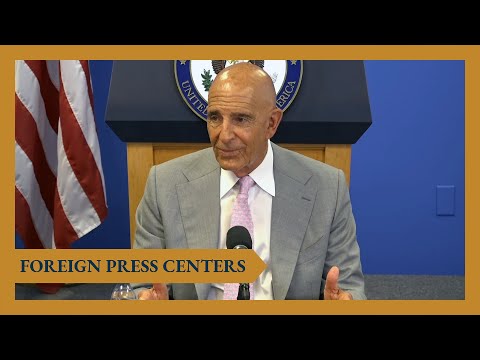
Barak told reporters at the New York Foreign Press Center that the administration’s aim was not nation‑building but to create space for Syria to transition away from an ISIS counter‑insurgency footing toward a “clean canvas” where regional normalization could be tested. “The president’s main message in taking sanctions off on May 13 was give them a chance. You can’t give them the chance if they’re shackled,” he said.
Why it matters: Barak framed the moves as a calculated opening that could be reversed if Damascus fails to meet international expectations. He said some U.N. Security Council members want to see clearer progress on minority rights, integration of foreign fighters and steps on constitution drafting before broader sanctions relief is granted.
Barak cited concerns about an estimated 20,000–25,000 foreign fighters and said the international community is watching how the Syrian government handles their return and integration. He added that the U.S. expects the Syrian government to remain a single, unified state rather than accept a federal model with separate armed forces for sectarian or ethnic enclaves.
On ties between Syria and Israel, Barak said the U.S. has encouraged discussions that point toward the logic of broader regional normalization embodied by the Abraham Accords, though he emphasized any progress will be incremental. “One of [Secretary Rubio’s] conditions was the Abraham Accords — not signing them overnight, but pointing in that direction,” Barak said, adding that normalization would also implicate Lebanon, Jordan, Iraq and Turkey.
Barak acknowledged that the diplomatic and sanctions processes are layered. “Bilateral sanctions the president of the United States unilaterally lifted them, which doesn’t mean they’re gone,” he said, noting some sanctions are temporary, others permanent, and that congressional and U.N. actions operate on different timetables.
Discussion vs. decision: Barak described U.S. action as unilateral executive relief, not a multilateral removal of all restrictions, and said sanctions can be reimposed if Damascus backslides. He framed the policy as an opening that leaves leverage for the U.N. and Security Council to press for benchmarks on minority protections and foreign fighters.
Ending: Barak called the period an “experiment” and said it is too early to judge outcomes: “It’s an experiment, and we’re at the very beginning,” he said. He added that world partners — and developments on the ground — will determine whether the move produces durable political and security gains.