Lifetime Citizen Portal Access — AI Briefings, Alerts & Unlimited Follows
UN briefing warns of escalating violence in As‑Suwayda; cites Israeli strikes and sectarian tensions
Loading...
Summary
A United Nations official told the Security Council that fighting in As‑Suwayda since July 12 has caused hundreds of casualties, damaged essential services and displaced civilians; the briefing also noted Israeli strikes on Syrian territory and called for investigations and an inclusive political process under UNSCR 2254.
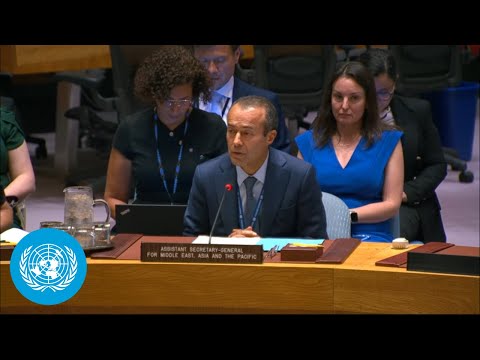
Khalid Kheri, a United Nations official, told the Security Council that fighting in As‑Suwayda governorate since July 12 has produced “hundreds of casualties” among security forces, fighters and civilians and has severely strained local services and humanitarian access.
Kheri said the immediate violence began after a series of mutual kidnappings in the Druze‑majority As‑Suwayda governorate on July 12 and escalated into armed clashes between Bedouin tribes and local Druze armed groups. He said Syrian security forces deployed under the ministries of defense and interior on July 14 with the stated aim of halting the clashes, restoring order and pursuing those responsible.
“The ensuing fighting resulted in hundreds of casualties among the Damascus security forces and Druze fighters, and tragically, among Druze and Bedouin civilians, including women, children, and elderly,” Kheri said. He also reported that “10 were killed and others were abducted” in related attacks on security personnel and that there were reports of abuses and extrajudicial executions affecting detainees and civilians.
Kheri cited humanitarian impacts, saying that the United Nations Office for the Coordination of Humanitarian Affairs had reported significant displacement, damage to critical infrastructure — including water, electricity and telecommunications — and constrained access to affected areas. He said medical facilities in As‑Suwayda and Daraa were “at or near capacity” and that commercial supplies and deliveries remained disrupted. The World Health Organization had dispatched emergency medical supplies to Daraa, he added, while deliveries to As‑Suwayda were pending because of insecurity.
Against this backdrop, Kheri told the council that Israel had “resumed and intensified its strikes on Syrian territory,” citing attacks on sites in As‑Suwayda, Daraa and in and around Damascus that reportedly included the Ministry of Defense, the vicinity of the Presidential Palace and Mezzeh Military Airport. He said the Syrian permanent representative had informed the Secretary‑General and the Security Council that the strikes resulted in casualties among both civilian and security personnel and noted reports of Israeli statements on troop redeployment on the Golan.
Kheri also described cross‑line movements in mid‑July, saying that on July 15–16 hundreds of Druze from the occupied Syrian Golan and from Syrian territory gathered on both sides of the ceasefire line; some who crossed from the occupied side traveled to Hadar and later returned. He cautioned that such movements and the reported presence of Israeli Defense Forces near the ceasefire line risk further destabilizing the area.
Kheri urged accountability and transparency in investigations of alleged violations, calling on the Syrian authorities to ensure any probes are “in line with international standards” and completed quickly to help restore public confidence. He reiterated the Secretary‑General’s condemnation, saying, “I reiterate the Secretary‑General’s unequivocal condemnation of all violence against civilians, including all acts that fan the flames of sectarian tensions.”
He recalled the Security Council’s presidential statement of March 14 calling for inclusive and transparent justice and reconciliation processes and cited United Nations Security Council Resolution 2254 as the framework for a Syrian‑led political process. Kheri said the United Nations and humanitarian partners were engaging with relevant authorities and mobilizing teams to assess needs and provide assistance as security conditions permit.
Kheri warned that the situation on the ground remained fluid and called on all parties to uphold the 1974 Agreement on Disengagement of Forces and to take steps to protect civilians, safeguard infrastructure and facilitate humanitarian access. He emphasized the United Nations’ readiness to “work alongside the Syrian people to support an inclusive and credible political transition that ensures accountability, fosters national healing, and lays the foundation for Syria’s long‑term recovery and prosperity.”