Lifetime Citizen Portal Access — AI Briefings, Alerts & Unlimited Follows
Subcommittee Probes Navy Plans for Drones, Counter‑UAS and ISR Investments
Loading...
Summary
Senators asked how lessons from Ukraine and Red Sea operations are shaping Navy and Marine Corps investments in drones, counter‑UAS systems and ISR, and raised the need for cheaper defensive options so ships do not exhaust costly interceptors.
Lawmakers pressed Navy and Marine Corps leaders on what the services are learning from recent conflicts about unmanned systems, how they are driving investments in offensive and defensive drones, and whether procurement approaches will allow rapid technological refresh.
Why it matters: Cheap, widely available unmanned systems have altered the operating environment; countering swarms and maintaining affordable defenses is now a budgetary and operational priority.
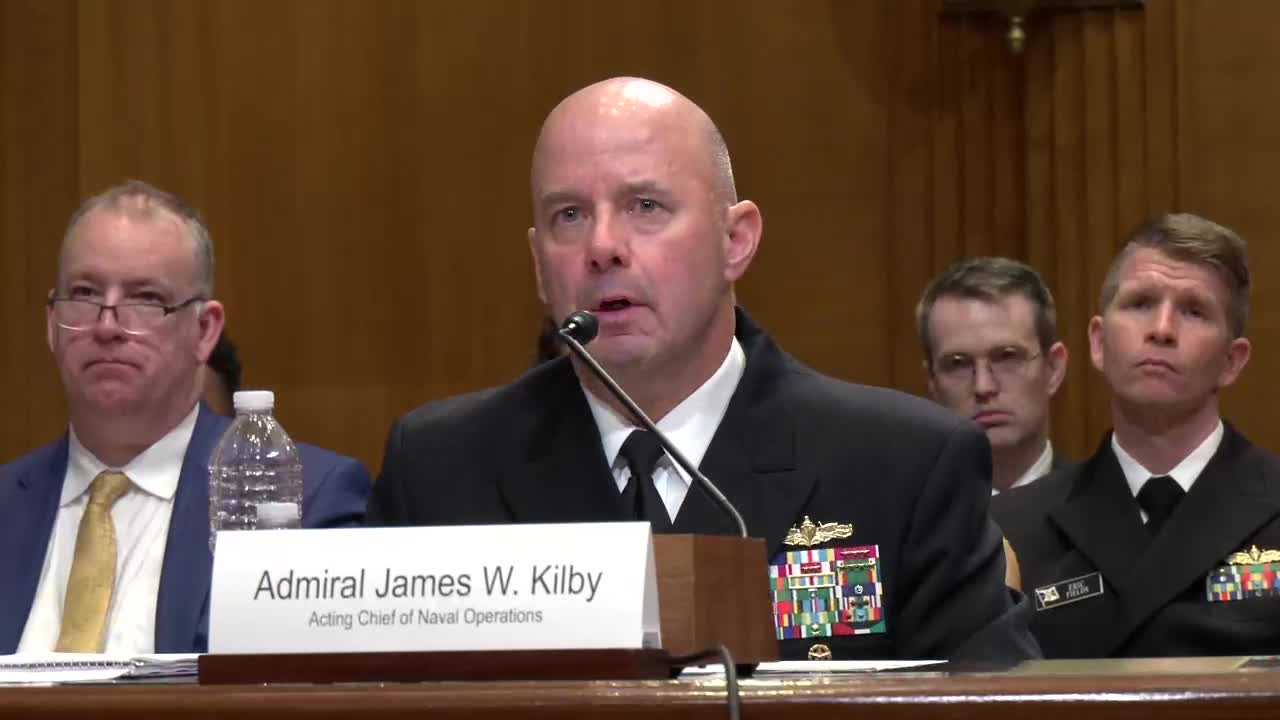
Senators cited the way Ukrainian forces used drones in the Black Sea and how Houthi attacks in the Red Sea have targeted commercial shipping and Navy vessels. Admiral Kilby and Gen. Smith described investments in layered defenses, nontraditional sea denial concepts and hybrid manned‑unmanned force mixes. Kilby said the Navy has been installing lower‑cost systems on certain combatants to avoid expending high‑value interceptors when more economical options suffice.
General Smith described Marine Corps investments in MQ‑9 and other ISR platforms and an “attack drone team” at Quantico pursuing additive manufacturing and 3‑D printing to enable rapid, lower‑cost production of attack drones and munitions. Senators asked about cost curves for counter‑UAS; Navy witnesses said they are focused on lowering cost per engagement and increasing the availability of cheaper defensive options for ships and installations.
Ending: Witnesses said the services are experimenting with a mix of off‑the‑shelf, service‑developed and industrial partnerships to field drones and counter‑UAS more quickly, and promised follow‑up briefings on test results and procurement options.