Get AI Briefings, Transcripts & Alerts on Local & National Government Meetings — Forever.
County youth diversion coordinator reports 72 referrals, funding gaps after state grant shortfall
Summary
The county's youth diversion coordinator told commissioners the program has received 72 referrals, has an active caseload of 35 youth and faces a funding shortfall after an expected state grant award was reduced; municipal partners, local fees and a likely $10,000 reallocation from ETCOG were presented as partial funding sources.
Jennifer, the Van Zandt County youth diversion coordinator, updated the commissioners on the county’s new youth diversion program, reporting 72 referrals to date, an active caseload of 35 youth and that “nearly a third of those cases have been successfully completed.” She told the court that the program is operating across all five municipal courts in the county under signed memorandums of understanding.
Jennifer said the program was developed after a change in state rules allowing counties to operate a consolidated diversion program rather than separate city programs. She described close cooperation with juvenile probation, the children’s advocacy center, school resource officers, Project Turnaround and other local partners and said the county implemented a drug‑testing protocol for diverted youth.
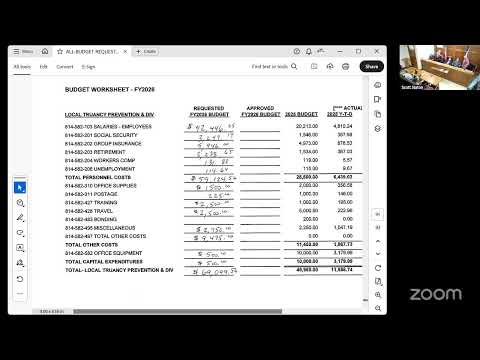
On funding, Jennifer and Judge Shen described a grant application made through the East Texas Council of Governments (ETCOG) and said they initially believed the program would receive a larger award; however ETCOG’s statewide allocation dropped to $33,000 and Van Zandt expects a possible reallocation of $10,000 from other regions pending final approval. Jennifer said the program also expects municipal contributions (the five municipal courts are Canton, Van, Edgewood, Grand Saline and Wills Point) that together proposed $14,500 pending municipal budget approvals, local youth diversion administrative fees ($50 per diverted youth, $2,700 collected so far), and a portion of local consolidated court costs and truancy prevention funds. She described the statutory framework in broad terms (references to the Court of Criminal Procedure and the Local Government Code were included in the handout) and noted that some funding lines require clarification from the county auditor and treasurer.
Judge Shen and Jennifer said the program relies heavily on interagency cooperation and that many diversion benefits are nonmonetary (school reengagement, testing and case management). Jennifer described a recent case she considered a success: a teen with multiple citations who completed summer school, improved grades, voluntarily enrolled in alcohol testing and is on track for December graduation, with most of the youth’s citations expected to be disposed of through diversion by September.
Ending: Commissioners asked staff to clarify fund accounting for the local consolidated court costs and truancy funds and to return with a final accounting of available local funds and the confirmed ETCOG grant amount; no final budget vote occurred during the workshop.