Lifetime Citizen Portal Access — AI Briefings, Alerts & Unlimited Follows
Helsinki Commission staffer urges sustained Western aid, denies recognizing Russian territorial gains
Loading...
Summary
A legislative staff member for Sen. Roger Wicker argued that a Ukrainian victory is necessary for European security, urged Western states to finance and arm Ukraine, recommended withholding recognition of Russian territorial gains, and prioritized Ukrainian control of the Dnieper and the Zaporizhzhia nuclear plant.
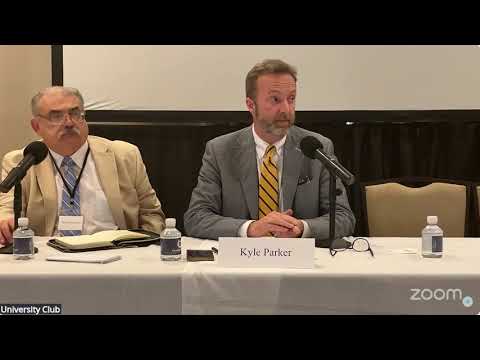
A legislative staff member for Sen. Roger Wicker, chairman of the Senate Armed Services Committee and the U.S. Helsinki Commission, said sustained Western support is necessary for “a free stable and prosperous Ukraine” and urged European states to fill Ukraine’s urgent monetary and military shortfalls.
"So yeah. So, why why a free stable and prosperous Ukraine at peace with it with its neighbors matters?" the staff member said, arguing that a Ukrainian victory would help shore up the U.S.-led international order and protect transatlantic trade.
The staff member, who said they had just returned from an eighth trip to Ukraine, framed support as both a moral imperative and a strategic necessity. "Helping a friendly state fend off an unprovoked genocidal attack is a moral imperative," they said. They also called on the United States to use its unique ability "to confer or deny political legitimacy on another state, another leader, or any settlement" and urged that the U.S. and allies never confer legal recognition on Russian territorial gains in Ukraine.
On specific priorities, the staff member recommended that the United States and its European partners prioritize Ukraine’s use of the Dnieper River, access to the Black Sea, and "ultimate control over the Zaporizhzhia nuclear power plant." They noted that retaining Ukraine’s control of those six reactors would make Ukraine "a net energy exporter to Europe." The staff member also promoted the so-called Danish model—European states purchasing weapons from Ukrainian producers inside Ukraine—to help replenish depleted Western stockpiles without fueling domestic inflation.
The speaker provided several on-the-ground observations from Kyiv: they said "roughly 40% of the kit Ukraine is using on the battlefield is being produced inside Ukraine," described functioning civilian life under threat of attack, and recalled that residents have about "3 minutes to shelter" from some ballistic missile strikes. They emphasized that Ukrainians do not expect a near-term end to the war and "no one I spoke to is ready to concede anything to an aggressor hell bent on erasing them."
The staffer credited U.S. logistics and infrastructure for bolstering European defensive capabilities and praised European states that have provided aid, saying many have delivered significant support on a per-capita basis. They urged European governments to "provide Ukraine's urgent and unmet monetary needs" and suggested they could finance some support through national budgets and by confiscating Russian state assets held in European banks.
The remarks combined policy prescriptions (withholding recognition, prioritizing river and sea access, and supporting Ukrainian production) with eyewitness impressions from Kyiv. No formal actions, votes, or binding commitments were announced during the remarks.
The staff member closed by saying Ukrainians remain determined and that more Americans should visit to see conditions firsthand. "Ukrainians have learned in this war not to fear Russians, fear the Russians, and it's time that we learn to shed our fear of the Russians too," they said, then invited questions.