Get Full Government Meeting Transcripts, Videos, & Alerts Forever!
Get email alerts on the Airport Operations topic
No spam. Unsubscribe anytime.
A.B. Won Pat airport updates legislature on water system, parkway, energy loan and facilities
Summary
A.B. Won Pat International Airport officials briefed the Guam Legislature’s General Government Operations and Appropriations Committee on Jan. 24 about the airport’s FAA-funded water system, the proposed parkway alignment, an energy-conservation financing offer, ongoing capital projects and operations.
A.B. Won Pat International Airport officials briefed the Guam Legislature’s General Government Operations and Appropriations Committee on Jan. 24 about the airport’s water system, the proposed parkway alignment, an energy conservation financing offer, ongoing capital projects and operations.
The update matters because the airport’s FAA-funded water project will free two wells for community use; the proposed parkway alignment affects land access and subdivisibility for nearby property owners; and the airport’s planned energy-efficiency loan would be paid by the airport, not by Guam Power Authority.
Mike Israel, chairman of the Airport Board, told the committee the airport faces two major tasks: resolving legacy operational problems and managing future growth. “Guam is very, very important,” Israel said, describing the island’s regional role and recent demand spikes after regional emergencies. He and other board members pressed airport management to improve contract oversight for day-to-day services.
Mary, the airport’s executive manager, described the FAA-funded water system as shifting supply away from two wells the airport formerly used, which “frees up demand” for Guam Water Works Authority to serve the wider community. Mary said she would provide the committee with more detailed production figures on the airport system on request.
On the parkway project—referred to in the briefing as the Tizan/Tizem/TJ Parkway—the airport repeatedly said the Department of Public Works (DPW) is the project lead. Airport officials said DPW is conducting an environmental analysis that will prescribe a preferred alignment; the airport has discussed a route with landowners and partners but cannot finalize a map before the EA completes. The airport said it expects coordination with federal partners, including the Federal Aviation Administration, and is seeking to avoid condemnation by reaching negotiated agreements with affected owners.
Energy-efficiency work was described as having an acceptable commercial-lender offer. Mary said the airport had “secured” financing on Jan. 20 in the sense that one proposer’s terms were acceptable, but the award is not final because the procurement is in a protest period. She said the arrangement is a direct loan to the airport and that Guam Power Authority is assisting with contract administration and facilitation.
On finances, Acting Comptroller Carlos Pedaglia said the airport’s draft 2011 financial statements show approximately $49.2 million in operating revenues and roughly $33.7 million in operating expenses. Committee members noted the presentation’s apparent $16 million gap between revenues and expenses and were reminded that debt-service obligations and bond repayments reduce that surplus; Pedaglia said the receivables balance is largely a timing issue tied to federal draws and other collections. A committee member asked for an aging schedule of accounts receivable; the comptroller agreed to provide that to the committee.
Operations and customer-service issues drew sustained attention. Committee members and board representatives discussed restroom cleanliness and a pilot restroom-renovation project that board members said used residential-grade materials and did not meet expectations. Mary said the airport is prioritizing improved contract management and, if funds permit, will include restroom renovation in this year’s work. The airport also said it is investigating reported durability problems with arrival carts and pursuing vendor remedies.
Traffic and commercial operations: airport officials reported about 50 charter flights received so far in 2012 and described charters as volatile; the airport said it prefers to convert charters into scheduled service. The airport also said it is exploring reworked lease space and small commercial kiosks in the arrivals lobby to feature local goods, subject to existing exclusivity clauses in some contracts and federal disadvantaged-business requirements.
Passenger processing and ground transport: officials said the Electronic System for Travel Authorization (ESTA) and an ambassador program have reduced processing time for some arrivals and that coordination with Customs, Immigration and TSA remains necessary. The airport noted ongoing concerns about bus parking and diesel exhaust in passenger loading zones and said it is evaluating operational changes—such as requiring buses to stage away from the curb and only pull forward for active loading—to reduce fumes and congestion.
Next steps the briefing identified: DPW is scheduled to brief the committee next week on the parkway project; the airport will provide an accounts-receivable aging report to the committee; and the energy-financing award remains subject to completion of the airport’s procurement process and any protests. No formal votes or binding committee actions were taken during the briefing.
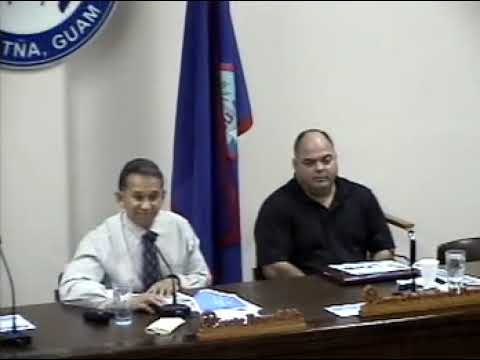
The informational briefing was convened by the General Government Operations and Appropriations Committee at 6:30 p.m. on Jan. 24 and included Airport Board representatives and senior airport staff.