Get Full Government Meeting Transcripts, Videos, & Alerts Forever!
Get email alerts on the 47 Commons Pud topic
No spam. Unsubscribe anytime.
Residents press water, traffic and zoning concerns as Boone County staff recommends favorably on 47 Commons PUD
Summary
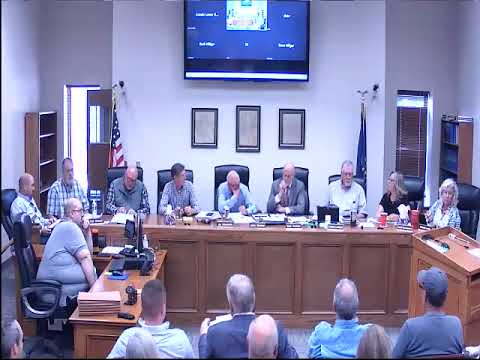
The Boone County Area Plan Commission on May 7 heard a lengthy public hearing on petition 25W‑23‑044, the proposed 47 Commons Planned Unit Development (PUD), a roughly 190‑acre mixed‑use project at the southwest corner of the I‑65 and State Road 47 interchange in Washington Township.
The Boone County Area Plan Commission on May 7 heard a lengthy public hearing on petition 25W‑23‑044, the proposed 47 Commons Planned Unit Development (PUD), a roughly 190‑acre mixed‑use project at the southwest corner of the I‑65 and State Road 47 interchange in Washington Township.
Staff recommended that the APC give a favorable recommendation to the PUD and the PUD district ordinance, subject to conditions including review and approval of redline edits, inclusion of Boone County stormwater ordinance requirements, completion of a transportation plan and traffic impact study addressing highway department concerns, and resolution of health department comments for individual sites. Deborah Luzier, area plan commission director, summarized the application and the technical advisory comments, including requirements that sewer and water may start as well and septic but must be abandoned within 18 months of availability of sewer and water, that commercial septic approval will require state approval, and that wells must be at least 100 feet from septic systems.
The applicant team — represented by attorney Kath Branson and developers and operators including Tom Merritt and his son Jake Merritt of Merritt Contracting and Matt Hale of Shelby Materials — described the PUD as a three‑block master plan with a retail/commercial block along State Road 47, a technical services and special contractors block (including heavier industrial uses) to the south of Spring Creek, and a limited technical services block for the most intense industrial uses. Tom Merritt said the initial investment would be about $30 million over three years, with a projected $150–$170 million investment at build‑out and an estimate of about 85 new jobs; Merritt said the company converted to employee ownership in January and sought to remain local.
Developers said recent revisions shifted heavier industrial uses south of Spring Creek and placed lighter commercial, retail and some multifamily housing north of the creek; Jake Merritt said the team held extensive neighbor meetings and modified use areas accordingly. The draft PUD, as described by staff and the applicant, incorporates several elements of the county's major thoroughfares overlay district — including landscape, architectural, lighting and sign standards — while carving out a customized set of uses and development standards for the PUD area.
More than two dozen residents and stakeholders spoke during the public comment period. Speakers who opposed or raised concerns included Britt Reese (resident), who warned that approving the PUD could set a precedent that would allow heavier industrial uses and later PUDs and said the proposal “will also threaten one of our vital resources, water.” Reese and other commenters cited a regional groundwater study and noted recent municipal water‑capacity constraints in nearby towns (Lebanon, Thorntown), arguing the PUD could increase demand on a sub‑basin with limited excess capacity. Multiple speakers asked who would pay to replace or deepen private wells if groundwater levels declined and questioned sewer capacity and potential need for additional wastewater infrastructure.
Residents also raised traffic and roadside safety concerns. Highway department comments in the staff record cited possible roadway and bridge improvements (Bridge 105 on 275 West and Bridge 106 on 350 West), requested pavement section submittals, and said proposed local roads and intersections may need redesign, guardrail, and acceleration/deceleration lanes; staff recommended a traffic impact study and a transportation plan be appended to the PUD ordinance.
Supporters — including employees of Merritt Contracting, representatives of the Boone County Farm Bureau, and several neighbors who testified about local hiring and company responsiveness — emphasized local ownership, job creation, and the developer’s stated commitments to buffering, architectural standards, underground utilities north of Spring Creek, and staged infrastructure. Shelby Materials representatives described company standards for plant appearance and neighborhood mitigation and said ready‑mix concrete is needed for local construction.
Key technical conditions identified by staff and the technical advisory committee include: adding explicit reference that development must meet Boone County stormwater standards before recording the PUD; a transportation plan and traffic impact study meeting highway department requirements; state commercial septic approvals where applicable; well‑to‑septic separation of at least 100 feet; and submittal of soil sampling where required. The highway department recommended specific access management measures to limit curb cuts on county roads and raised questions about where heavy truck traffic would be routed and whether 350 West and 275 West must be upgraded before industrial traffic begins.
At the time the transcript ends, the APC had not recorded a final commission vote on the revised PUD petition. Staff recommended a favorable recommendation to the county commissioners with the conditions listed above; several members of the public requested stricter limits on heavy industrial uses, minimum PUD acreage, guarantees regarding water and sewer capacity, and additional buffers and green‑space minimums.