Get Full Government Meeting Transcripts, Videos, & Alerts Forever!
Get email alerts on the Education topic
No spam. Unsubscribe anytime.
Advocates urge Seattle council to approve FEPP levy amendments for restorative practices, legal aid and food support
Summary
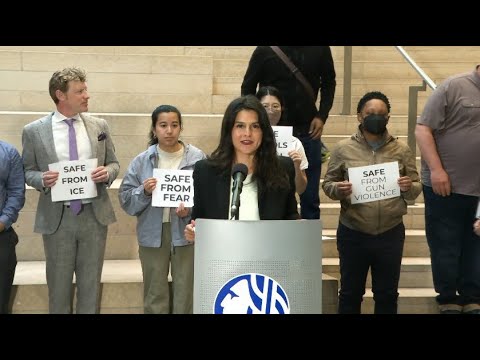
Advocates and students urged the Seattle City Council during public comment to approve amendments to the Families Education and Preschool Promise (FEPP) levy that would expand restorative practices in schools, fund legal services for immigrant families and increase food access.
Advocates and students urged the Seattle City Council during public comment to approve amendments to the Families Education and Preschool Promise (FEPP) levy that would expand restorative practices in schools, fund legal services for immigrant families and increase food access.
The testimony, given by youth organizers and nonprofit leaders representing the Keep Your Promise Coalition and partner groups, focused primarily on amendments 1, 5, 7 and 8 to the FEPP levy and called on the council to vote in favor of them; Councilmember Alexis Marcedes Rink told the room the council planned to vote on the amendments in about 13 minutes.
Why it matters: Supporters said the amendments would shift school safety away from punitive approaches toward community‑based prevention, provide legal defense for families facing deportation, and use levy dollars to expand food access for children and families. Speakers argued the changes would protect students who are especially vulnerable to federal immigration enforcement and that scheduling hearings during weekday mornings made it hard for students to participate.
“My name is Catherine Enchinose. I am an organizer with Seattle Student Union and a member of the Keep Your Promise Coalition,” said Catherine Enchinose, who said the coalition includes “over 10 organizations” and that she spoke for students who could not attend because hearings were scheduled during school hours. Enchinose said she spoke “in strong support of amendments 1, 5, 7, and 8,” and described amendment 1 as guidance that schools should avoid punitive practices that contribute to the “school‑to‑prison pipeline.”
Tim Warden Hertz of the Northwest Immigrant Rights Project said immigrant communities “are under attack” and described real‑world instances of family separation and workplace raids. “These amendments offer the chance to offer support to Seattle students and their families in the face of these attacks,” he said, and he noted the council previously passed a resolution reconfirming Seattle’s status as a welcoming city.
Restorative‑practice practitioners described classroom and school‑level impacts they attribute to FEPP funding. “Restorative practices is violence prevention,” said Lena, a restorative justice practitioner at Washington Building Leaders of Change (WABLOC). Lena described running four cohorts of junior circle keepers, giving an example of two students leading a circle and older students supporting younger ones. She asked the council to “fund and believe in student safety through restorative practices.”
Yuna, a youth organizer for FEAST, described the levy and the amendments as reflecting priorities young people and communities of color have long demanded, and cited “DEEL’s 2022 FEP report” as highlighting gains in academic achievement, lower dropout rates and greater feelings of safety and belonging since FEPP investments. Yuna also referenced a prior campaign to remove school resource officers in Seattle Public Schools that collected “over 20,000 signatures.”
Chetan, executive director of the Washington Youth Alliance, called the FEPP levy renewal “essential” and criticized the scheduling of the hearing during weekday mornings and final exams, saying it made it “nearly impossible for young people and students to attend.” He urged the council and the Seattle School Board to prevent a return of officers and to support restorative, nonpunitive safety approaches.
Councilmember Alexis Marcedes Rink framed the amendments as a municipal response to federal policies she described as threatening immigrant families and basic nutrition benefits. Rink encouraged colleagues to adopt the amendments, saying the measures were “for students, families and communities” and that the coalition co‑authored many provisions.
Discussion versus action: The remarks in the transcript are public testimony in support of specific FEPP levy amendments and include requests for the council to adopt amendments 1, 5, 7 and 8. Councilmember Rink stated a vote on the amendments was imminent; the transcript does not record the vote or its outcome.
Speakers repeatedly noted two process issues: that public hearings scheduled during school hours limit student participation and that some elements of the amendments (for example, a proposed moratorium on SEOs stationed in schools) will also be addressed by the Seattle School Board, which will take separate input before making decisions.
Council action to follow: The transcript documents that the council planned to vote on the FEPP levy amendments shortly after the public comments, but does not record the result of any motion.
Looking ahead: Supporters asked the council to adopt the amendments as written, to preserve funding for restorative practices and legal services, and to continue outreach to students and families so those most affected can participate in future decision‑making.