Get Full Government Meeting Transcripts, Videos, & Alerts Forever!
Get email alerts on the Downtown Revitalization topic
No spam. Unsubscribe anytime.
Everett panel outlines steps to reduce downtown storefront vacancies and boost activity
Summary
City staff, the Downtown Everett Association and council members discussed housing, placemaking, grants and a state creative-district application as tools to lower a 7% ground-floor vacancy rate and attract more visitors and businesses to downtown Everett.
City officials, the Downtown Everett Association and council members on June 11 discussed steps they say are reducing long-term storefront vacancies in downtown Everett and encouraging more residents and visitors to spend time and money there.
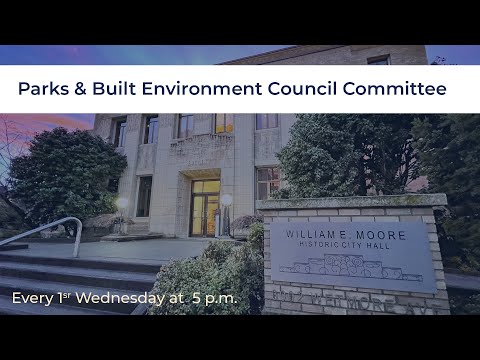
Dan Ernesi, a city economic development official, told the Parks and Built Environment Council Committee that the city has focused on housing, zoning and systems that support growth to revive the central business district. “Downtown Everett is really the heart of the business and residents life in Everett, and it deserves the attention,” Ernesi said. He estimated about 1,500 housing units built or under construction in the downtown since 2018, with roughly another 1,000 in the development pipeline.
Liz Stenning, executive director of the Downtown Everett Association, presented recent local data and said the association’s boundary covers 39 blocks. “Our ground floor vacancy rate right now is at 7%,” Stenning said, adding the association counted 78 new businesses since 2021, seven openings in 2025 so far and nine more planned. She also said the organization is tracking visitor trends with Placer data showing downtown foot traffic of 6.5 million visits in 2019, 3.9 million in 2020 and 5.5 million in 2024, and that visitors who stay overnight spend about $220 per day at local businesses.
Tyler Chisholm, the city’s placemaking program manager, described efforts to increase special events, public art and upkeep of streets and lighting to change perceptions and attract attendees. “The best marketing that we can have at the city is happy residents,” Chisholm said, noting last year’s special events generated more than $13 million in direct spending at downtown businesses.
Panelists described a mix of strategies the city and the Downtown Everett Association are using: encouraging multifamily housing near the core through Metro Everett zoning, supporting the Downtown Everett Association’s Main Street accreditation and maintenance programs, operating a storefront grant program that has funded improvements for about 40 businesses, hiring a business development manager to show prospects available spaces and pursuing a state Creative District designation to unlock grant opportunities and signage.
Committee members raised questions about how vacancy rates are calculated and about long-vacant individual storefronts and facades; panelists said some vacancies reflect complex property-owner dynamics or needed building repairs rather than lack of demand. Stenning acknowledged some ground-floor spaces may be occupied but inactive and said the association maintains a vacancy map and a business development staffer, Scott Hume, who is touring prospects and matching them with spaces.
Speakers also discussed near-term capital projects and property decisions. City staff said an earlier council award to move the evidence/property room into the Kalmbach Building is being re-evaluated because post-pandemic construction costs have risen; staff are comparing that option with using the south police precinct building vacated by a 911 relocation so council can decide which site to use.
Panelists asked council members for continued support for code enforcement, special-events permitting that reduces barriers, the storefront grant program and consideration of parking management changes such as app-based paid on-street parking. Stenning said the Downtown Everett Association will seek renewal of its Business Improvement Area (also called the Downtown Improvement District) and may propose adjustments as the district’s footprint and the downtown’s residential population grow.
The panel encouraged public involvement in the Creative District planning process and said the city is collecting input on the designation through a survey on the city website. Stenning said the association plans a downtown vision process early next year to knit together zoning, public-realm improvements and economic development strategies.
The committee did not take formal action on any ordinance or budget item during the discussion; members thanked the panel and adjourned after about an hour of discussion.