Lifetime Citizen Portal Access — AI Briefings, Alerts & Unlimited Follows
Gifford Pinchot officials brief Cowlitz commissioners on Spirit Lake EIS, roadwork and thinning plans
Loading...
Summary
Johanna Kovarik and Nick Granum of the Gifford Pinchot National Forest updated the Cowlitz County Board of Commissioners on the Spirit Lake draft environmental impact statement, large summer roadwork and a forestwide commercial plantation thinning plan.
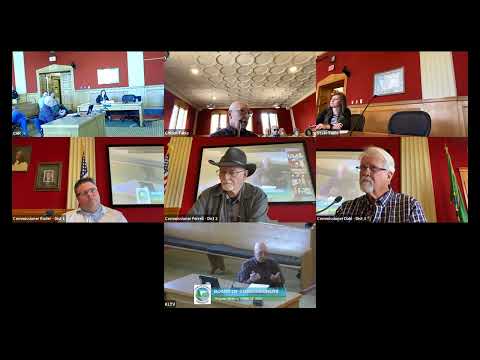
Johanna Kovarik, forest supervisor for the Gifford Pinchot National Forest, and Nick Granum, acting district ranger for the Mount Saint Helens National Volcanic Monument and Ranger District, briefed the Cowlitz County Board of Commissioners on forest projects including the Spirit Lake Long Term Outflow Project draft environmental impact statement, a large summer road‑maintenance program, and a forestwide commercial plantation thinning analysis.
Kovarik told the board the forest service expects to publish a draft EIS for the Spirit Lake outflow project in the coming weeks and "we'll be looking for and welcoming public comment on that draft environmental impact statement when it comes out." She said the agency has converted its emergency response plan for Spirit Lake to an emergency action plan aligned with national standards and that a recent tabletop exercise included the Army Corps of Engineers, the Bureau of Reclamation and Cowlitz County Emergency Management.
Kovarik and Granum warned of significant roadwork this summer, including one major bridge replacement and the continued closure of State Route 504 to Johnston Ridge Observatory because of a landslide; SR 504 was described as unlikely to reopen until 2027. Granum said some interpretive services continue at the Coldwater Science Learning Center while repairs proceed and that smaller facilities such as restrooms have been returned to service.
On forest health, Kovarik described a forestwide commercial plantation thinning and potential control‑line analysis covering a large planning area; she referenced figures of roughly 136,000 acres and later 156,000 acres in different parts of the presentation and said the program would increase the forest's capacity for fuels treatments and commercial thinning. She also said the service was targeting roughly 3,600 acres per year of commercial plantation thinning in implementation. The board discussed fuels treatments, piling and burning, and the use of prescribed underburns on some east‑side units.
Kovarik emphasized fire‑season preparedness: the forest has been hiring to fill firefighting positions, predictive services report normal to above‑normal risk for June and July with above‑normal projections for August and September, and managers urged the public to observe fire restrictions.
Local recreation issues drew extended public comment. Members of the Backcountry Horsemen urged permission to resume and help maintain horse trails in the monument; Kovarik and Granum said such requests will be considered during the monument plan revision and in site‑specific analyses, and urged the horsemen to identify trail locations to prioritize. The presenters also noted volunteer and partner support from the Mount Saint Helens Institute and encouraged the public to watch for the EIS release and public meetings.
No formal county action was taken on forest management items; the presentations were informational and the forest service left contact information for follow‑up and public participation in the EIS process.