Lifetime Citizen Portal Access — AI Briefings, Alerts & Unlimited Follows
Skamania County commissioner tells Gorge panel federal land rules, low harvests have squeezed local revenue
Loading...
Summary
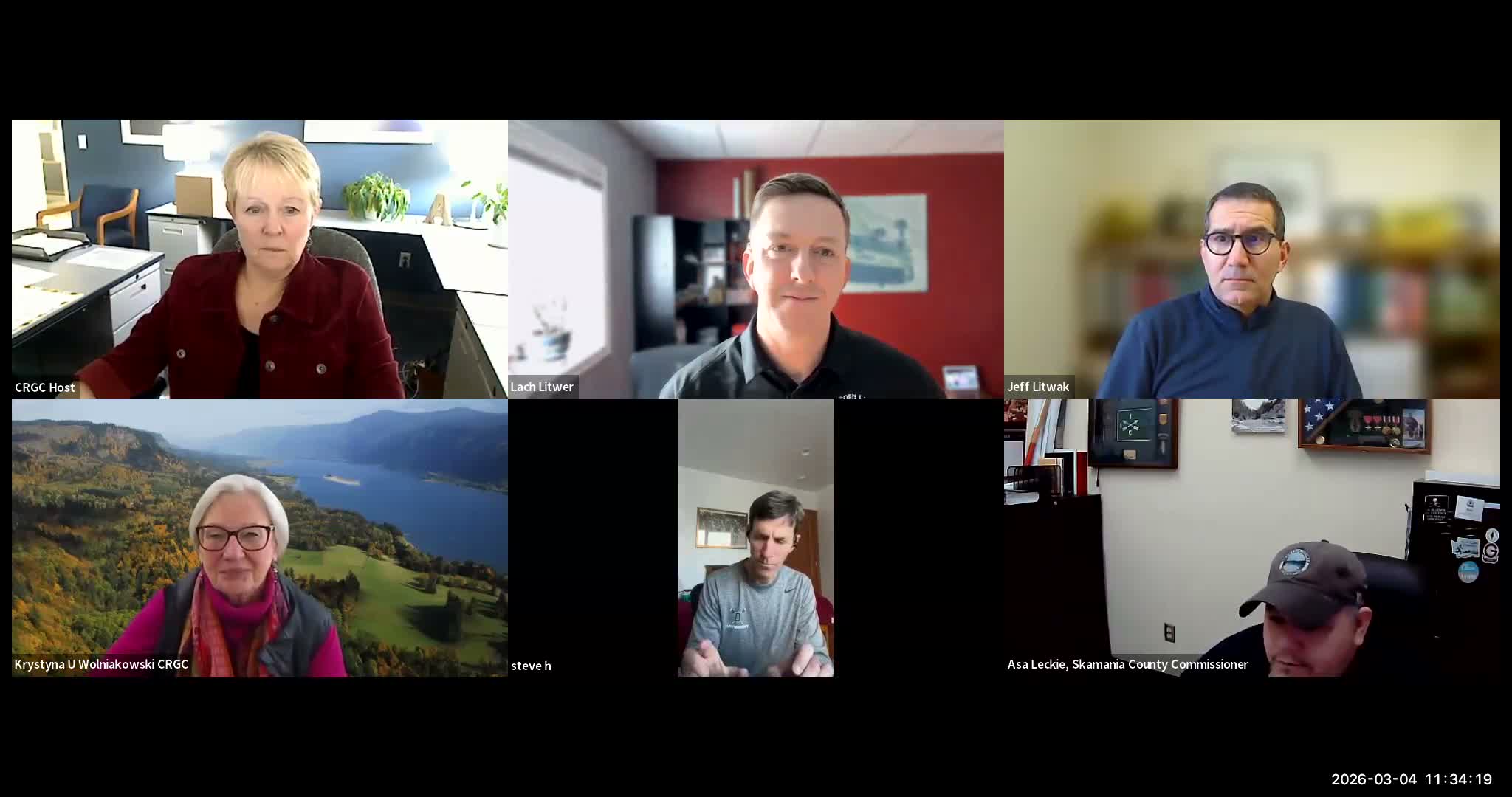
Skamania County Commissioner Lisa Lecky told the Columbia River Gorge Commission’s Economic Vitality Committee that federal land acquisitions and chronically low timber harvests have reduced the county’s tax base and strained services; commissioners offered to convene partners, provide support letters and explore targeted funding outreach.
Commissioner Lisa Lecky of Skamania County told the Columbia River Gorge Commission’s Economic Vitality Committee that decades of federal land acquisitions and restricted development in the National Scenic Area have squeezed the county’s tax base and complicated local economic recovery.
"Skamania County regulatory-wise is 92% controlled by the U.S. Forest Service between the Gifford Pinchot National Forest and the National Scenic Area," Lecky said, arguing that recent land purchases removed taxable land and depressed local revenues. She estimated roughly $4,000,000 of lost property-tax-equivalent revenue over the past decade and said about $200,000 in payments-in-lieu-of-taxes (PILT) expired in the last budget cycle.
Why it matters: Lecky said the revenue losses reduce funding for schools, emergency services and other infrastructure, and that the county’s shift from timber to a largely seasonal tourism economy leaves it vulnerable to swings in visitation and household spending. "We have to solve the school tax base," she said, adding that an aging local workforce and high housing costs make it harder to retain younger residents.
Commission members and staff acknowledged those constraints and sketched next steps. Chair Litworth said the commission has limited authority over federal land-acquisition policy but can convene partners and amplify local needs. "We may be able to help convene conversations with other agencies so they understand what’s happening in your county," the chair said.
Lecky proposed several ideas for balancing conservation and local revenue: asking the Forest Service to meet its prescribed-sale quotas (PSQs) where ecologically appropriate so counties and schools share some benefits from forest management; exploring larger, commercially managed fuel breaks to reduce wildfire risk and to allow more harvest where safe; and pursuing stable, long-term PILT funding at the congressional level so counties are not left with temporary payments.
Public commenters voiced similar concerns. Mary Bridal, who identified herself as a longtime resident involved in local boards, said counties that ceded land should receive reliable PILT funding and warned against quick policy assertions without deeper economic study. "The counties that gave up the land and cannot get taxes from it should get in-lieu funding," she said.
Staff and regional partners discussed practical support measures. An Oregon Investment Board representative said there is lending capacity but demand and application cycles vary; the commission’s staff noted the body has previously provided support letters for grant applications and offered to furnish letters and testimony when helpful. Jessica Mehta of Maquette said her organization had produced short videos about loan clients that could support outreach and increase awareness of available funds.
What’s next: Commissioners agreed to follow up with Skamania County, convene relevant federal and regional partners to clarify available policy levers, and provide technical support such as grant support letters and testimony. The committee did not take any formal votes at the meeting (it lacked a quorum) and set a tentative plan to continue the conversation at a future meeting.