Lifetime Citizen Portal Access — AI Briefings, Alerts & Unlimited Follows
Senate hearing spotlights rise of nationwide injunctions and bipartisan reform proposals
Loading...
Summary
A Senate Judiciary joint subcommittee hearing examined the sharp increase in nationwide injunctions, the legal and institutional risks they pose, and several reform proposals including three-judge panels, automatic stays and limits on forum shopping.
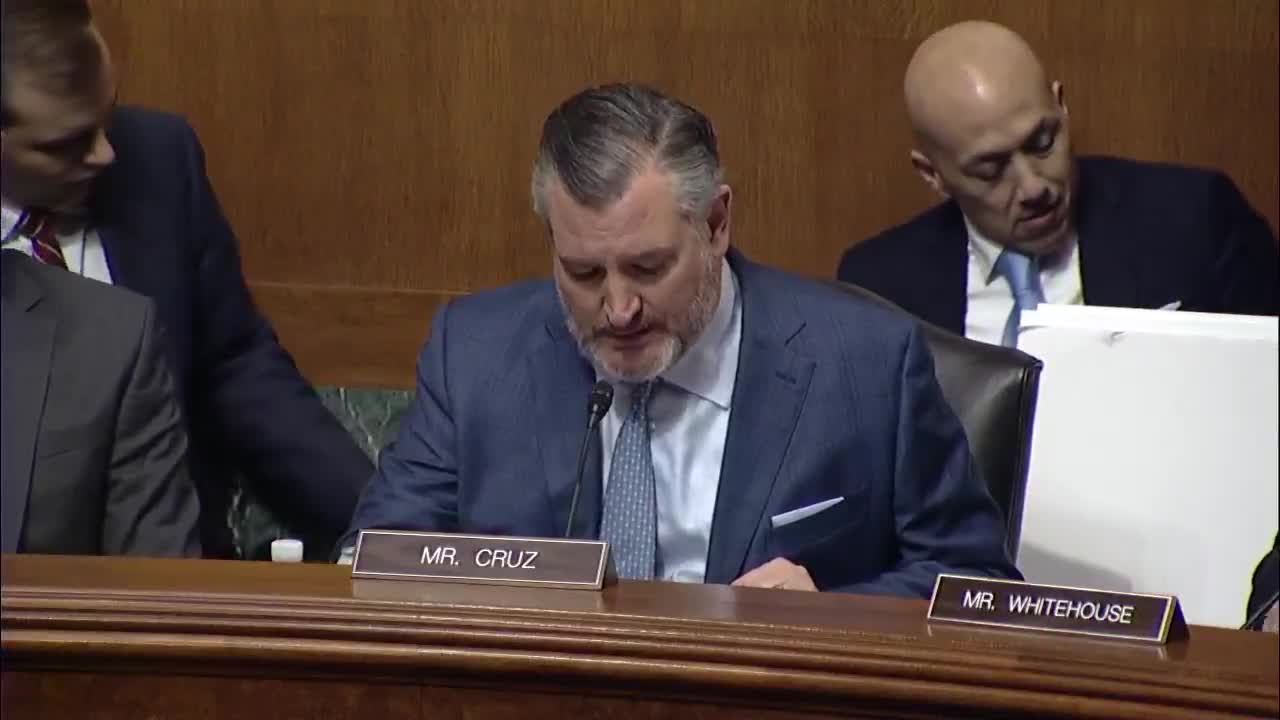
A joint hearing of the Senate Judiciary Committee’s Subcommittee on the Constitution and Subcommittee on Federal Courts heard sharply differing views on nationwide (also called universal) injunctions and proposals to limit their reach.
Senator Ted Cruz, chairman of the Subcommittee on Federal Courts, told the panel that single district judges have issued nationwide injunctions that effectively override the president’s policies, and urged Congress to act to rein in what he called “judicial tyranny.” “One unelected district judge sitting in a courtroom … can now issue a nationwide injunction that ties the hands of the president of the United States for all 330,000,000 Americans,” Cruz said.
Proposals discussed at the hearing ranged from statutory changes to procedural fixes. Witnesses and senators described several near-term options: requiring multi-judge panels to decide preliminary nationwide relief, automatically staying a district court’s nationwide order for a brief period to allow expedited appellate review, consolidating venue for challenges to federal policies, and narrowing the circumstances in which a single judge may bind nonparties.
The hearing featured three academic witnesses: Josh Blackman, Centennial Chair of Constitutional Law at South Texas College of Law; Kate Shaw, professor at University of Pennsylvania Carey Law School; and Professor Joel Alasea, Director of the Law School Center for the Constitution (as introduced to the committee). Blackman pressed structural solutions: limit temporary restraining orders to named parties and seven days, require a three-judge panel (two circuit judges and one district judge) for preliminary nationwide relief against federal and state governments, and create an automatic-stay and expedited appellate path for emergency appeals. Blackman said those changes would reduce “forum-shopping” and prevent a single judge from acting as a de facto national policymaker.
Shaw agreed that increased executive action helps explain the surge in litigation but cautioned against blunt statutory limits. She told senators that many recent judicial losses for the executive branch reflect cross‑ideological agreement that specific actions were unlawful, and she emphasized Congress’s role in resolving statutory gaps or granting authorities the administration seeks. Shaw also recommended attention to judicial security and operational reforms — for example, reducing single‑judge divisions that invite forum shopping.
Professor Alasea focused on historical practice and the party‑centered meaning of Article III relief, arguing that equitable remedies traditionally redressed only plaintiffs’ injuries and that routine nationwide injunctions are a modern development. He described the use of universal injunctions as a twentieth‑ and twenty‑first‑century phenomenon that has accelerated in recent years.
Senators from both parties pressed witnesses on tradeoffs. Several Republican senators said the recent pace of nationwide injunctions — which some speakers described as more than 40 in the first four months of the current administration, with a disproportionate share coming from a handful of districts — threatens the separation of powers. Democratic senators stressed that the surge in litigation follows an unusually large volume of novel executive action and said that where courts have blocked executive measures they often did so because those measures appear to violate statutes or the Constitution.
Several senators and witnesses proposed specific legislative or administrative changes: require class certification or other Rule 23 procedures when broad relief is sought; authorize three‑judge initial panels for injunctions affecting nationwide policy; create a short automatic stay when a district court issues nationwide relief; and have clearer venue rules to reduce forum shopping. Some witnesses suggested Supreme Court clarification or a Judicial Conference rule change as alternatives to new statutes.
The hearing did not produce legislative action; members agreed to pursue further work. Senators submitted written questions and requested responses from witnesses. The committee recorded extensive debate over legal doctrine, practical consequences for governance, and the balance between judicial review and democratic accountability.