Get Full Government Meeting Transcripts, Videos, & Alerts Forever!
Get email alerts on the Industrial Symbiosis topic
No spam. Unsubscribe anytime.
Oregon legislators hear industrial symbiosis pitch; businesses urge funding for HB 3,246
Summary
At an informational June 3 hearing, industry and port leaders described projects that turn industrial waste into revenue and urged lawmakers to fund House Bill 3,246, which would create a statewide roadmap and technical assistance for pilot communities.
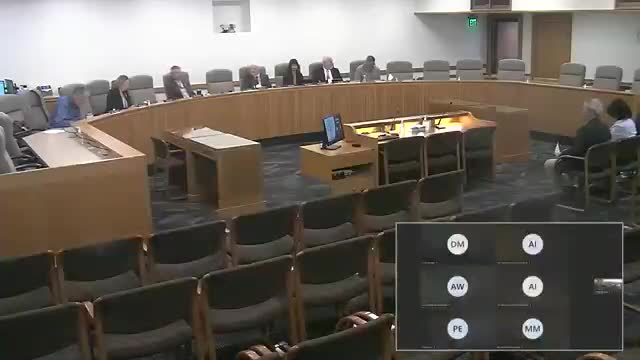
Chair Lively opened the House Climate, Energy, and Environment Committee’s June 3 informational meeting on industrial symbiosis, where business and port leaders outlined projects that convert industrial waste streams into usable products and urged support for House Bill 3,246.
Industrial symbiosis is an approach in which one facility’s waste streams — energy, water or materials — become inputs for other businesses, speakers said. Rhys Roth, Executive Director of the Center for Sustainable Infrastructure, told lawmakers that industrial symbiosis has been widely used in Denmark and that Washington state recently appropriated $5,000,000 for grants and technical assistance to scale similar work. "Industrial symbiosis is an approach to infrastructure development, where facilities' waste streams, such as energy, water, and materials, become valuable resources and inputs for other businesses," Roth said.
The meeting assembled speakers from food processing, ports, and recycling businesses to describe concrete examples and to press for state support. Debbie Rady, chief quality stewardship officer for Boardman Foods, described local practices at the Port of Morrow and said the company already diverts about 30% of produce that otherwise would have been waste. "We said, 'no onion left behind,'" Rady said, describing resource-conserving supply-chain changes and partnerships with Oregon State University for research.
Orlando Simpson, chief executive officer of CORE, a Portland-area solid waste and recycling company, described an effort to upcycle lumber waste into construction materials and said current practice of grinding wood waste and transporting it to be burned is inefficient and avoidable. "We literally cut down trees, we grind the tree up, we truck it, and then we burn it," Simpson said, arguing for higher-value uses such as cross-laminated timber and other recycled wood products.
Matt McGrath, Deputy Director at the Port of Astoria, described a byproduct-recovery pilot that pulls protein-rich sludge from seafood processing wastewater and repurposes it for products such as animal feed or fertilizer. He said the port is moving from phase 1 studies into a phase 2 pilot and is discussing regulatory pathways with the Department of Environmental Quality. "The waste streams were turning out to be more valuable than the products themselves," McGrath said.
Amy Wentworth, senior director of environmental health and safety for Pacific Seafood, said resource mapping and pilot technical assistance would help businesses identify compatible partners and profitable uses for their byproducts. "Before we can tackle the questions surrounding infrastructure, we need to identify the opportunities to turn excess resources into value," Wentworth said.
Speakers repeatedly asked the committee to advance HB 3,246, which they said would fund a statewide industrial symbiosis roadmap, technical assistance, and up to six pilot communities. Several presenters noted Washington state examples and federal programs that can help with design and technical services. No formal votes or committee actions were taken at the informational hearing.
Why it matters: proponents said coordinated planning and modest state investment could leverage larger public and private infrastructure dollars, create higher-value local industries, reduce landfill use and greenhouse gas emissions, and support manufacturing and food-processing jobs across rural and coastal Oregon.
Committee chair and members closed the informational hearing and signaled further discussion about HB 3,246 during the interim and in the short session to secure funding and next steps.