Lifetime Citizen Portal Access — AI Briefings, Alerts & Unlimited Follows
Baltimore reports MWBE gains, seeks larger Main Street funding and legal fixes
Loading...
Summary
Director Lundy told a City Council committee that the mayor’s small-business office increased MWBE certifications and contract payments in FY24, is asking to raise Main Street annual allocations to $100,000 from $75,000, and will seek code revisions to shore up the minority/women business program amid national legal uncertainty.
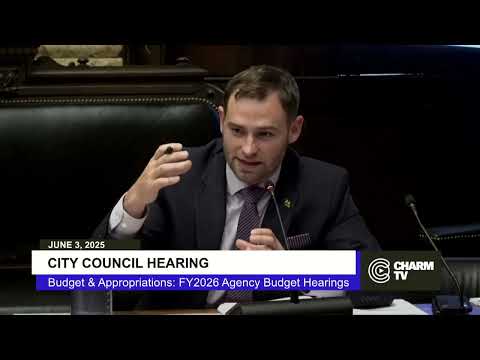
Director Lundy, director of the Mayor’s Office of Minority and Women‑Owned Small Business Advocacy and Development, told a Baltimore City Council committee that the office increased certified MWBEs in fiscal 2024, expanded procurement reviews and contractor payments, and will seek budget and legislative changes to strengthen city support for minority- and women-owned businesses.
The report matters because the MWBE program channels city procurement dollars to local minority- and women‑owned firms and because the program faces both legal challenges at the national level and operational issues the office says it must address to expand opportunity across Baltimore neighborhoods.
Lundy said the office “increased the number of certified MWBEs by 185 year‑over‑year,” and that staff “oversaw the review and approval of 17 32 submissions totaling over 3,480,000,000.00 in procurement contracts.” Lundy also reported that active contracts resulted in approximately $20,800,000 paid to MBEs and $6,900,000 paid to WBEs in FY24. She credited the law department and the city solicitor, Ebony Thompson, for legal support in defending remedial civil‑rights elements of the program.
Lundy described planned changes to the MWBE program and related city code, saying she had completed a rewrite and sent a draft to the legislative reference unit. “Those changes are looking to do is to reconcile some inconsistencies that are in the law,” Lundy said, citing conflicting provisions around emergency procurements and recommending a number of practice changes from the city’s 2022 disparity study, including expanding the program’s market area into Prince George’s and Montgomery counties where Baltimore already spends a share of procurement dollars.
She warned the committee about legal risk. “The only thing that would be our roadblock … will be if the Supreme Court rules that there is no legal race or gender preference program that can exist in any form or fashion,” Lundy said, adding the office is preparing contingency options if the high court narrows or overturns such programs.
On Main Streets, Lundy and Director Nader (Baltimore Main Streets) described ongoing work with nine Main Street community organizations — Highlandtown, Pennsylvania Avenue, Belair‑Edison, Hamilton, Lauraville/Louisville, Park Heights, Fells Point, Pigtown, Federal Hill, and Waverly — and said each community will receive a $75,000 annual allocation in the coming fiscal year. Lundy said she has submitted an enhancement request to raise that allocation to $100,000 per Main Street and called $100,000 a reasonable baseline.
Council members pressed for details on program delivery and outcomes. Councilman Blanchard asked whether any Main Street programs were planning not to renew; Lundy replied, “At the moment, all of the mainstreets are going to be renewing their contracts for the upcoming fiscal year.” Councilman Jones and Council member Parker asked about expansion, vacancy strategies and how the office helps immigrant and refugee‑owned businesses navigate city contracting; Lundy pointed to language‑access work, outreach partnerships and a new data officer to analyze vacancy and program trends.
The office reported several capacity and technical initiatives: Catalyst Baltimore (a technical‑assistance matching program), a 10‑week speaker series, the Small Business Resource Center and the Minority Business Development Agency Advanced Manufacturing Center. Lundy said the office is procuring software (referred to in testimony as B2G) to capture tax and revenue data for certification and to track business “graduation” from the MWBE program using SBA size standards and NAICS codes.
On performance metrics, Lundy acknowledged current budget book measures predate the office’s reorganization and said she will work to update them to reflect Main Streets activity and the office’s broader work. Several council members requested data: Councilman Jones asked for a report on how many firms have graduated from the MWBE program over the last decade; Lundy agreed to follow up.
The presentation included outreach and events calendars: Catalyst Baltimore technical assistance will continue in FY26, and the office plans the Baltimore City Small Business Advancement Conference on June 12 at the Baltimore Convention Center. Lundy urged council members to consult the office’s FY24 annual report for a fuller accounting of activities.
Council discussion centered on three operational priorities: increasing Main Street funding and clarifying performance measures; reducing commercial vacancy through coordinated data collection and targeted enforcement of repeat vacant‑property owners; and updating the MWBE code and procedures to address conflicting language and to prepare for possible legal changes at the national level.
Looking ahead, Lundy said the office will bring proposed legislative changes to the council, continue Main Streets placemaking efforts and expand multilingual outreach for immigrant and refugee entrepreneurs. Several council members signaled support for greater Main Street funding and asked for follow‑up briefings on vacancy data and program performance.