Lifetime Citizen Portal Access — AI Briefings, Alerts & Unlimited Follows
Committee debates tracking and accountability for groundwater conservation districts’ 50‑year goals
Loading...
Summary
House Bill 20,78 would add reporting and interim benchmarks to the GCD/ GMA desired future condition process so progress toward 50‑year groundwater goals can be tracked and evaluated.
House Bill 20,78 would require groundwater conservation districts (GCDs) and groundwater management areas (GMAs) to publish and track interim benchmarks and reporting that measure progress toward 50‑year desired future conditions (DFCs), the sponsor told the committee.
Supporters said the proposal brings accountability and a shared understanding of whether regional DFCs are on track. Brian Sledge, representing multiple groundwater districts, told the committee the DFC process contains a “fatal flaw” because the 50‑year horizon never arrives for current decision makers; he argued the bill’s tracking requirements would allow course corrections while projects are still being built.
Several GCD representatives, including Monique Norman (attorney for GCDs) and Alan Day (general manager, Brazos Valley GCD), said they support the management‑plan and monitoring provisions but raised concerns about language the sponsors used that could let a regional body (a GMA) impose interim numeric triggers on individual districts. Day said his district reports groundwater levels and progress annually and that GMA‑imposed interim values could be used in ways that complicate local management.
Proponents, including Texas 2036, said the bill simply requires benchmarking and transparency so districts, the public and the legislature know whether their long‑term goals are being achieved.
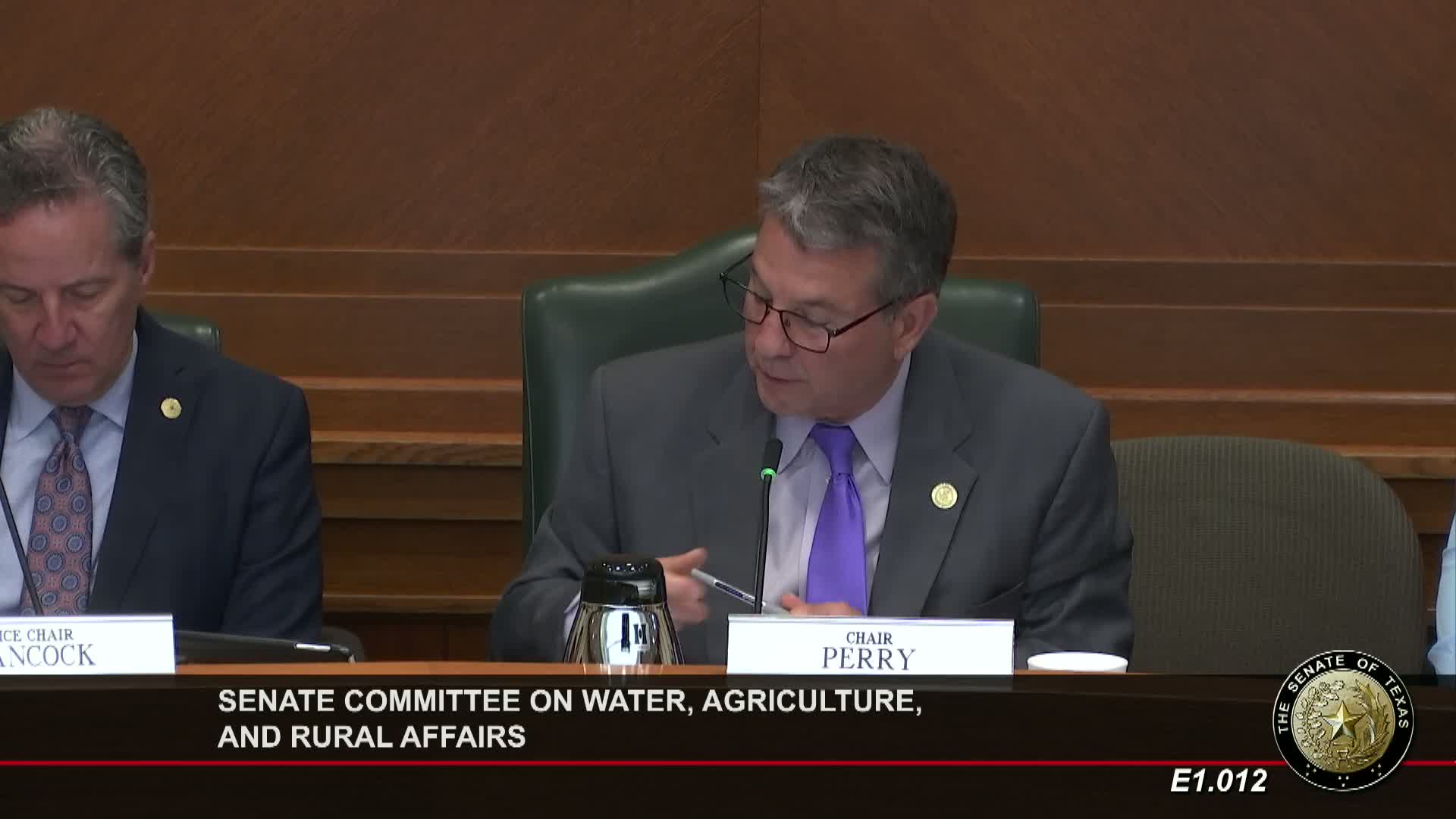
During committee action the committee moved a recommendation that the bill not pass in committee (a committee “do not pass” motion was adopted by roll call); committee members discussed continuing stakeholder work on how to craft monitoring and reporting without imposing unintended enforcement or curtailment mechanics.