Get email alerts on the Code Publication Process topic
No spam. Unsubscribe anytime.
Committee asks staff to fix publication process and confirms how ordinances are inserted into county code
Summary
Members asked staff to document who will update the county code and how final ordinance text will be published — in‑house by the county clerk or via a publisher — and requested that future publishing responsibilities and timing be clarified in code or policy so future clerks know the protocol
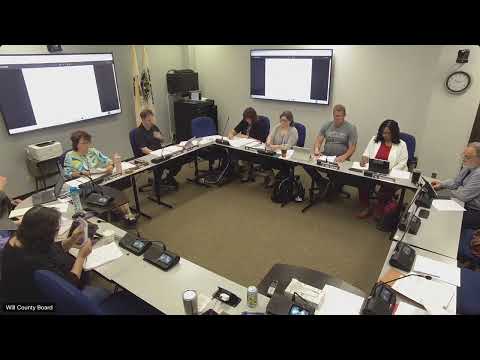
The Will County ordinance committee concluded its meeting by flagging a recurring administrative problem: when the board adopts or amends ordinances, those changes do not always appear correctly in the official code of ordinances on the county website.
Committee members and staff described a gap between passing ordinances at a county‑board meeting and the insertion of the final, consolidated language into the county’s published code. Staff explained that the circuit clerk and the county clerk currently coordinate with a publisher (American Standard Publishing was named in discussion) to upload changes; scanned or redlined drafts have produced typographical errors and misformatted citations in the working files.
Members asked for a formal protocol so future changes are not lost or mis‑formatted. Staff said the options include: (1) the county clerk maintaining the code in‑house and updating the county website directly, or (2) continuing to use an external publisher with a defined monthly or ad hoc update schedule and a quality‑control step to confirm statutory citations and dollar amounts. Chief of Staff Falke and county legal staff agreed to consult the county clerk about the clerk’s operational preference and agreed staff will return with a proposed workflow and a short statement of responsibilities so future clerks and staff know who is responsible for updating the published code.
The committee instructed staff to: retype chapters that contain formatting errors before forwarding to the executive committee; circulate corrected drafts to committee members individually (to avoid Open Meetings Act issues); and document the publishing step so that future ordinance changes are reliably entered into the county code.
AI generated
The text on this page is AI generated. Summaries, highlights, analysis, and video transcripts are all produced from the original source material.
AI can make mistakes, so if you spot one, and we will fix it for everyone.
Note: the source content is unaltered by us. Any content source we link to, be it a video, an audio recording, or a document, is presented exactly as its publisher released it. That publisher is usually a government body, sometimes an individual official or another organisation.