Lifetime Citizen Portal Access — AI Briefings, Alerts & Unlimited Follows
Council adopts septic-to-sewer grant program, caps individual grants at $30,000
Loading...
Summary
City adopted a septic-to-sewer grant program to help property owners decommission septic systems and connect to sewer; program will reimburse contractors directly and is capped at $30,000 per property unless council approves a higher amount.
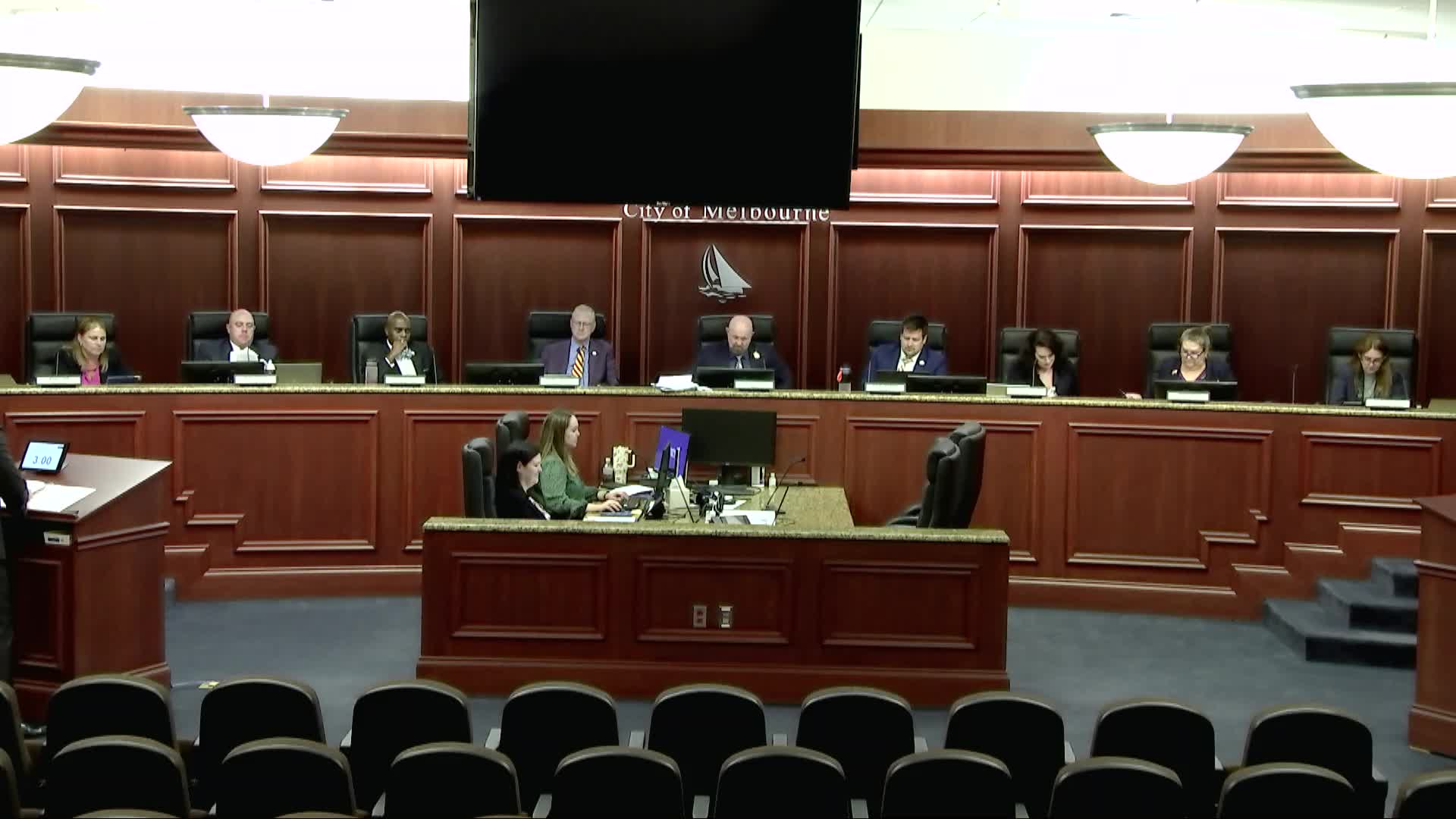
The Melbourne City Council on April 22 adopted a city septic-to-sewer grant program intended to accelerate the removal of aging septic systems that discharge into waterways feeding the Indian River Lagoon.
City staff described the program as a reimbursement-based grant that will pay licensed contractors for approved septic removal and sewer connection work after permit inspections and documentation. Staff said the program is intended to be funded from a combination of Melbourne’s stormwater utility funds, Save Our Indian River Lagoon trust funds, Florida Department of Environmental Protection grants, or other grant sources as they become available.
As written, the city will cap individual grants at $30,000; any individual grant over that amount would require separate council authorization, staff said. The council also approved a companion resolution delegating authority to the city manager or the manager’s designee to award and distribute grant funds under the program.
Staff identified neighborhood priorities for the program as areas in the lagoon watershed where older septic systems are nearest the water, including Villa Espana, Pineapple Avenue, Roxy, Hoag, Crichton and Hazelwood; staff said priority will be given to properties that discharge directly to the lagoon or its tributaries. Staff noted many older systems were installed before modern standards and that some failing tanks go unnoticed because sandy soils can mask failures.
Council member Bassett asked for a ballpark cost for conversions. City staff said the primary cost is installation of a grinder pump and forced main connection; staff estimated typical grant-supported conversions run from roughly $12,000 to $20,000 and can reach $20,000–$24,000 depending on distance to the sewer main and site conditions. Staff described a process that will allow homeowners to assign the repayment to contractors so the city can reimburse contractors directly after inspections — an assignment-of-payment form will be required.
Staff said there is no immediate fiscal impact because the program will use grant or designated funds as they are available; council adopted the program and delegated distribution authority so staff can act when funding sources are identified. Council approved the program by voice vote.
The resolutions approved were numbered 4341 (program adoption) and 4342 (delegation of authority). Council also asked staff to include an exhibit list of recent addresses to show where previous grants have applied and to continue to prioritize properties that are direct dischargers to the lagoon.
Provenance: staff presentation and council discussion on the septic-to-sewer program appear in the April 22 meeting transcript at item 15.