Lifetime Citizen Portal Access — AI Briefings, Alerts & Unlimited Follows
Senate Energy Committee grills nominees on permitting, tribal consultation, Colorado River, nuclear and EIA independence
Loading...
Summary
The Senate Energy and Natural Resources Committee heard testimony from four presidential nominees to senior posts at Interior and Energy, pressing them on permitting, tribal consultation, Colorado River operations, nuclear deployment, and the Energy Information Administration’s independence.
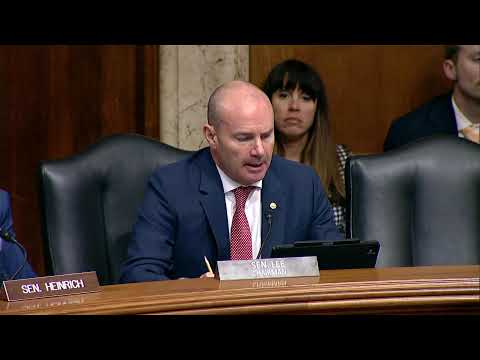
The Senate Committee on Energy and Natural Resources held a nominations hearing that examined four presidential nominees for senior positions at the Department of the Interior and the Department of Energy.
Nominees introduced themselves and described priorities if confirmed. Andrea Travnik, nominated to be Assistant Secretary of the Interior for Water and Science, said she would prioritize western water infrastructure, the Colorado River, and updating scientific resource assessments: “If confirmed in this role, yes, I'm committed to working towards that as well,” she told Senator Hoeven when asked about western water infrastructure. Travnik said timely data and collaborative operations had informed her public‑service work on flood response in North Dakota.
Leslie Beyer, nominated to be Assistant Secretary for Land and Minerals Management at Interior, highlighted management of the Bureau of Land Management, Bureau of Ocean Energy Management, the Bureau of Safety and Environmental Enforcement, and the Office of Surface Mining and pledged to “be a responsible steward of more than 245,000,000 acres of surface, 700,000,000 acres of subsurface, and over 3,000,000,000 acres offshore.” She told senators she would work with states, tribes, and industry to balance multiple uses and follow congressional directives.
Ted Gerrish, nominated as Assistant Secretary for Nuclear Energy at DOE, said the nation needs to begin building the next generation of reactors and resolve nuclear-waste management: “First and foremost, as soon as feasible, we need to build a new reactor, either a large or small or SMR or microreactor,” he told the committee. Gerrish described programs to test prototypes at Idaho National Laboratory and said the department must pursue financing tools and public‑private mechanisms to bring first‑of‑a‑kind reactors to market.
Tristan Abbey, nominated to lead the Energy Information Administration, emphasized EIA’s role in providing objective data and said restoring EIA capacity is a priority. He told Chairman Lee and Ranking Member Heinrich he would focus on clearing unfinished projects, recruiting staff, modernizing systems, and producing a congressionally directed critical minerals outlook: “If confirmed, it would exist,” Abbey said of the 2021-mandated outlook.
Senators questioned nominees across several recurring themes.
Permitting and NEPA timelines: Senators pressed Beyer and Travnik on expedited permitting guidance discussed by the administration that in some cases targets reviews within 14–28 days and asked whether tribal consultation could be completed meaningfully in that time. Travnik said the department would need to “engage with tribes” and that the goal is to “move forward while still meeting the different requirements.” Beyer said permitting timelines must be reasonable and pledged to work with the committee to streamline processes without losing transparency.
Tribal consultation and monuments: Senators asked whether tribal consultation would be preserved under expedited reviews and urged meaningful—not “check‑the‑box”—consultation. Beyer and Travnik both said they would work with tribal leaders and congressional delegations on monument boundaries, conveyances, and project reviews if confirmed.
Colorado River and hydropower: Travnik said Colorado River obligations and upcoming deadlines would be a top priority if confirmed and pledged to work with the seven basin states. Senators raised concerns that operational decisions at Glen Canyon Dam and other Reclamation actions that affect hydropower could force customers to buy replacement power at higher cost; Travnik said she would investigate how to preserve low‑cost hydropower while meeting environmental requirements.
Nuclear deployment and financing: Several senators asked Gerrish how to accelerate demonstration and commercialization of advanced reactors and whether the department would coordinate with the Nuclear Regulatory Commission and use financing tools (loan guarantees, grants, public‑private partnerships) to support early projects. Gerrish said the department must license and build first‑of‑a‑kind plants, and that financing mechanisms are necessary to achieve scale.
EIA independence and the critical minerals outlook: Senators pressed Abbey to commit to objective, nonpartisan data. He pledged objectivity and said the critical‑minerals outlook directed by Congress in 2021 would be produced if he is confirmed. Abbey said modernizing EIA and expanding global data collection are priorities.
Other matters raised included concerns about workforce reductions and program changes at DOE, the halted distribution of some Bipartisan Infrastructure Law and Inflation Reduction Act funds, and the status of Indian water‑rights settlements. Ranking Member Martin Heinrich said he would vote for at least some DOE nominees despite reservations about department direction and pledged to hold appointees accountable.
The nominees were sworn and responded that they would appear before the committee, that they were not aware of conflicts of interest that would prevent them from serving, and that they did not hold assets in a blind trust (as asked by the chair). The committee opened 5‑minute rounds of questioning; in several cases senators scheduled follow‑up meetings and asked for additional materials. The hearing record will remain open for additional statements and questions for the record.