Lifetime Citizen Portal Access — AI Briefings, Alerts & Unlimited Follows
Lawmaker urges support for three Clean Air Act updates to speed permitting
Loading...
Summary
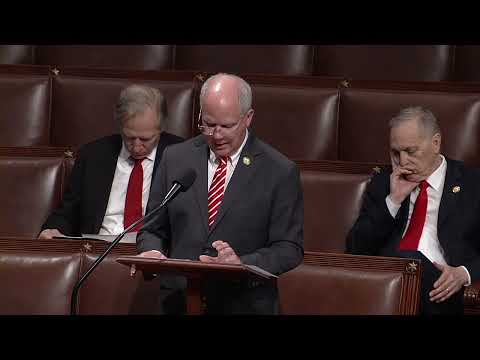
A House lawmaker on the floor urged colleagues to back three bills—HR 6409 (Fences Act), HR 6398 (Red Tape Act) and HR 6387 (Fire Act)—saying they would modernize the Clean Air Act, reduce permitting delays and protect states from foreign or unavoidable emissions while preserving environmental safeguards.
A House lawmaker on the floor urged colleagues to support three bills—HR 6409 (Fences Act), HR 6398 (Red Tape Act) and HR 6387 (Fire Act)—that he said would modernize the Clean Air Act and shorten permitting timelines for energy and manufacturing projects.
The lawmaker framed the measures as part of the committee's permitting-reform agenda and aligned with White House permitting priorities, saying, "A lot has changed since 1990," and that the Clean Air Act has not had a substantive overhaul since then.
He said the current permitting regime creates regulatory gridlock that "stifles American growth and innovation" and presented several statistics from his remarks to justify reform. "In the U.S., it takes 80 percent longer to permit projects than elsewhere in the world," he said, and added that "America's outdated permitting system cost manufacturers in the U.S. approximately $7,900,000,000 each year." He attributed those figures to his floor remarks; they were presented as claims made during the address and were not independently verified in the proceedings.
The lawmaker said the three bills would address different aspects of permitting and air-quality regulation. He described the Fences Act, introduced by Rep. Pflueger, as clarifying that foreign-source emissions'whether natural or man-made'should not be counted when determining whether a state meets national air-quality standards. "The Fences Act protects manufacturers and communities from unnecessary compliance burdens caused by events beyond their control," he said, citing examples such as pollution from other countries, wildfires or dust storms.
He characterized the Red Tape Act, introduced by Rep. Joyce, as removing duplicative environmental review requirements for projects already subject to NEPA review, saying duplicate processes "lead to additional delays and costs in the NEPA process." According to the floor remarks, that change is intended to reduce permitting time and lower administrative costs for projects that already undergo federal environmental review.
On the Fire Act, the lawmaker said the measure (introduced by Rep. Gabe Evans and co-led by Rep. Adam Gray) would update the Clean Air Act to better account for wildfire smoke and prescribed burns. "Bipartisan legislation ensures that states are not punished for prescribed burns or emissions they cannot control," he said, adding that prescribed burns are "the most effective tool to decrease the severity of wildfires and public health problems associated with wildfire smoke," and that regulatory burdens have limited their use.
Throughout the remarks he warned about competitiveness, saying without reforms "our nation's risk falling behind our adversaries like China." He also asserted that over 70% of projects require Clean Air Act permits, which he described as the most burdensome permitting requirement; that claim was presented during the address and not tested or verified on the floor.
The lawmaker closed by urging colleagues to back the three bills as "common sense solutions" that would update the Clean Air Act and then yielded back the floor. No formal vote or recorded action on the bills occurred during these remarks.
Notes: All numbers and policy characterizations above reflect statements made by the speaker on the House floor; they are reported here as floor remarks and were not independently verified within the transcript.