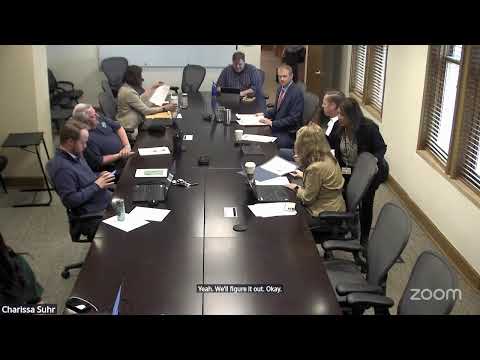
Commissioners debate PFAS task force and $7.5 million state allocation as county staff prepare implementation steps
Summary
Commissioners debated the scope and form of a PFAS task force and next steps for administering roughly $7.5 million in state funds awarded to Spokane County for PFAS response; staff reported outreach to Ecology and academic partners but requested executive‑session follow‑up on implementation details.
A vigorous discussion on April 29 addressed how Spokane County should organize oversight of newly allocated PFAS funds and next steps for implementation. Commissioners and staff discussed forming a task force or advisory group, transparency and public participation measures, and governance of $7.5 million in state funding that staff said was appropriated to Spokane County.
Commissioner comments showed a difference of view about whether a county‑sanctioned task force should be established. One commissioner said he had paused while scope issues were debated (whether the task force should study immediate health impacts only, or also longer‑term infrastructure solutions such as new water sources or APA expansions) and said that, with impasse reached, he would proceed to convene meetings with the County Health Officer, who agreed to co‑convene when he returns from travel. That commissioner said he has engaged the college and Ecology staff and asked for executive‑session follow‑up on implementation details.
Other commissioners emphasized that any county use of the state allocation will be a board decision and that staff must not be directed by a single commissioner to deploy significant resources; they requested that the health‑district co‑chair be formally invited to discuss scoping with the full board. Commissioners also discussed the open‑meeting considerations that arise if three or more commissioners participate in a task‑force body and asked legal staff to advise on a structure that would preserve openness while allowing robust stakeholder input.
Staff said they had met with college partners and Ecology and were preparing implementation steps and a draft communications plan; the staff indicated some positive developments about use of the allocation but said details could not be discussed in open session and suggested an executive‑session briefing for the board. No formal board decision was made on task‑force structure during the briefing; commissioners asked staff to return with options for an advisory process and legal counsel on open‑meeting law implications.
AI generated
The text on this page is AI generated. Summaries, highlights, analysis, and video transcripts are all produced from the original source material.
AI can make mistakes, so if you spot one, and we will fix it for everyone.
Note: the source content is unaltered by us. Any content source we link to, be it a video, an audio recording, or a document, is presented exactly as its publisher released it. That publisher is usually a government body, sometimes an individual official or another organisation.