Lifetime Citizen Portal Access — AI Briefings, Alerts & Unlimited Follows
Senate committee presses nominee on supply chains, munitions and small‑business barriers
Loading...
Summary
Michael Catanazzi, the White House nominee to be assistant secretary of defense for industrial base policy, told the Senate Armed Services Committee that he would focus the office on “prioritization, productivity, and production” while working with Congress and industry to expand munitions capacity and secure critical minerals.
Michael Catanazzi, the White House nominee to be assistant secretary of defense for industrial base policy, told the Senate Armed Services Committee that he would focus the office on “prioritization, productivity, and production” while working with Congress and industry to expand munitions capacity and secure critical minerals.
In his opening statement, Catanazzi said the United States faces “constraints in crucial and exquisite capabilities delivered in uncomfortably limited quantities,” adding that the department must both address urgent wartime needs and pursue long‑term transformation of manufacturing and materials supply chains. He said he would use tools such as the Defense Production Act and the Industrial Base Analysis and Sustainment (IBAS) program to drive private investment and scale production.
The nomination hearing centered on several recurring themes: how to grow munitions production quickly, how tariffs and foreign investment affect suppliers, how to reduce compliance burdens that keep small businesses from contracting with Defense, and how to secure supply chains for rare earths and other critical minerals.
Catanazzi told Sen. Deb Fischer, chair of the Senate subcommittee on strategic forces, that “predictable and stable defense budgets” and clearer signals about surge expectations would help industry make capital investments. He also said the department should scale workforce and leverage small businesses to expand capacity.
On tariffs and supply‑chain risk, Catanazzi acknowledged the issue’s complexity and told Sen. Reed that he had not yet seen a definitive internal analysis but was prepared to work with the committee to assess impacts. He said IBAS and DPA investments “collectively invested over $540,000,000 into these resource developments over the past few years” and that further use of those authorities is warranted.
Committee members also pressed Catanazzi on foreign investment risk and CFIUS engagement near military installations. Catanazzi said adversarial capital and transactions involving Chinese companies are a “top priority” for the office and that he would seek additional resources to expand analysis and scrutiny.
Senators repeatedly raised small‑business obstacles to DOD contracting, including compliance with cyber standards such as the Cybersecurity Maturity Model Certification (CMMC). Catanazzi described Project Spectrum, a program in the industrial base policy office intended to help small firms meet requirements, and said he would work with the committee to expand assistance and lower barriers where possible.
Lawmakers also sought commitments on acquisition authorities. Catanazzi said he supports more aggressive use of authorities such as middle‑tier acquisition and other transaction authority and said he would work with senators on legislative measures to make those approaches more durable.
On artificial intelligence procurement, Sen. Elizabeth Warren pointed to Office of Management and Budget guidance on avoiding vendor lock‑in and protecting government data. Catanazzi said he was not familiar with every detail of the OMB guidance in the hearing record but expressed willingness, if confirmed, to work with senators to ensure DOD acquisitions protect competition and data security.
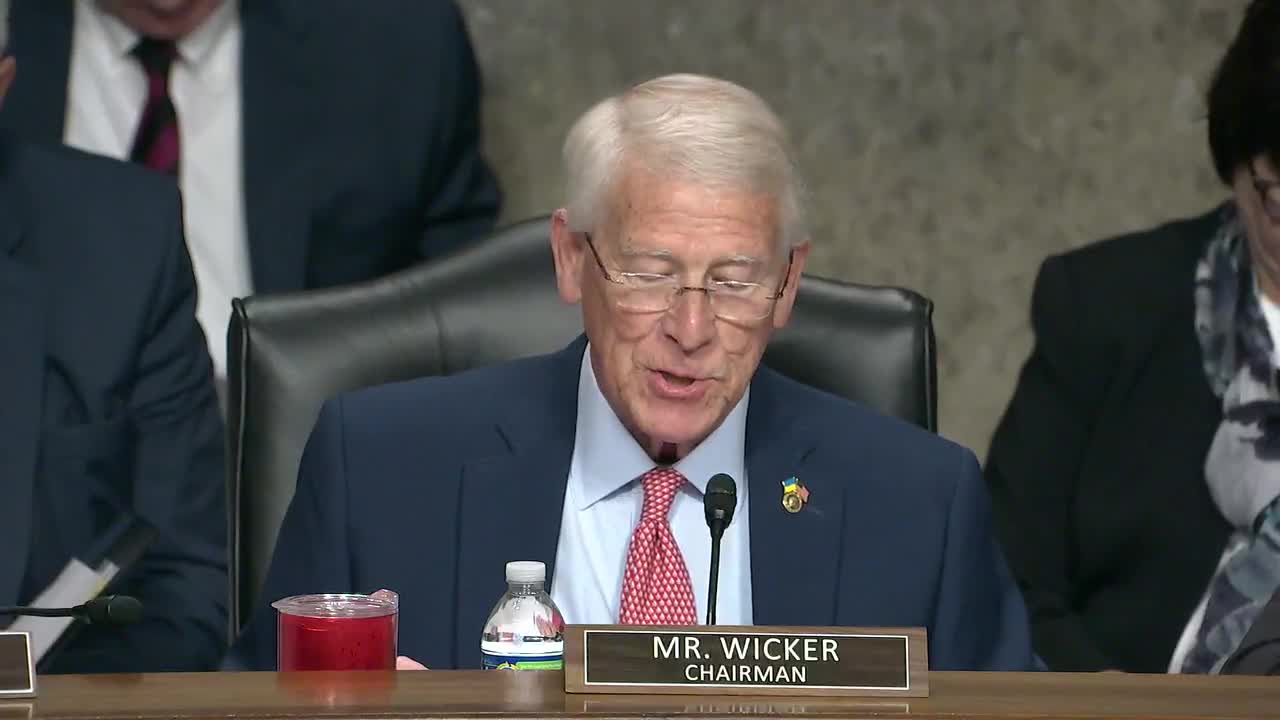
Chairman Wicker and others asked about the staffing and scale of the industrial base policy office. Catanazzi acknowledged the office’s small size relative to its responsibilities and agreed to provide the committee with staffing plans and follow‑up analysis on how to resource the work.
Questions for the record and additional follow‑ups were requested; committee staff set deadlines for responses. The hearing included extended exchanges but no votes on the nominations during the session.
Upcoming steps: the committee will collect written questions and submit them to the nominees; Catanazzi said he would cooperate and provide analyses requested by senators.