Lifetime Citizen Portal Access — AI Briefings, Alerts & Unlimited Follows
House approves emergency funding, oversight changes to avert Division of Developmental Disabilities shortfall
Loading...
Summary
The Arizona House passed House Bill 2,945 on an emergency basis after heated debate, approving a supplemental funding package and new oversight and ‘‘guardrails’’ for the Parents as Paid Caregivers program and other waiver-driven changes to the state'funded developmental disabilities system. The bill passed 48-11-1 and will be sent to the Senate.
The Arizona House of Representatives approved House Bill 2,945 as an emergency measure Wednesday, 48-11-1, moving a supplemental funding and oversight package aimed at preventing the Division of Developmental Disabilities (DDD) from running out of money. The bill, carried through the Appropriations process and amended on the floor, includes a new funding source and requirements for legislative review of certain Medicaid waiver changes.
The measure matters to roughly tens of thousands of families who rely on DDD services: sponsors and supporters said the bill averts an imminent funding crisis and adds accountability measures they say are needed after rapid growth in program use. Opponents said the compromise still leaves important needs unaddressed for some families and voiced concern about specific funding shifts.
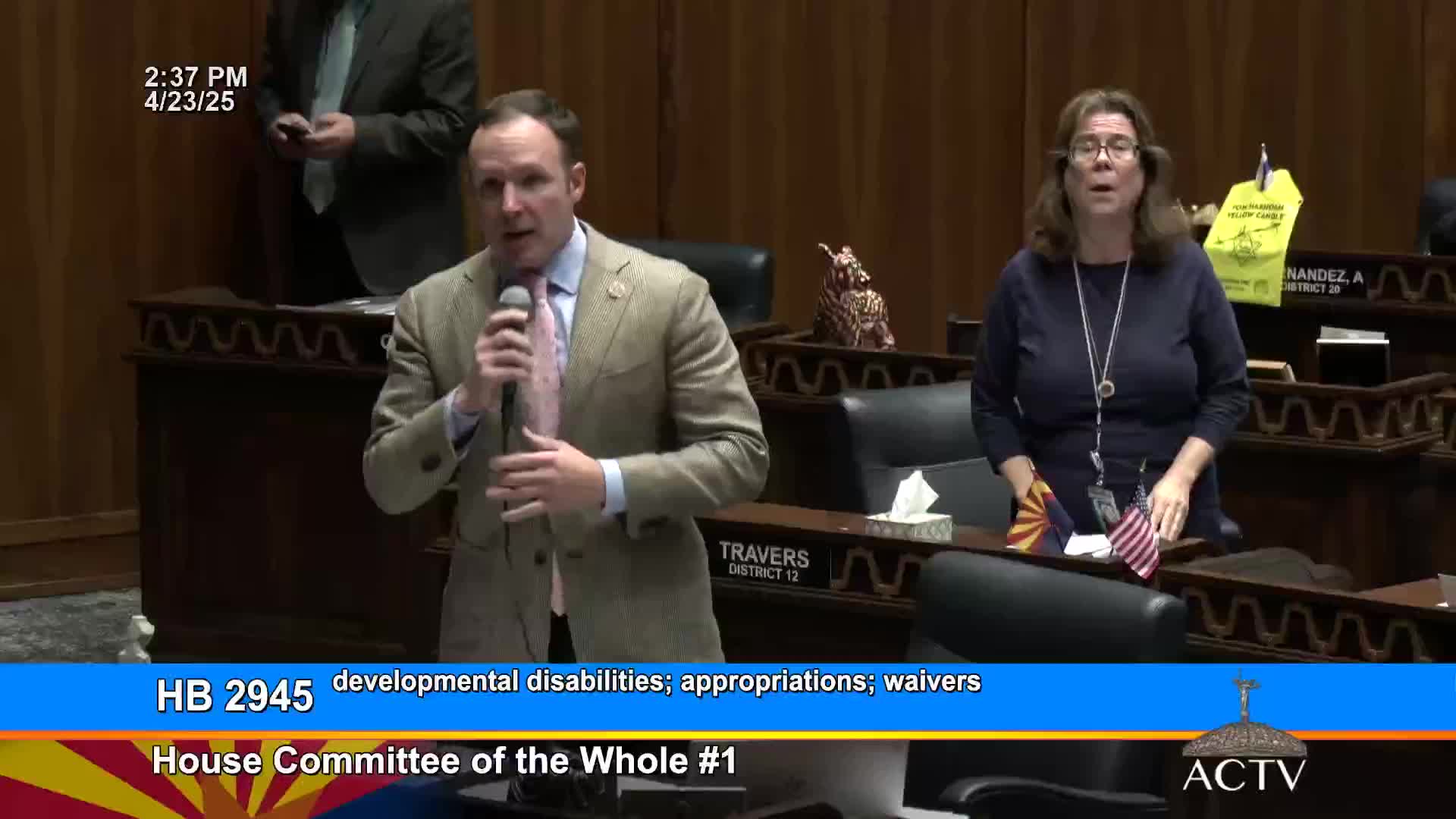
Representative Matt Gress, who led the floor amendment debate, said the package provides funding and a set of policy guardrails aimed at stabilizing the program. "We are taking up a bill of paramount importance to 60,000 families in the state of Arizona," Gress said on the House floor, urging adoption of the substitute amendment that ultimately was folded into the committee amendment the chamber passed.
Key provisions incorporated in the final bill include: - A supplemental appropriation sourced from the Prescription Drug Rebates Fund; sponsors said the fund holds more than $300 million and can sustain a $122 million appropriation to cover the immediate DDD shortfall. - Legislative review requirements for waiver amendments: if a waiver expands covered populations, adds covered services, or causes utilization to rise by more than 10 percent, the administering agency must come to the Legislature for approval; lesser changes must be monitored for a three-year implementation period. - Electronic visit verification (EVV) and strengthened "extraordinary care" standards intended to ensure payments for parents as paid caregivers (PPCG) match services actually provided to the child. - A 40-hour cap on paid parent caregiving hours, a limit sponsors said the governor's office had already planned to implement; Representative Gress said implementation was expected to begin July 1.
Opponents, including Representative Nancy Gutierrez in earlier remarks, said the substitute language did not match what some families had requested and expressed concern that specific limits could exclude the most medically intensive children. "We could get this done today and be done with it, with proper things in place," Gutierrez told colleagues during debate; she later acknowledged staff work and bipartisanship in final negotiations.
Other critics warned the bill tapped contested funding sources and could have downstream effects. Representative Vito Santos (remarks on the floor) called the amendment a "partisan exercise" and cautioned that moving money from other programs could trigger contractual and legal challenges.
The bill drew prolonged floor debate and multiple procedural steps in the Committee of the Whole. A substitute amendment in Representative Gress's name initially failed on a division vote (20 ayes, 37 nays) during one Committee of the Whole session. The House later adopted a substitute to the Appropriations Committee amendment and the amended bill received a final third-reading passage as an emergency measure (48 ayes, 11 nays, 1 not voting). The clerk recorded the bill for transmission to the Senate.
Representative Livingston, chairing Appropriations during the floor process, thanked colleagues and staff and said he expected the Senate to pass the measure and the governor to sign it. "I do expect the Senate to pass this. I do expect the governor to sign this," Livingston said after final passage.
Votes at key steps: - Failed adoption of the Gress substitute floor amendment (division call): 20 ayes, 37 nays. - Adoption of the Appropriations Committee amendment as amended (substitute adopted on the floor): vote recorded in floor proceedings. - Final passage (third reading) of HB 2,945 as amended, with emergency: 48 ayes, 11 nays, 1 not voting.
What the bill does not do: the final compromise removes explicit capitation rate-setting language that had drawn provider concern and keeps some authority with the administering agencies, while adding the legislative waiver-review triggers. Supporters said the changes strike a balance between keeping services running and restoring the Legislature's fiscal oversight.
The House transmitted the bill to the Senate; sponsors urged the Senate to act quickly so families and providers would not face service interruptions.