Lifetime Citizen Portal Access — AI Briefings, Alerts & Unlimited Follows
Milwaukie staff advance functional-classification maps for pedestrian, bike, transit networks
Loading...
Summary
City transportation staff presented mode-specific functional-classification maps and proposed project lists for the Transportation System Plan update, emphasizing an aspirational overlay that will be refined into a prioritized, constrained project list to feed the capital improvement program.
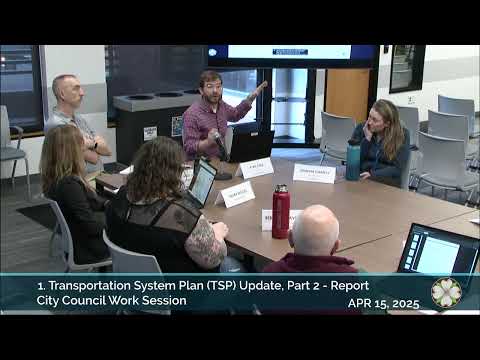
City transportation staff presented proposed functional-classification maps for pedestrians, bicycles, transit and freight at a Milwaukie work session, outlining how the maps will guide project design and prioritization and explaining that the maps mix current conditions with aspirational future service.
The presentation, which picked up where a previous March work session left off, described a two-part approach: mode-specific network maps and a written classification that defines the role each route plays within that mode. "It's an aspirational map, not a current condition," a transportation staff member said, noting that some lines on the maps reflect planned or anticipated future improvements rather than existing infrastructure.
The maps are intended to sit alongside the city’s existing automobile functional classification; staff said the goal is to be clearer about which routes should receive treatments for comfort and safety for people walking, biking and using transit. The staff member illustrated the approach using the Monroe Greenway as an example, saying the corridor encounters very different land uses and speeds from east to west and therefore would require different interventions on different segments.
Staff also described a proposed method for scoring projects against goals and objectives and said the team has already developed an unconstrained project list. "We have an over 200 total projects, at least in [bicycle and pedestrian] modes together, to weigh and evaluate and make sense of," the staff member said. Projects will be evaluated, costed and then prioritized; projects placed on the constrained list would move into the city's capital improvement program (CIP).
Council members pressed staff on potential conflicts among modes where routes overlap, the practical limits of achieving the lowest Level of Traffic Stress (LTS) citywide for pedestrians, and jurisdictional gaps where adjacent jurisdictions (notably Portland and Clackamas County) control portions of corridors. A council member asked whether staff had produced an overlay to flag direct conflicts between bike, pedestrian and transit classifications; staff said they had tried to account for parallel routes and other trade-offs, and that design-level project work would look at specific conflicts.
Staff acknowledged inconsistencies in the draft maps where jurisdictional boundaries or recent committee feedback had not yet been incorporated. They said a more recent freight designation for a railroad corridor exists in their data though it did not appear in the presentation slides.
On schedule and next steps, staff said advisory-committee materials and the unconstrained project list are posted online and that the team would return to council with project-level information beginning June 3. "Now we're in the steps of actually developing solutions and project," a staff member said. Council members and staff discussed using the scoring and prioritization to create programmatic bundles of smaller safe-street projects and noted that some projects will require coordination with regional partners, grant funding or changes to right-of-way.
Why it matters: the proposed functional classifications and the project list will form the backbone of the TSP update’s implementation path and feed into the city’s CIP. The classifications will affect which corridors get design attention, how projects are packaged for grants, and which neighborhoods receive investments to improve walking, biking and transit access.
Staff noted the maps are still proposed and will be revised before any final adoption. They encouraged council members and the public to review the advisory-committee materials online and provide comments; staff committed to returning to council in June with the project list and prioritized recommendations.