Get Full Government Meeting Transcripts, Videos, & Alerts Forever!
Get email alerts on the Digital Asset Mining topic
No spam. Unsubscribe anytime.
Senate debate on digital-asset mining bill centers on energy, zoning and state oversight
Summary
Senators debated S.163, a bill laying out a state-level regulatory footprint for digital-asset mining, with questions focused on energy use, local zoning authority and coordination with the Public Service Commission. Senator from Lawrence moved to carry the bill over for further consideration.
Senators debated S.163, a bill intended to create statutory rules for digital-asset (cryptocurrency) mining operations in South Carolina, focusing on energy consumption, local zoning and the role of the Public Service Commission.
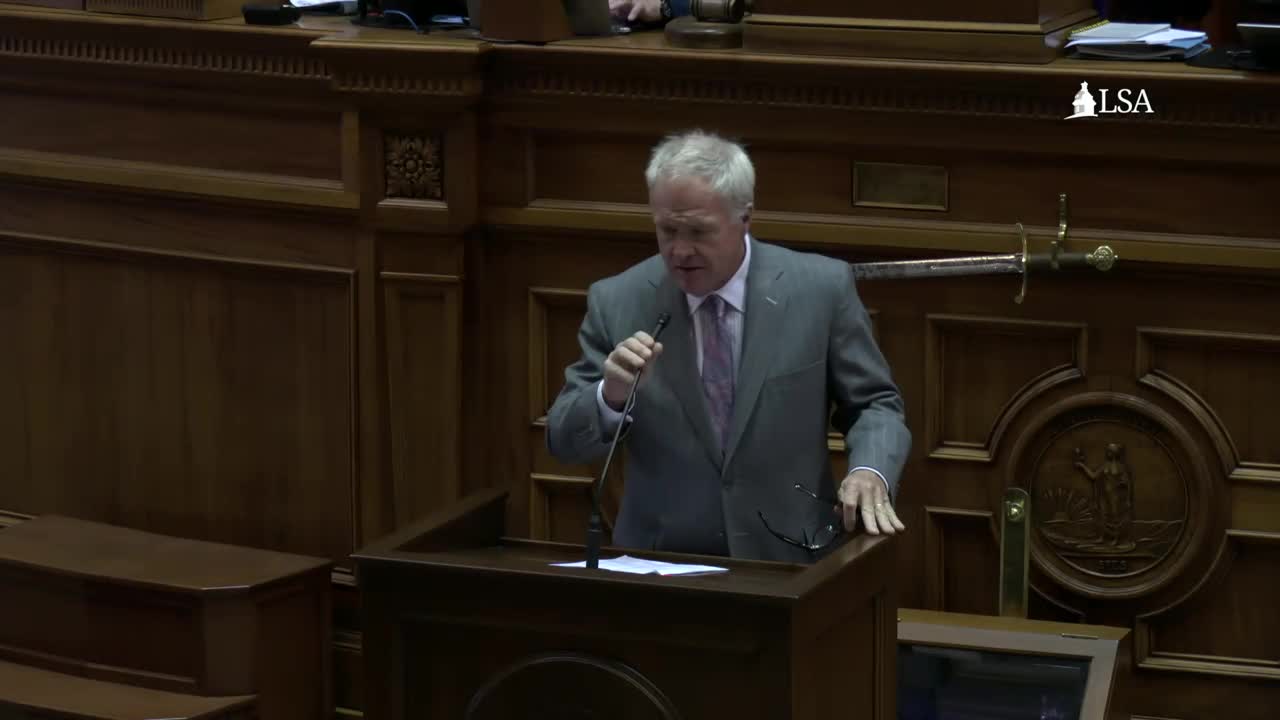
The bill’s sponsor, identified in the transcript as the Senator from Lawrence, told colleagues the legislation is designed to provide a “reasonable footprint” in state code so the legislature can begin to address an industry the sponsor described as “alive, active, and . . . growing exponentially.” He said existing industrial zoning and regulatory tools already address many issues and that the bill is not meant to create a new, special category for high-energy users.
The bill drew questions from members worried about potential conflicts with recent energy legislation and with local zoning authority. Senator Campson asked whether digital-asset mining operations should be treated like data centers given their high electricity demand: “Isn’t it cryptocurrency that requires these massive amount of energy?” The sponsor replied that existing industrial zoning law and the Public Service Commission’s oversight of high-consumption customers would apply.
Other senators urged more time to review the amendment language and to coordinate the bill with utilities and the energy legislation recently passed. The senator from Lawrence agreed to further consultation and said he would convene stakeholders, including those who worked on last week’s energy bill.
After discussion, the Senate voted to carry S.163 over for further consideration; the motion to carry over was passed by voice vote. No substantive final action (passage or defeat) occurred during this session.
The bill’s proponents said it aims to avoid creating duplicate local rules for industrially zoned areas and to preserve the Public Service Commission’s authority to review high-usage customer plans. Detractors urged additional review to ensure the bill does not unintentionally preempt local zoning or conflict with energy-system planning.
The bill was carried over to a later calendar so senators and stakeholders could examine the committee language and the proposed amendment in greater detail.