Get AI Briefings, Transcripts & Alerts on Local & National Government Meetings — Forever.
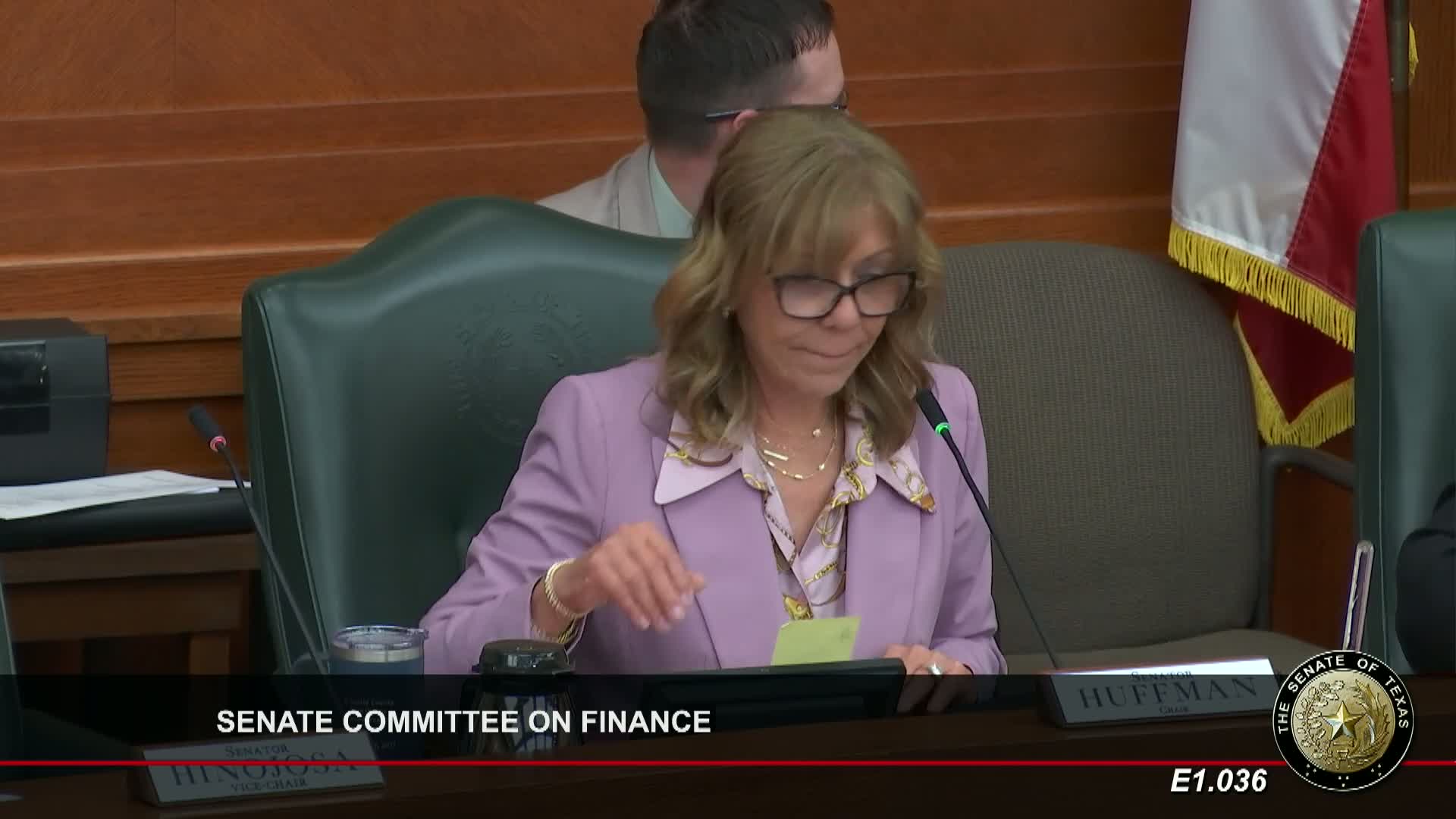
Senate panel backs bill to codify Judicial Centers of Excellence program
Loading...
Summary
The Senate Committee on Finance voted to report a committee substitute for Senate Bill 15 74, which would codify the Texas Judicial Council's Centers of Excellence program that evaluates and recognizes courts meeting specified performance standards.
The Senate Committee on Finance on Friday voted to report favorably a committee substitute for Senate Bill 15 74, a measure to codify the Texas Judicial Council's Centers of Excellence program and make the recognition process statutory.
The bill, laid out by Senator Judith Zaffirini and discussed at length by committee members and witnesses, would define evaluation criteria for eligible courts and make the program permanent. "The Centers of Excellence program is an initiative by the Texas Judicial Council to identify, support, and highlight the excellent work done by courts across the State," Zaffirini told the committee, describing standards that include governance, access and fairness, caseflow management and court operations.
The nut graf: supporters said the bill standardizes evaluation and recognition for courts across multiple jurisdictions and seeks to increase public trust in the judiciary by making the program stable through statute. "I sincerely hope that you will support Senate Bill 15 74 in the interest of justice so that the best courts can be evaluated," said Victor Villareal, judge of Webb County Court at Law No. 2, who described his court's prior designation and the improvements his staff made after the assessment.
In testimony the committee heard from two judges and the administrative director of the Office of Court Administration, who serves as executive director of the Texas Judicial Council. Mark Russo, who identified himself as a justice of the peace and a Centers of Excellence designee, called the effort "an excellent bill" and said the multi-step process "ensures procedural fairness" and helps courts mentor each other. "It makes it better. And why wouldn't you want a transparent government where the judges are honest about how they perform?" Russo said.
Megan Lavoie, administrative director for the Office of Court Administration, told senators the mentoring and outreach are already occurring informally: "I think it's already happening," she said, describing judges who hold the designation acting as "ambassadors for the program" and training peers through existing judicial training centers.
Senators discussed the bill's original fiscal provisions and a committee substitute that struck references to merit pay and expanded eligibility to include justices of the peace and municipal judges. Senator Zaffirini noted she had removed the merit-pay language; Senator Perry thanked her for doing so, saying the change addressed concerns about compensation incentives.
The committee adopted the committee substitute and later voted to report the substitute favorably to the full Senate. Tally: 9 ayes, 0 nays. The committee recorded the substitute as certified for the appropriate calendar with an objection to local and uncontested certification noted in the record.
Supporters said the program is voluntary and intended to "raise the bar" by identifying courts that meet all specified standards; opponents were not recorded during the public testimony period. The committee left the bill to be considered by the full Senate next.
Ending: The bill now goes to the full Senate after the committee's favorable report; committee supporters said the change is meant to provide stability and consistency for a program they say already has produced improvements in court operations and public transparency.