Lifetime Citizen Portal Access — AI Briefings, Alerts & Unlimited Follows
Bill would extend Sunset Act and add JLARC planning criteria; sponsor says change improves audit timing
Loading...
Summary
House Bill 1372 would extend the Sunset Act termination date and require JLARC to tailor resource commitments and consider whether recurring mandated reviews would yield new information; sponsor and stakeholder asked the committee to allow flexibility when data are limited or disrupted.
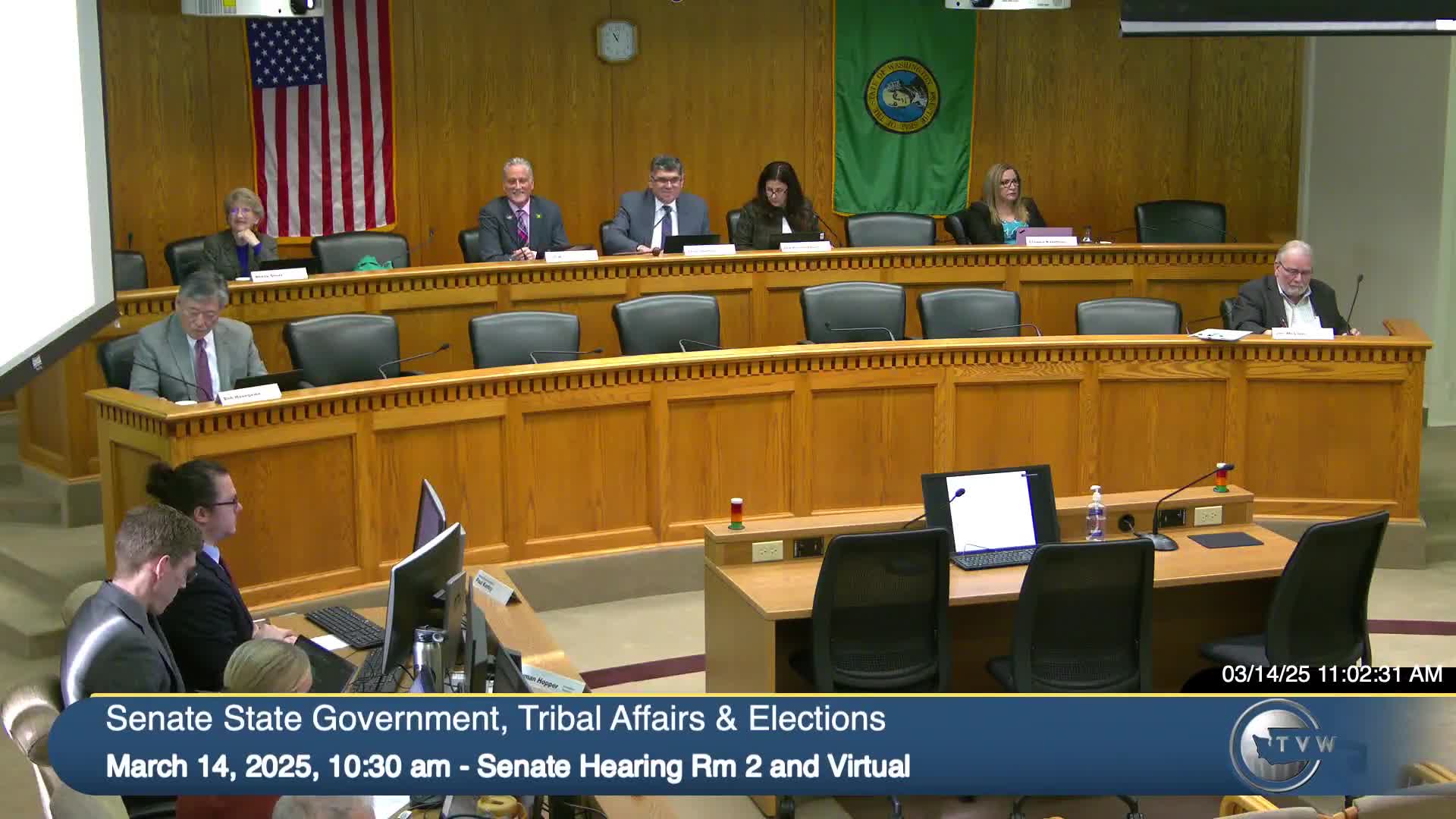
On March 14 the Senate State Government, Tribal Affairs & Elections Committee heard House Bill 1372, which would extend the state’s Sunset Act and add requirements and flexibility to the Joint Legislative Audit and Review Committee’s (JLARC) planning and review process.
Committee staff summarized three main changes: a 20-year extension of the Sunset Act’s expiration date; a requirement that JLARC develop criteria to ensure staff and resource commitments are proportionate to the size and complexity of program budgets; and an instruction that JLARC consider whether mandated recurring reviews would produce new information before scheduling them. The bill also removes a statutory exception that had kept JLARC from reviewing the Department of Natural Resources’ sustainable-harvest calculation if litigation was pending.
Representative Ed Orcutt, a member of JLARC and the bill’s House sponsor, said JLARC often must decide whether it has sufficient data to conduct a reliable audit and that the bill would give the committee discretion to avoid studies when data are incomplete or interrupted. Orcutt emphasized the budgetary stakes, saying the DNR sustainable-harvest review affects timber revenues used in capital budgets and school construction funding.
Becky Bogard of Washington Filmworks asked the committee to consider an amendment that would let JLARC delay scheduled reviews when a program has undergone significant statutory changes and therefore lacks enough implementation time to generate meaningful data.
Committee members asked staff to clarify how the changes interact with JLARC’s existing mandates and with recent requirements to add racial-equity analysis to studies; staff said the bill would not remove that equity requirement. The committee closed the hearing without a vote.