Get AI Briefings, Transcripts & Alerts on Local & National Government Meetings — Forever.
Senate advances nutrition and school-food package, approving Kolkhorst labeling measure and school-meal additive ban
Loading...
Summary
On March 12 the Texas Senate approved SB 25, a broad nutrition-and-labeling measure by Sen. Lois Kolkhorst, and SB 314, a bill by Sen. Joan Hughes that bars certain additives from free and reduced-price school meals; both bills passed after floor amendments addressing industry and school-district concerns.
The Texas Senate on March 12 approved a package of bills aimed at improving nutrition and what children are served in schools, adopting a prominent consumer-labeling and nutrition bill and a separate measure that bars certain additives from meals served through the free and reduced-price school lunch program.
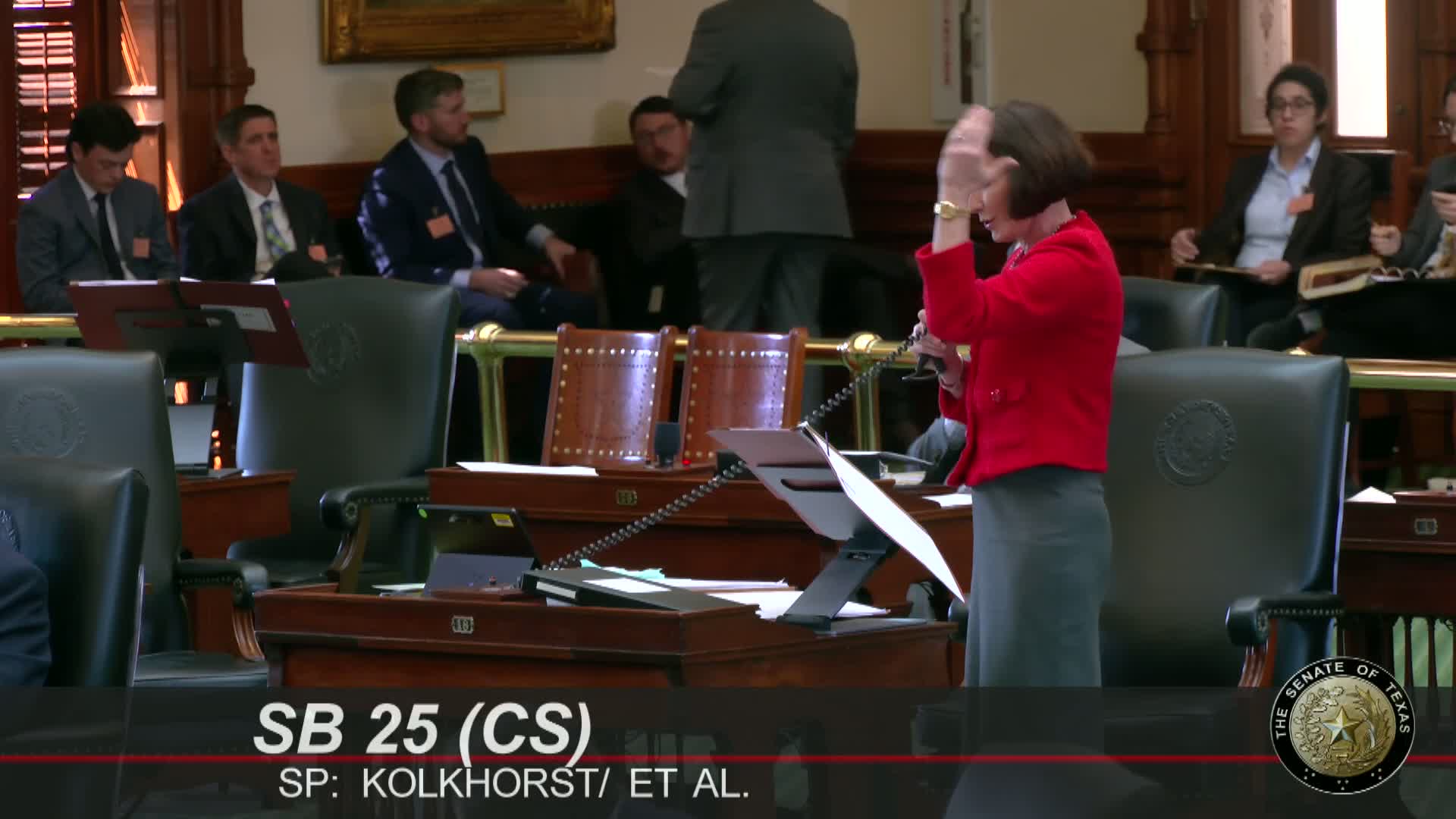
Senator Lois Kolkhorst’s committee substitute for Senate Bill 25 passed the Senate after floor debate and amendments. The bill creates a Texas Nutrition Advisory Committee, requires improved labeling for certain ingredients that other Western countries ban, requires expanded physical education and nutrition instruction in schools, and adds continuing-education requirements in nutrition for health-care practitioners who interact with patients. Kolkhorst said the measure is intended to “arm Texans with information so they can make their decisions on their foods.”
As introduced and amended on the floor, the bill includes a labeling requirement for products sold in Texas that contain ingredients banned in jurisdictions such as the EU and Canada; sponsors said the bill does not ban products but requires disclosure and provides a runway for manufacturers to comply. The Senate adopted a floor amendment worked on with industry that: (1) provides an updated list of ingredients for labeling; (2) exempts certain on-site, ready-to-eat foods (deli/bakery items prepared for immediate consumption) from packaging requirements; and (3) clarifies that the labeling requirement applies to any product offered for sale in Texas, not just products manufactured here.
Senators debated several policy elements at length. Kolkhorst proposed mandatory five-days-per-week physical education through eighth grade and said the bill will discourage using PE as a punitive measure. Senator Schwartner and others pressed on the bill’s fiscal note and long-term budget effects; Kolkhorst and supporters said upfront administrative costs to state agencies are expected to be offset over time by public-health savings. Lawmakers also added an amendment to require continuing education in nutrition for nurses and physician assistants, expanding an original physician-focused requirement.
Separately, the Senate approved Senator Hughes’ committee substitute for SB 314, a measure that prohibits certain food additives (the transcript cited brominated vegetable oil, potassium bromate and some artificial dyes) from being included in free and reduced-price meals provided by school districts. The Hughes bill drew amendments to protect school meal access during transition: an amendment accepted on the floor provides an automatic one-year waiver for districts that cannot comply through no fault of their own and allows further administrative waivers where supply-chain or other constraints prevent compliance.
Votes recorded on the floor show SB 25 passed unanimously on final passage (31 ayes, 0 nays). SB 314 passed on final passage with a recorded vote of 30 ayes and 1 nay. Sponsors said they will continue to work with House colleagues and stakeholders to refine definitions and implementation timelines; Kolkhorst noted the bill gives manufacturers until 2027 to conform labeling.
Advocates, industry representatives and education officials were mentioned in the floor remarks; senators emphasized the bill package is intended to provide consumers and school cafeterias with clearer information rather than to ban foods outright. Both measures now proceed to the House.