Lifetime Citizen Portal Access — AI Briefings, Alerts & Unlimited Follows
Cleveland Water lead-service replacements will reshape Garfield Heights paving plans
Loading...
Summary
City staff told council Cleveland Water plans to replace thousands of lead service lines through about 2037, a program that will complicate the timing and funding of the city's road-repair schedule because Cleveland Water's work and grants do not automatically fund street repaving.
Garfield Heights officials said Cleveland Water's multi-year plan to replace lead service lines across the city will change how and when streets are repaved.
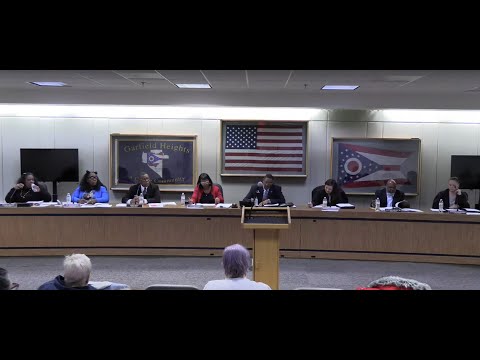
At a council caucus meeting, Public Works staff described a Cleveland Water mapping and replacement program that identifies roughly 4,000 likely lead service connections among the city's about 11,000 water connections and plans to remove roughly 300 lead services a year through about 2037. That schedule, staff warned, could delay when the city may pave streets where lead services remain in place.
The change matters because the city historically has stacked grant funding: one set of grant money pays to replace water mains or services and a separate set pays to repave the street. Jeff Rohn, chief of staff, said the program is positive because the city will get lead services replaced at no direct cost to Garfield Heights, but it also complicates the city's usual grant strategy. "Number 1, we're getting all of the lead service replaced in the city. That's great. Good news. No cost to us. Positive," Rohn told the council.
Jim Sickles, the staff member who briefed council on construction projects, said Cleveland Water will not pay for repaving when it removes lead services. "If the lead services have been removed, then it has the potential to be paved," Sickles said. "But that has been a way that we have been, in the past, been able to do road repairs is by replacing the water lines and then paving the street on top of that. So all this is just throwing a kink in a lot of the way we've been doing things." He added that if Cleveland Water removes lead service later than the city expects, the street may need to wait at least five years before a full paving program, depending on grant cycles and contractor scheduling.
Council members asked how the new schedule would affect pavings already planned. Sickles said work on some mains already completed (he cited a stretch of Cranwood Park Boulevard) could allow those segments to be repaved sooner, but where only smaller service replacements or temporary patches have occurred, the city should expect additional coordination with Cleveland Water and its grant timetable.
Sickles and Rohn said the city will try to align its street program with Cleveland Water's replacement schedule and with the city's consultant work (OHM) so that grant-funded paving can continue where feasible, but acknowledged the process now requires an additional step of coordination. "What really changes for us is timing and planning," the chief of staff said. Staff also warned that Cleveland Water's grant money for lead removal arrives on a seasonal schedule and may not be available in time for the city's paving season, forcing potential schedule changes.
Council members asked staff to continue coordinating with Cleveland Water and to notify residents about impacts in specific wards; staff said more detailed planning and mapping will follow.
Ending: Council members did not adopt any ordinance or motion specifically tied to the Cleveland Water program at the caucus meeting. Staff said they will return with further information and that the city will attempt to sequence paving and lead-service replacement to minimize duplicate street work while accommodating Cleveland Water's grant and construction timetable.