Get AI Briefings, Transcripts & Alerts on Local & National Government Meetings — Forever.
Panel debates tougher organized retail-theft penalties and definitions amid questions about low-income offenders
Loading...
Summary
The committee advanced SB 1300, which rewrites the organized-retail-theft statute, adjusts the value-based penalty ladder upward, and creates evidentiary rules to aid prosecution; supporters said the measure targets organized rings, while civil-rights and some senators raised concerns about potential impacts on people stealing for need.
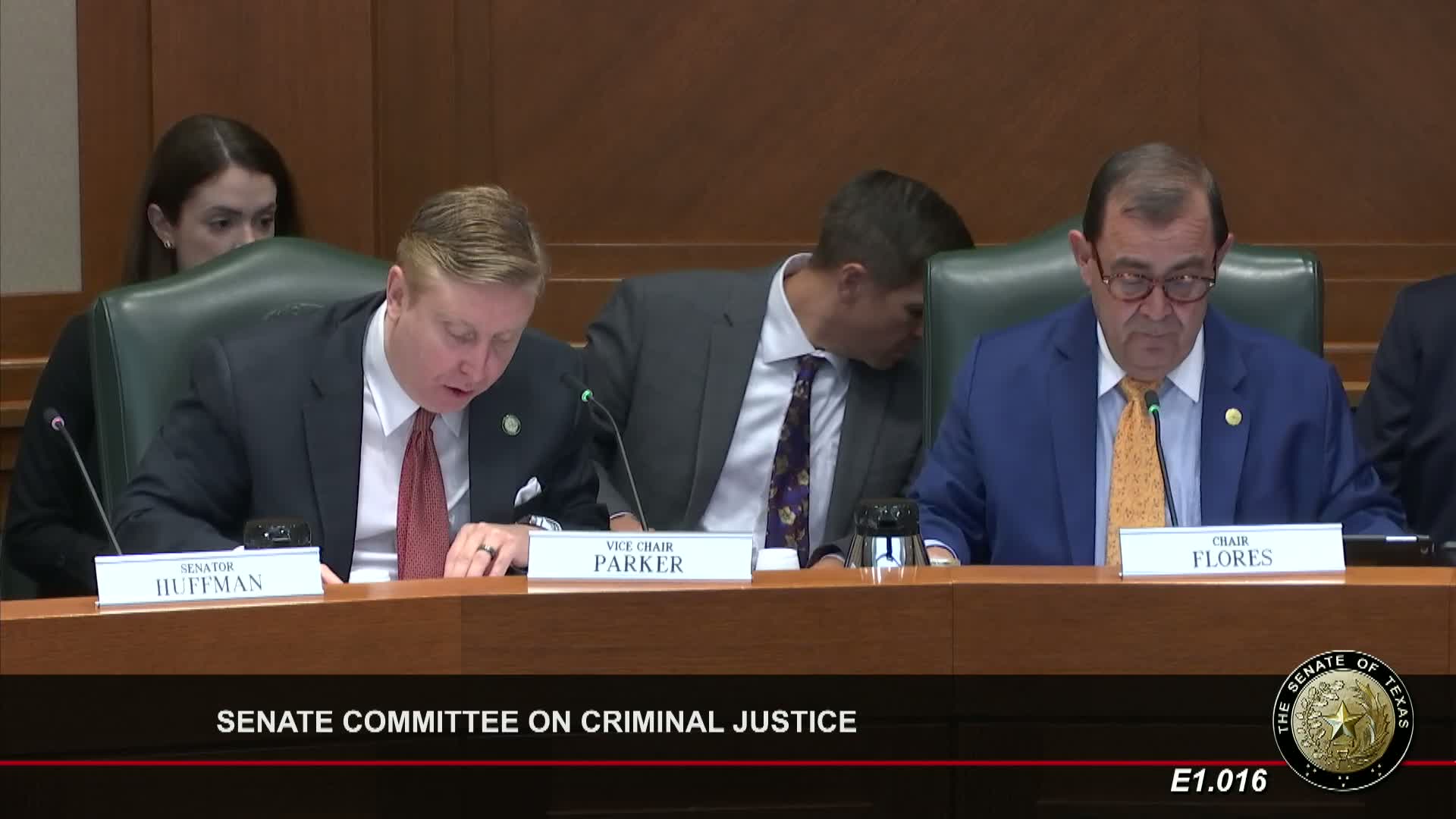
Chair Flores recognized Senator Flores to present SB 1300, a comprehensive rewrite of the organized retail-theft statute aimed at curbing large-scale theft rings that target merchants and consumers.
SB 1300 consolidates several theories of organized retail theft (acting in concert, repeated thefts within a 180-day period, obtaining benefits from retail theft or overwhelming store security) into a statutory definition, clarifies evidentiary rules for proving value and merchant identity (including admissibility of unaltered price tags and prior organized-retail-theft offenses), and increases penalty levels at each value tier (for example, moving some mid-range thefts from state-jail felonies to third-degree felonies and raising the highest tiers to first-degree offenses for large aggregated losses).
Jennifer Tharp, Comal County Criminal District Attorney, testified in strong support, saying the changes provide prosecutors with notice, evidentiary frameworks and tools tailored to organized retail crime. John McCord of the Texas Retailers Association said ORC commonly involves ancillary crimes (vehicle crashes, property damage) and that retailers are seeing an increase in organized, professional rings who resell stolen merchandise. The FCIC's Jeff Headley described transnational organized operations and said Texas’ approach has become a national model.
Opposition: Kirsten Budwein of the Texas Civil Rights Project testified in opposition, arguing the bill could sweep ordinary shoplifting into elevated organized-theft charges because the “two-or-more occasions within 180 days” prong does not require acting in concert; she cited the ORC Task Force report urging care in distinguishing petty shoplifting from organized rings. Senator Miles and other committee members voiced concerns about prosecuting low-income people who may steal essential items (diapers, formula) and asked the sponsor to work on safeguards or a threshold value.
After extended discussion, the committee recorded a favorable recommendation on SB 1300 and moved it to the full Senate (committee tally reported 5 ayes, 0 nays). Sponsor and prosecutors said charging discretion and options such as deferred adjudication remain tools to address low-level, first-time thefts, while supporters said the statutory changes are intended to target coordinated, professional theft rings that “overwhelm stores” and disrupt commerce.
Next steps: The bill is reported favorably to the full Senate for further consideration; senators asked for follow-up conversations on drafting clarifications to ensure the law targets organized criminals and not people committing isolated thefts from need.