Get AI Briefings, Transcripts & Alerts on Local & National Government Meetings — Forever.
NDSU leaders, research centers press House panel to restore cuts and fund priorities in SB 2020
Loading...
Summary
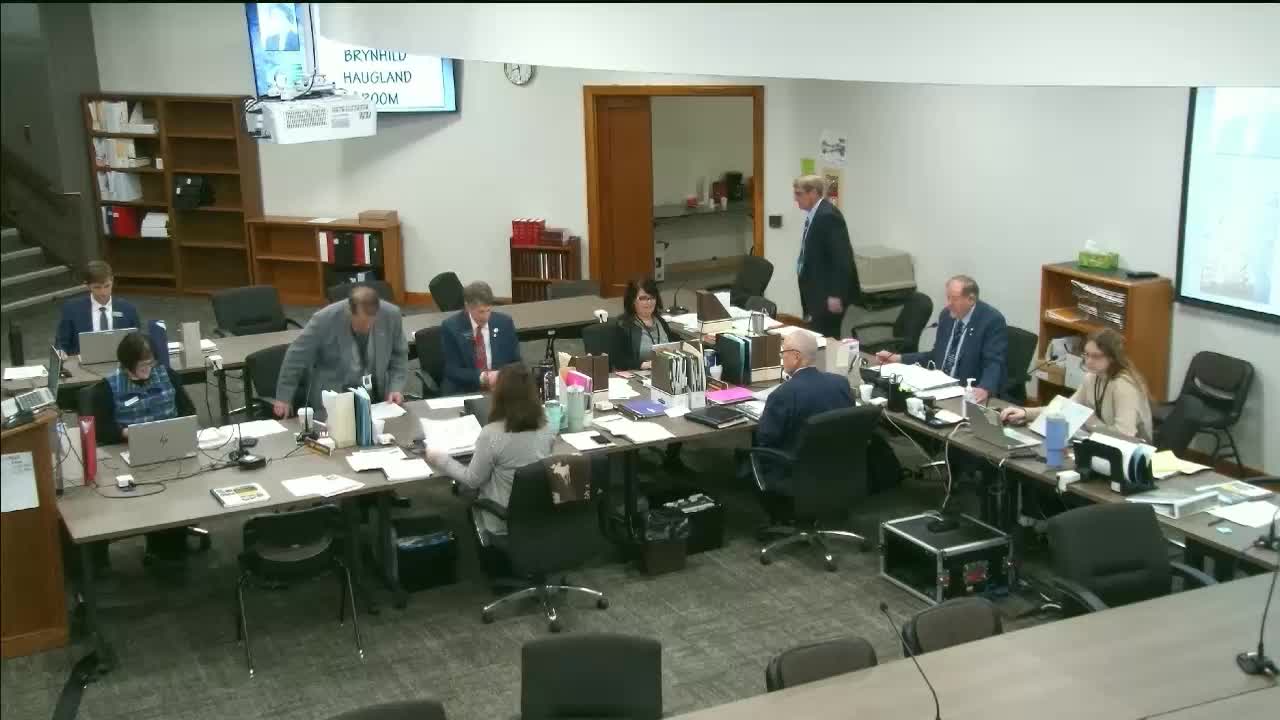
At a hearing of the Government Operations Division of the House Appropriations Committee, leaders of North Dakota State University's research and extension system urged lawmakers to restore base funding and support a package of program and capital priorities in Senate Bill 2020, the budget bill for the North Dakota Agricultural Experiment Station and NDSU Extension.
At a hearing of the Government Operations Division of the House Appropriations Committee, leaders of North Dakota State University's research and extension system urged lawmakers to restore base funding and support a package of program and capital priorities in Senate Bill 2020, the budget bill for the North Dakota Agricultural Experiment Station and NDSU Extension.
The request centers on restoring base budget reductions the system says remain in the Senate bill — a 3% cut to the main agricultural experiment station and a 4.7% cut to NDSU Extension — and on funding six program initiatives and several capital projects SBAR (the State Board of Agricultural Research and Extension) prioritized after statewide stakeholder input.
Why it matters: NDSU research and extension staff told the committee their work supports the state’s $41 billion agricultural economy, delivers timely farm-level recommendations and trains future scientists. "I stand before you today in support of Senate Bill 2020, and I ask you to support this bill with a critical ask to reinstate the base budgets for these agencies," said Sarah Hall Levis, chair of the State Board of Agricultural Research and Extension (SBARE).
What presenters told the committee - Greg Lardy, director of the North Dakota Agricultural Experiment Station, described SBARE’s six ranked initiatives (page references to the committee budget book were cited repeatedly) and asked the committee to review the Senate changes that he said would limit the agency’s ability to respond quickly to producers’ needs. "The cuts to our base budget will reduce the ability of our agency to respond in a timely manner to serve our state with the best research possible," Lardy said.
- SBARE’s prioritization: SBARE reported a stakeholder input process that began Sept. 14, 2023, concluded Jan. 3, 2024, and produced the programmatic and capital priority lists through meetings Jan. 10–Feb. 21, 2024. Lardy and SBARE members emphasized the lists were developed to address long-term, statewide needs rather than short-term market trends.
Key program funding items summarized to the committee (as presented by Lardy and SBARE leadership) - Center for Agricultural Policy and Trade Studies: SBARE listed this as its No. 1 program priority; the request described to the committee included three FTEs and roughly $975,000 in support to enhance trade and policy research for North Dakota producers. The Senate did not include funding for this initiative.
- Digital transformation / precision agriculture: listed as a priority to accelerate work on precision farming, artificial intelligence and data analytics; the Senate did not include funding for this initiative.
- Livestock/animal health (toxicology): SBARE asked for additional veterinary toxicology capacity. Committee testimony noted the Senate included $275,000 in its version of SB 2020 for a veterinary toxicology resident position; stakeholders said the field faces a national shortage and warned the state’s board-certified diagnostic toxicologist could retire within five years without a resident pipeline in place.
- Operating support and graduate student assistance: SBARE prioritized increased operating budgets across the seven Research Extension Centers (RECs) and the main station. The plan Lardy described included ~$560,000 to support operating at branch stations, ~$630,000 for main‑station operating, $1,000,000 for equipment and $900,000 for graduate research assistantships. REC directors said operating costs have risen sharply and that some research relies on grants that do not allow payment of routine operating or maintenance costs.
- Biofuels and carbon management: SBARE proposed research and staff to help producers participate in carbon markets and lower the carbon intensity (CI) of feedstocks used for renewable fuels; that initiative was described to the committee as a request for two positions and operating support (Lardy reported a total request figure of roughly $525,000).
- Technical support and research specialists: SBARE highlighted critical needs for skilled technical staff across programs (grape and vineyard, agronomy, plant pathology, soybean breeding, biosystems engineering) to sustain research productivity.
Capital and one-time project requests discussed - Oaks Irrigation Research Site building completion (Carrington REC): SBARE requested approximately $620,000 in one-time funds to finish interior work; Lardy said the Senate included funds for that project.
- Langdon seed conditioning plant (Langdon REC): total project cost listed at $2,600,000. Lardy told the committee the Senate included $950,000 from the Strategic Investment and Improvement Fund (SIF) and provided $1,650,000 in special fund authorization; Langdon staff told the committee those special funds would need to be raised locally or through partners.
- Equipment storage sheds: the Senate version provided full funding for three remaining storage sheds (Dickinson, Carrington, Central Grasslands) totaling $1,567,500, Lardy said; REC directors said sheltered storage preserves costly plot and research equipment.
- Williston/Nesson Valley irrigation research site: WREC and Lardy detailed carryover and special fund authority requests for the Nesson Valley facility. They asked the committee to allow carryover of previously appropriated general funds, provide authority to raise and spend additional special funds (Lardy mentioned $1,300,000 in special funds to complete the Nesson Valley building and a $1,700,000 carryover of general funds appropriated earlier), and continue an exemption that reduces architect fees for pre‑engineered buildings.
Local REC testimony and operating pressures REC directors and local users emphasized rising operating costs and deferred maintenance across the REC network: - Carrington REC (Mike Ausley) reported a 47% increase in overall operating costs since 2021 and a 95% increase for livestock research, and asked support for priority #6 (technical staff) and the operating initiative. - Central Grasslands REC (Kevin Sedovic) said operating costs rose 34% from 2020–2024 and described specific research gains — including virtual fencing trials — delivered to producers. - Dickinson REC (Chris Augustine) and Hettinger REC (Christopher Schauer) described new or recently completed capital projects and asked for continued operating and technician support; Hettinger noted the new smart feedlot and livestock handling facilities and said precision ag equipment requires recurring annual costs for operation and data services.
Veterinary toxicology: an at-risk specialty The North Dakota Veterinary Medical Association (represented by Lisonbee Ritter) and a veterinary witness told the committee that diagnostic veterinary toxicology is a narrow specialty with few residency programs. The testimony noted the NDSU Veterinary Diagnostic Lab currently has one board‑certified veterinary toxicologist (Dr. Michelle Mostrom) and said most diagnostic toxicologists nationally are nearing retirement; NDVMA urged funding to establish a veterinary toxicology residency at NDSU to maintain in‑state diagnostic capacity and disease surveillance.
Extension and 4‑H impacts NDSU Extension leaders and youth speakers described extension’s educational reach and 4‑H impacts. Highlights presented to the committee included: - NDSU Extension reported 312,589 individual contacts recorded in 2023 and more than 15,261 educational hours; NDSU Extension’s 4‑H programs reported 41,217 youth educational contacts in 2023 (a 40.3% increase from the previous year), figures presenters used to show statewide reach. - Two 4‑H ambassadors testified about leadership and communication skills gained through 4‑H and asked the committee to support operating funding that sustains youth programs.
Requests for follow-up information and committee next steps Committee members repeatedly asked for summary materials and outcome reports: Representative Bosch asked SBARE to compile a report showing how previously funded priorities performed and which items remained unfinished. Members also requested more detailed financial breakdowns of federal funding, bids and scopes for capital projects (particularly for Williston and Langdon), and clarifications about special fund authority and carryover requests. Agency witnesses agreed to provide the requested details.
What the hearing did not decide No formal appropriations votes were taken in the session recorded in the transcript. Presenters asked the Government Operations Division to consider restoring the two base budget reductions and to fund the operating and capital priorities; committee members signaled they would review the additional documentation and return to detailed budget work.
Ending note Presenters asked that the committee weigh the short‑term fiscal pressures against the long‑term returns of agricultural research and extension: witnesses repeatedly invoked economic and operational examples — from plant breeding and disease diagnosis to precision ag and livestock studies — to argue for restoring base budgets and funding the prioritized initiatives and capital projects.
Selected direct quotes from the hearing "I stand before you today in support of Senate Bill 2020, and I ask you to support this bill with a critical ask to reinstate the base budgets for these agencies," said Sarah Hall Levis, chair, State Board of Agricultural Research and Extension.
"The cuts to our base budget will reduce the ability of our agency to respond in a timely manner to serve our state with the best research possible," said Greg Lardy, director of the North Dakota Agricultural Experiment Station.
"4‑H has played an instrumental role in my life," said Alex Hall, a 4‑H ambassador who testified on behalf of extension youth programming.
Next steps reported in committee: agency staff will supply the requested program‑by‑program updates, federal funding breakdowns, and capital project bid/scoping details for committee review.