Lifetime Citizen Portal Access — AI Briefings, Alerts & Unlimited Follows
MassHealth drives majority of FY26 spending growth, administration warns of rising costs
Loading...
Summary
Administration witnesses told the Joint Committee on Ways and Means that MassHealth enrollment and acuity are major drivers of projected FY 2026 spending growth and that the program’s higher pharmacy and MCO costs are central budget pressures.
MassHealth — the commonwealth’s Medicaid program — was the largest single driver of growth in the FY 2026 House 1 spending presentation at the Ways and Means hearing on March 5.
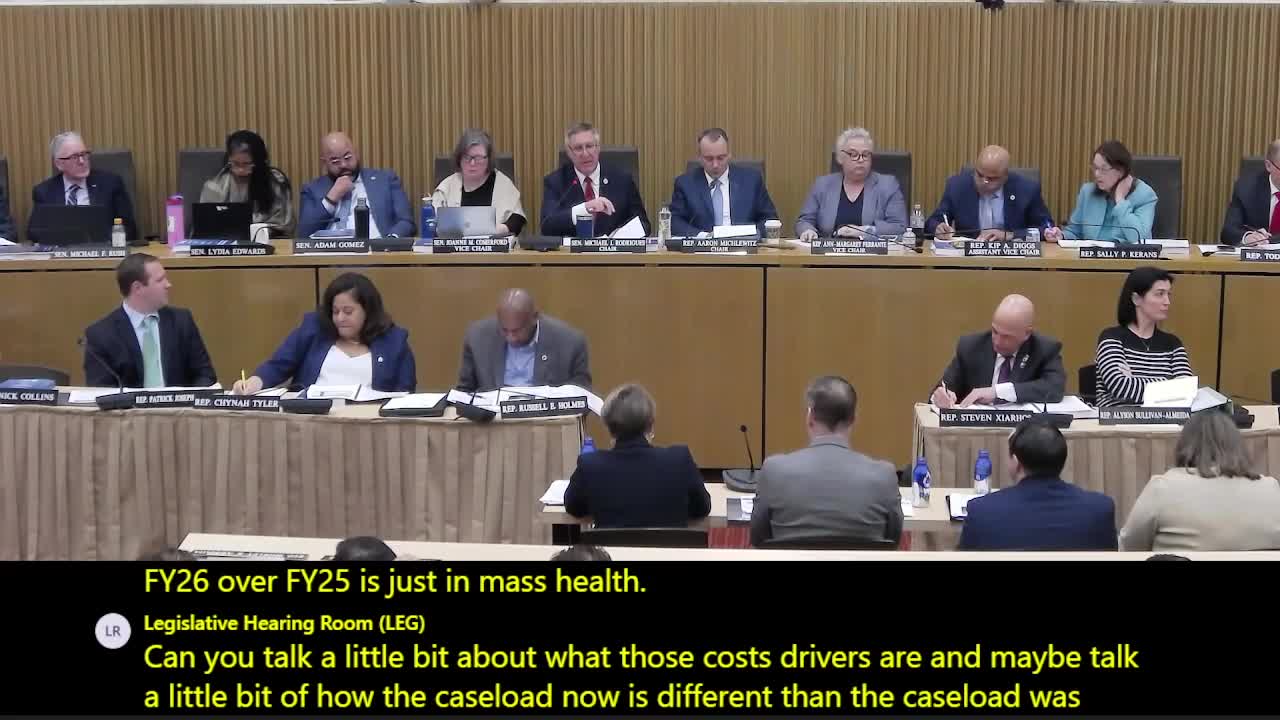
Secretary Matt Gorkowitz and committee members repeatedly flagged MassHealth in questioning and testimony. Senate Chair Michael Rogers told members “60% of the growth in spending in FY 26 over FY 25 is just in MassHealth” and asked the administration to explain cost drivers and how caseload now differs from pre‑pandemic levels.
The administration said redetermination after the federal public‑health emergency returned the program to closer‑to‑normal eligibility dynamics but left enrollment higher and more costly. Gorkowitz said MassHealth enrollment stands at about 2.2 million lives, roughly 260,000 more members than pre‑pandemic, and that a higher‑acuity mix remained after low‑utilizers left following redetermination. He also told the committee pharmacy expenditures rose sharply and MCO rate pressures contributed to growth, creating an aggregate multi‑billion‑dollar increase in MassHealth spending from FY 2025 to FY 2026 projections.
“We saw huge costs … almost a 16% increase in pharmacy costs, and pressures around our MCO rates,” Gorkowitz said, explaining those items were central to the program’s near‑term budget outlook. The administration said FY 2026 planning assumed the loss of some federal pandemic-era protections and that budgets were adjusted to reflect expected post‑emergency realities.
Why it matters: MassHealth is a major portion of the state budget and is exposed to enrollment, utilization and federal policy risk. Changes in federal policy, such as the end of federal redetermination moratoria or changes in matching funds, can produce significant state budget impacts.
Questions from lawmakers focused on where savings might be found, how much of the recent growth is temporary, and what programmatic levers — including transportation reimbursement changes and pharmacy pricing — might be available to control costs. The administration said it had proposed increases to cover expected costs in FY 2026 and would return with supplemental recommendations for FY 2025 where needed.
Looking ahead: The committee asked the administration to return at follow‑up hearings with more detail on specific cost drivers and on short‑ and mid‑term strategies to contain the program’s growth while preserving coverage.
Ending: Lawmakers signaled they expect more granular data on enrollment mix, pharmacy trends and MCO pricing in subsequent hearings before any decision on major programmatic changes.