Get AI Briefings, Transcripts & Alerts on Local & National Government Meetings — Forever.
Senate HHS committee recommends passage of bill to remove red caps from opioid prescriptions
Loading...
Summary
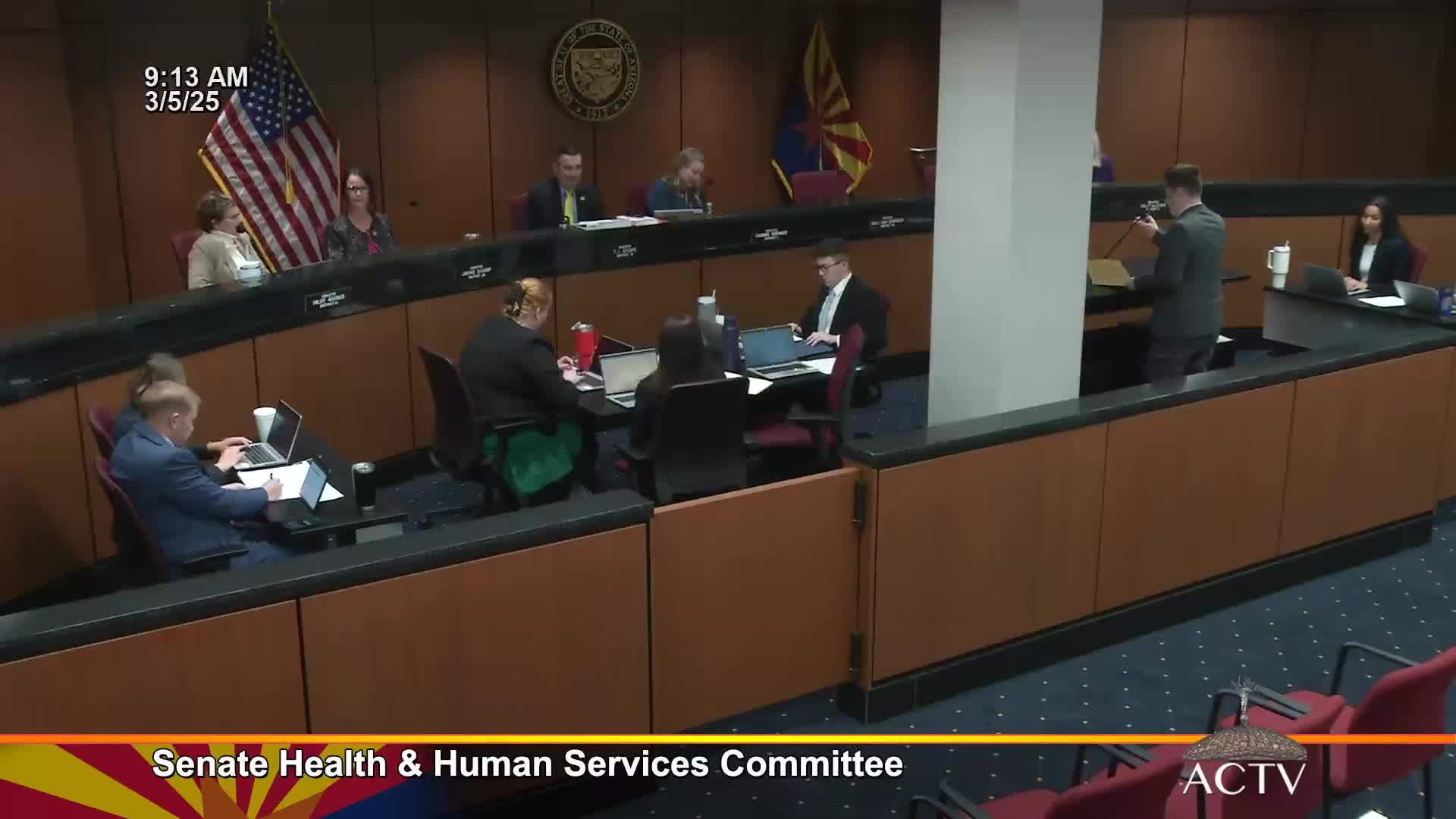
The Senate Committee on Health and Human Services gave House Bill 2291 a due-pass recommendation after testimony from chronic pain patients, clinicians and civil‑liberties advocates who said red caps stigmatize patients and create safety and privacy risks.
The Senate Committee on Health and Human Services voted to give House Bill 22‑91 a due‑pass recommendation, 5 ayes, 1 no and 1 not voting. The bill would remove the statutory requirement that opioid prescriptions dispensed directly to patients be packaged with distinctive red caps.
Supporters told the committee the red caps single out people who take opioids for legitimate medical reasons and can expose them to theft, stigma or invasion of privacy. Barbie Engle, a chronic pain patient from Pinal County and vice president of the International Pain Foundation, said the caps “violate our HIPAA… the Arizona data breach notification law” and cited several state statute numbers while urging passage. Cindy Hawk, who described herself as a chronic intractable complex pain patient, said, “The red cap law made me feel unsafe at the pharmacy counter.”
The bill drew a mix of testimony. Jeffrey Singer, M.D., a surgeon and senior fellow at the Cato Institute, told the committee he is skeptical that the red caps reduce opioid misuse, saying “it’s unlikely that a visual cue such as a red cap on a bottle will deter misuse” and warning the caps can make opioid bottles easier targets for people seeking pills. Caitlin Contreras of the ACLU of Arizona said HB 22‑91 would “help to reduce the stigma around people who use opioids and protect the privacy and safety of Arizona patients.” Jessica Fento, owner of a pain‑management clinic in Scottsdale, said the caps “discriminate against our patients by allowing everyone around them to know they are on opioid medication.”
A motion to give the bill a due‑pass recommendation was made on the floor of the committee and the secretary called the roll. The committee recorded five ayes, one no and one not voting; the clerk announced that HB 22‑91 received a due‑pass recommendation.
The bill will proceed to the next steps in the legislative process per committee rules.