Get Full Government Meeting Transcripts, Videos, & Alerts Forever!
Get email alerts on the Billboards topic
No spam. Unsubscribe anytime.
Taunton zoning committee asks planner to draft billboard overlay, limits for digital signs
Summary
After debate over recent variances, Taunton city councillors asked the city planner to draft an overlay district and technical limits (size, setbacks, refresh rate) that would allow billboards in specified highway corridors while restricting them elsewhere.
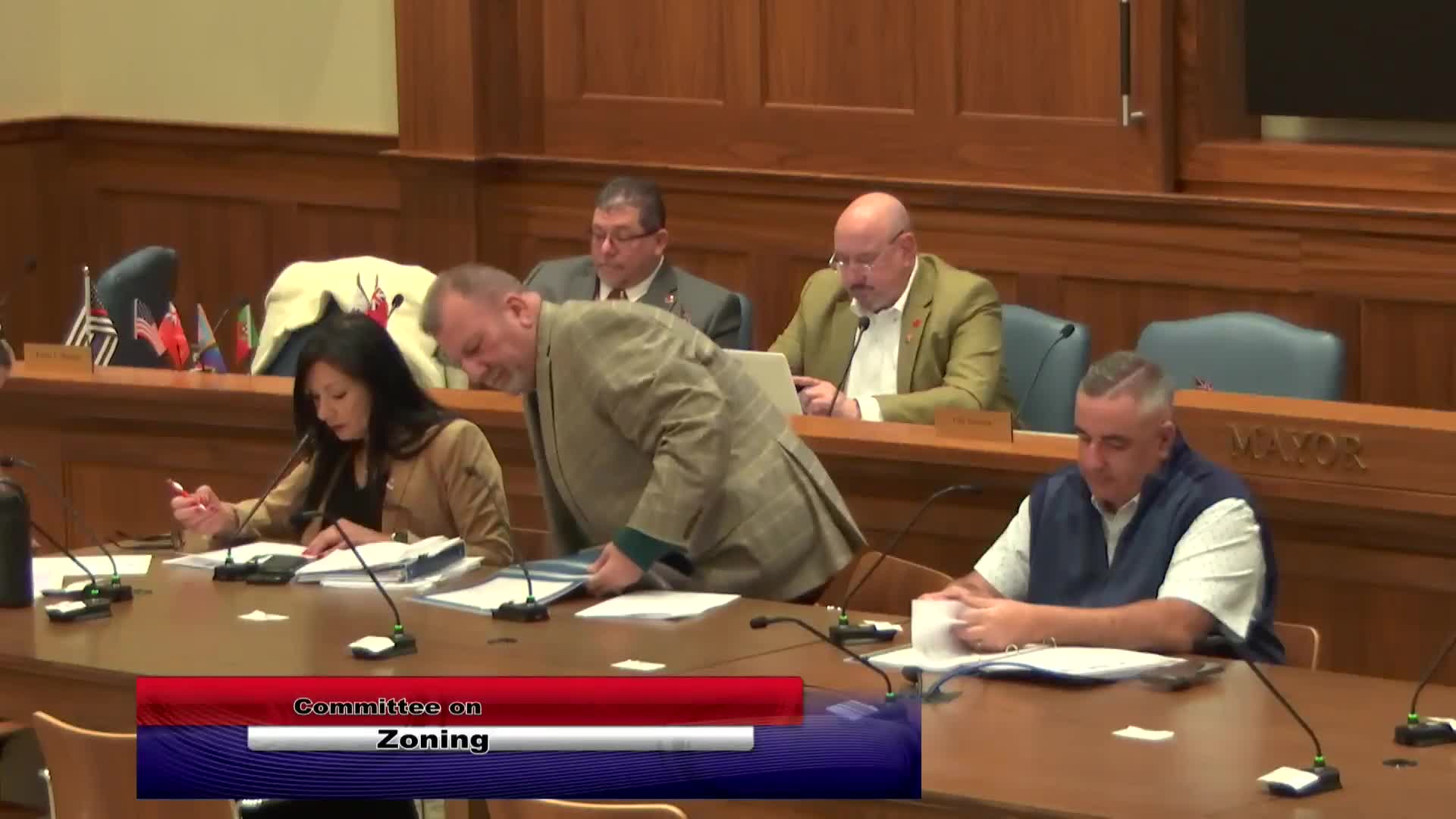
Taunton zoning councillors asked the city planner on Thursday to draft an overlay district and technical standards for billboards, including digital/video signs, and return with proposed locations and size and refresh-rate limits.
The request came during a meeting of the Committee on Zoning after councillors raised concerns about a recent variance that allowed a new sign on County Street and about the prospect of rotating digital displays in residential or local-business areas. City Planner Kevin Scanlon told the committee the city currently treats billboards as a use that requires a variance from the Zoning Board of Appeals and site-plan review, but offered an alternative: create a linear overlay along major routes where billboards would be allowed by special permit and amend the ZBA’s enabling authority to remove variance eligibility elsewhere.
The overlay approach would allow the council to identify specific corridors — councillors suggested Route 495, Route 140 south of Route 24 and stretches of Route 44 and 138 — where billboards could be permitted with set standards, and to prohibit variance relief in the remainder of the city. Scanlon said the state and local process also requires care: “Any time you have something completely not allowed with no means whatsoever to get it, the courts look pretty dimly on that,” and removing all variance avenues without providing an alternate permit route could invite legal challenge. (Kevin Scanlon is identified in the meeting as the city planner.)
Councillors who spoke said they were divided on where, if at all, billboards should be allowed. Councillor Pottier and Councillor Sanders said large rotating video signs are visually intrusive and distracting and urged strict limits or no new signs; Councillor Pottier favored allowing large signs only where they face limited-access highways. Several councillors said existing nonlit billboards along Winthrop Street and other corridors predate current zoning and are grandfathered, but they objected to signs placed close to local streets or near intersections.
Specific constraints councillors asked Scanlon to include in his draft were: an overlay that defines linear corridors (for example, a set distance on each side of major highways), maximum sign size, height and setback limits, and limits on digital sign refresh/transition rates to reduce driver distraction. Councillor Coit moved that Scanlon prepare an overlay-district proposal and draft standards; the motion was seconded and passed by the committee.
The planner said he will return with a draft that identifies candidate corridors and recommended standards for size, setbacks and refresh rate. The committee also discussed enforcement and how future variance decisions by the Zoning Board of Appeals will be routed to the council packet so councillors can monitor decisions in time to file appeals if they disagree.
The committee’s vote requests a staff draft for further discussion and public process; no binding ordinance change was adopted at the meeting.