Lifetime Citizen Portal Access — AI Briefings, Alerts & Unlimited Follows
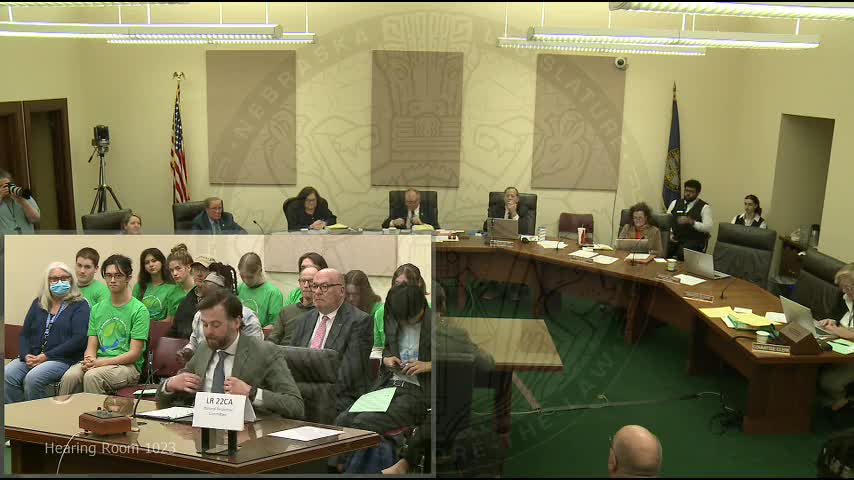
Natural Resources Committee hears ‘Green Amendment’ (LR22CA); supporters cite water and youth, opponents warn of litigation risk
Loading...
Summary
Senator George Dungan introduced LR22CA — the proposed Nebraska "Green Amendment" — and the Natural Resources Committee heard extensive testimony from youth activists, public-health experts, environmental groups, faith leaders and critics about whether a constitutional right to a clean and healthy environment should be added to the state constitution.
Senator George Dungan introduced LR22CA — a proposed constitutional amendment commonly called the "Green Amendment" — to the Natural Resources Committee and a lengthy public hearing followed, featuring dozens of proponents, several opponents and one neutral witness.
"A Nebraska Green Amendment will ensure that all of the government in the state, including the branches of government at both the state and the local level, will work to advance proactive environmental protection at every level of the decision making process," Senator George Dungan said in opening remarks. Dungan described language drawn from other states and said the amendment is intended to allow citizens to challenge government action or inaction that harms the environment.
Attorney Sheridan Macy, who helped draft the bill, told the committee, "The Green Amendment gives Nebraskans the right to a clean and healthy environment, supporting legal action when that right is violated, whether this be by government action or inaction." Macy and multiple young testifiers cited nitrate contamination of groundwater and higher pediatric cancer rates in Nebraska as motivating concerns. Macy said that in other states the amendment has been used to press for enforcement and additional regulation; she also told senators that states adopting similar language have not seen a wave of frivolous lawsuits.
Students and youth-led groups comprised a substantial portion of the in-person proponents. Evalina Sain, on behalf of Students for Sustainability, linked the amendment to economic opportunities and workforce retention, arguing it could spur job growth in clean energy and related fields. Several young testifiers described local experiences: Mia Prales and other witnesses argued that meatpacking and livestock facilities contribute to local air and water impacts in communities such as South Omaha and Lexington; they cited published analyses querying pollutant discharges and said vulnerable, often low-income communities disproportionately bear pollution burdens.
Public-health testimony emphasized potential health harms from environmental contamination. Dr. David Corbin, a public-health professor emeritus, told the committee the amendment would allow governments to avoid environmental degradation rather than respond after harms occur; he cited a statewide climate-related grant award of $307,000,000 and called for investments that also protect low-income and underserved communities.
Opponents raised legal and fiscal concerns. Attorney David Begley said the amendment would invite lawsuits and attorney-fee awards and called it "the most extreme and expensive bill that has been ever offered in the Unicam." Begley warned that environmental groups would litigate against the state; he urged caution on potential fiscal exposure. Other neutral or skeptical testifiers urged specificity to avoid unintended consequences and flagged vague language as a risk.
A neutral witness identified herself as representing "Nebraskans Against Government Overreach" and recommended the committee examine state statutes on weather-modification contracting; she said the amendment’s wording was too vague and could be abused. Committee staff reported an on-line tally at the close of the hearing of 138 proponents, 9 opponents and 1 neutral comment.
Committee discussion touched on standing, remedies, and drafting choices. Several senators asked whether the amendment would create a private cause of action and how courts would define terms such as "clean water" or "pure water." Dungan and supporters said the provision is intended to provide judicially enforceable protections against unconstitutional government action and that courts would draw definitions from case law; supporters pointed to successful litigation in Montana and Hawaii and to Held v. Montana and other precedents as illustrative. Opponents disagreed on likely litigation outcomes and budgetary exposure.
Why it matters: LR22CA would place environmental protections in the Nebraska Constitution’s Bill of Rights and could change how state and local government decisions are litigated and reviewed. Supporters say the amendment would protect drinking water, public health and future generations; opponents warn of litigation and fiscal implications. The committee closed testimony with the tally and reserved deliberation on next steps.
No committee vote on LR22CA was recorded in the transcript provided; the hearing concluded with Senator Dungan closing and committee staff reporting the online testimony counts.