Get Full Government Meeting Transcripts, Videos, & Alerts Forever!
Get email alerts on the Land Use Data Centers topic
No spam. Unsubscribe anytime.
Board sends data‑center zoning change to planning commission after split vote; will consider joint hearing March 18
Summary
The board voted 4–3 to refer an ordinance change that would require conditional-use review for data centers in M-2 (heavy industrial) zoning. The change would leave data centers by right in the existing ICTP overlay (which currently has no mapped areas). The board authorized a joint Planning Commission/Board public hearing, anticipated March 18.
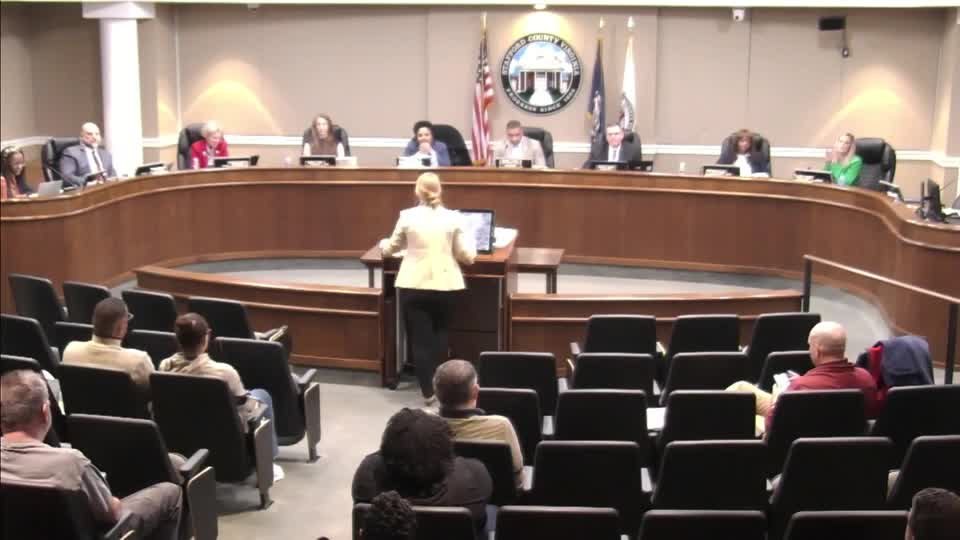
The Board of Supervisors voted 4–3 Feb. 18 to refer an ordinance amendment to the Planning Commission that would change data centers from a by‑right use to a conditional‑use permit (CUP) in the M‑2 (heavy industrial) zoning district and to participate in a joint public hearing anticipated March 18.
Why it matters: Data centers raise concerns about water use, noise, traffic and tax incentives while offering potential real-estate and personal-property tax revenue. A CUP process would give the county case-by-case review authority to set conditions on siting, footprint, water use and other impacts in M‑2 areas.
What was proposed: The proposed ordinance amendment (O-25-08, attached to the referral) targets only the M‑2 district; the county’s ICTP overlay would remain a by‑right location for data centers where the overlay is established. Staff told the board the ICTP overlay currently exists on paper but does not map any actual areas in the county.
Board discussion: Supervisors debated whether the change could dissuade desirable economic development and whether a county‑level overlay that identifies acceptable locations would be a better, more predictable approach. Several supervisors said a CUP provides needed leverage to address local impacts and to require conditions such as limits on potable water use or noise mitigation. Others said the county should consider targeted overlays in specific locations so suitable sites can be clearly pre‑approved.
Next steps: The board authorized referral to the Planning Commission with permission for the commission to make changes and to participate in a joint public hearing; the matter could return to the board for final action after the commission’s recommendation and the joint hearing March 18.
Ending: The referral passed 4–3, reflecting an active policy debate about balancing economic development and local controls.