Lifetime Citizen Portal Access — AI Briefings, Alerts & Unlimited Follows
Senate advances bill to address weigh‑station funding after debate on scope, recurring costs and software needs
Loading...
Summary
Senate Bill 122, which would provide funds for weigh‑station upgrades and related software, advanced after senators questioned the scope of work, recurring annual needs (~$4.7M) and one‑time capital estimates that could reach $164M. DOT director said ports of entry average a decade of service before major work.
Senate Bill 122, a measure to address funding shortfalls for the state’s weigh stations and permitting software, was advanced by the Appropriations Committee following detailed questions from senators about recurring operating needs, deferred maintenance and the scale of potential capital projects.
Senator Hayes, presenting the bill, said the Department of Transportation’s annual cost to manage weigh stations is roughly $4,700,000 and noted the permitting software OKIEPROS requires an estimated $3,000,000 update. He said the total cost to update a list of priority stations could reach about $164,000,000 depending on the package chosen.
Nut graf: The bill prompted a sequence of technical questions from senators about how weigh‑station fees are currently apportioned, whether a recurring $5 million or $10 million appropriation is appropriate, and how long renovated stations might last. Director Tim Gatz of ODOT said ports of entry are structures that require routine maintenance and that a well‑built new facility could deliver roughly a decade before major reinvestment.
Key details from testimony and Q&A
Recurring costs and cash on hand: Director Tim Gatz told the committee ODOT’s “all in cost on the weigh stations and the software systems of permitting office is about 4,700,000.0.” Senators noted the department’s revolving fund receipts have been volatile and that available cash on hand for weigh‑station work was substantially less than the identified annual need.
Software and capital costs: Senator Hayes and DOT staff identified OKIEPROS software modernization as a $3,000,000 item and listed several stations that surfaced as priorities for upgrade: Davis (southbound), El Reno (eastbound and westbound), Boise City, Tonkawa (or Tonopah per transcript), Guthrie (I‑35 northbound), an I‑40 eastbound site (Tiger Mountain referenced), and potential new ports at Hugo southbound and Cotton County southbound. The presentational estimate for several upgrades and new stations combined reached approximately $164,000,000.
Questions about policy and funding mechanism: Senators asked whether the bill should use an appropriation rather than an apportionment from existing fees so the department could reliably budget. Senator Hicks asked why the committee would consider $10,000,000 recurring when the department’s stated recurring need is about $4,700,000; Senator Hayes said the proposal remained under discussion and that the language could change to an appropriation to allow annual review.
Senate action and next steps
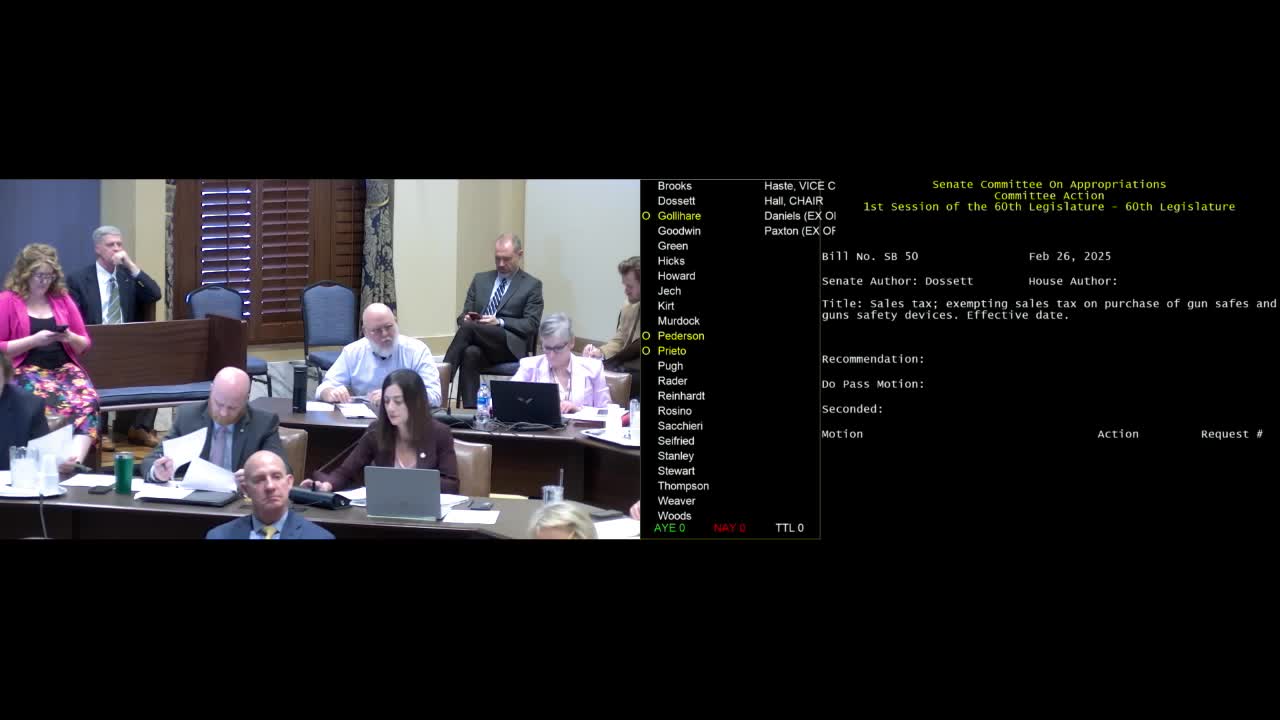
A do‑pass motion was recorded and the bill was advanced by the committee. The committee asked ODOT and fiscal staff to refine the fiscal proposal, including whether funds should come from apportionment or an annual appropriation and how much recurring funding is appropriate to cover routine operations versus catch‑up capital work.
Ending: The committee moved SB 122 forward and asked for more detailed fiscal modeling to return to appropriations staff before final Senate consideration.